
The Importance of Having a Secure, SSL-Protected Website in 2025
- Introduction
- What is SSL and how does it work?
- Why your website shouldn’t miss an SSL certificate
- It enhances trust and credibility
- It boosts your site’s SEO ranking and visibility
- Visitors are afraid of “not secure” warnings
- You can easily face fines
- You can’t make an interactive site without the certification
- Conclusion
Introduction
In this article, we will introduce you to the world of SSLs, their working mechanism, and all the positive aspects an SSL certification can give to your website!
What is SSL and how does it work?
In the early years of the internet, it looked like a safe space. Here, nobody wanted to rob your belongings, and there were simply no threats at all for a general user. However, that was what we witnessed: typical internet browsers.
The truth is, at that time, the internet was the “Wild West” with lawlessness, a lot of conflicts, and many clever thieves waiting for the innocent users to be unsuspecting and walk into a trap.
There were two major problems with all sites at that time:
- Users couldn’t be sure a website was real
- Any information they sent could be stolen in seconds
And the SSL certification ensured a solution to these problems.
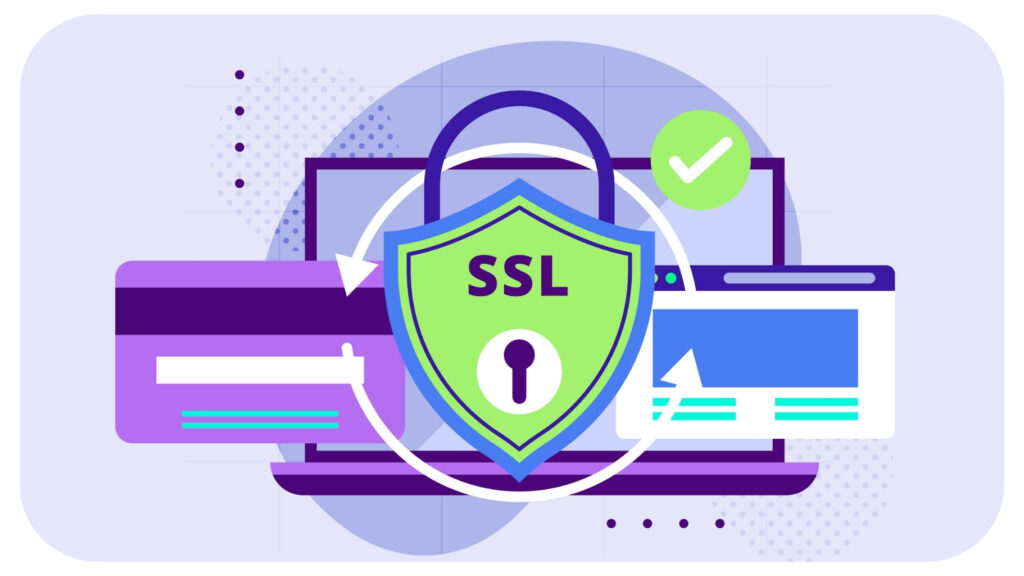
An SSL certificate is a digital certificate installed on a website’s server. It both confirms the website’s identity and ensures that the encrypted data is exchanged between the browser and the server.
But how does this work?
SSL works by encrypting the data exchanged between a user’s browser and a website, making it unreadable to anyone who tries to intercept it. It also verifies the website’s identity through a trusted certificate, ensuring the user is connecting to the legitimate site.
That means an SSL certificate is a powerful tool for calming down anxious visitors. If your website has it, the visitors know that the link to your site leads them to a legitimate site, and they also know that their personal data is in a safe, protected environment.
Why your website shouldn’t miss an SSL certificate
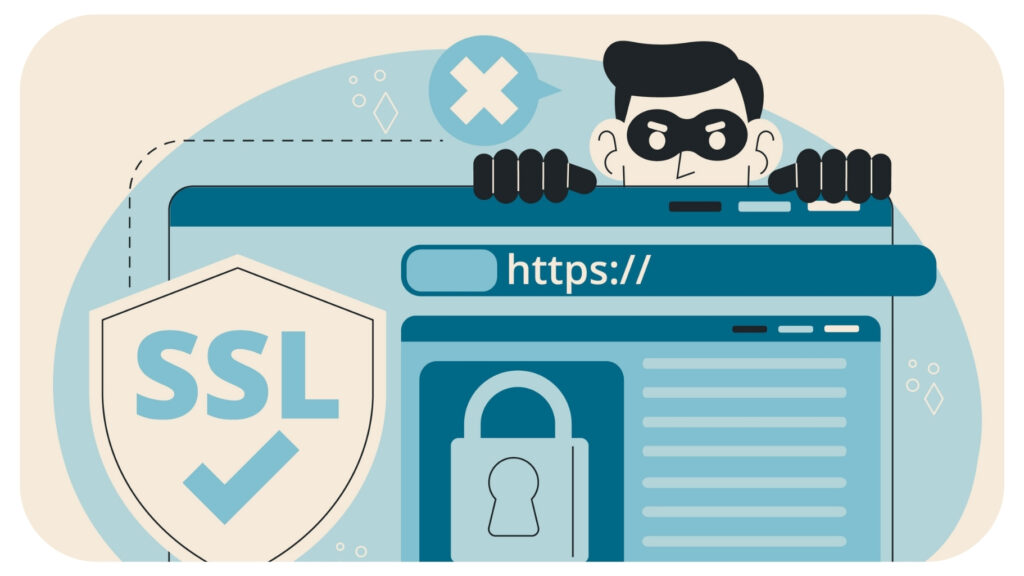
We have already shown a couple of examples of why an SSL certificate is a must-have extension of your website, but there are a bunch of other aspects you need to keep an eye on.
In this part of the article, we share five other aspects with you!
1. It enhances trust and credibility
Recent surveys reveal that 85% of internet users feel more secure using websites with an SSL certificate. That means, if you have this certification, out of 100 people 85 will choose your site over a non-certificated competitor.
As customers’ expectations evolved, and how they require privacy safety at all times during browsing on the web, websites tried to adapt to these demands. That’s why in 2025, 95% of the world’s top websites use SSL certificates – brought to us by Sci-tech-today.
But what is a market standard across the biggest players is still an opportunity across the smaller ones. That’s why if you jump into this world today, getting the SSL certification could definitely boost your website’s number of visitors.
2. It boosts your site’s SEO ranking and visibility
SEO ranking is another key aspect. SEO is the abbreviation of search engine optimization, and refers to tasks that are focusing on climbing forward on the search results page. That is crucial, because when a user enters a search query into its browser, the browser recognizes the query and recommends sites that are connected to that phrase.
However, the user will only open up one of the first few options, leaving the others empty-handed. But becoming one of the first few options is really hard. It requires a perfect website, backlinks, and trusted factors.
The truth is, nobody really knows the formula of Google; therefore, nobody can be sure what factors matter the most when they rank these sites. One thing is sure: Google admitted that trust factors (encryption, hosting plan and option, domain authority scores) matters during these calculations. That’s why having a SSL certification grows your organic appearance.
3. Visitors are afraid of “not secure” warnings
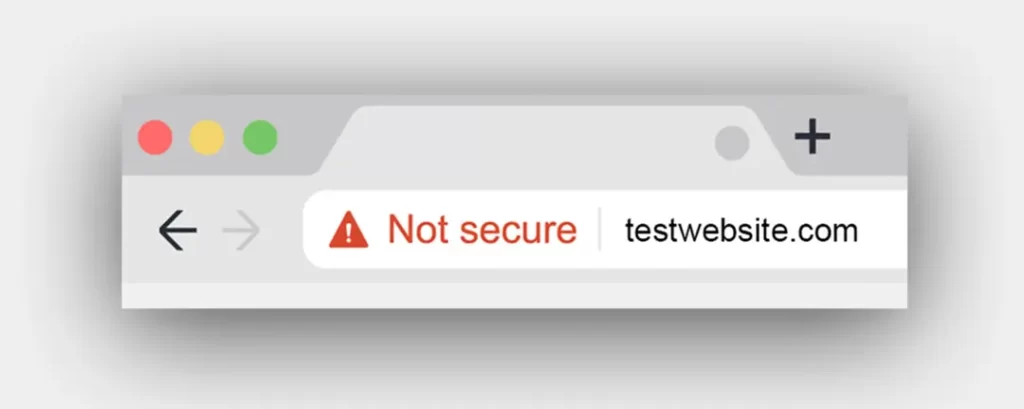
“This site can’t provide a secure connection” – this is how Google indicates to the browsers that it won’t load up a specific website, because there is a serious chance that it may harm the visitor’s device. Although, contrary to the general assumption, this message doesn’t truly mean that Google recognizes the threat. It rather means that certain security protocols are not involved between Google and the website, which is necessary to get trusted by the provider.
However, the potential visitors definitely recognize this as a threat. Even if they wanted to give it a chance, they don’t want to add credit card credentials there, or in many cases, they don’t even want to visit the site at all. If this is already the worst-case scenario with warnings, you can imagine how tragic the situation can be without the SSL-protection.
4. You can easily face fines
An SSL certification is still not mandatory. No regulator can punish your site either if you neglect it. However, if there is a data leak and your site is affected, the regulators will definitely be on the rush to hunt you.
An SSL certification decreases the chance of delivering your visitors’ data to unauthorized third parties. Your visitors data is encrypted, and the data thieves need to find other ways to get this data.
5. You can’t make an interactive site without the certification
You can’t build a truly interactive website without an SSL certificate, because today’s browsers won’t let key features run on an unsecured connection. If your site isn’t using HTTPS, things like login forms, checkout pages, comments, or any kind of user input may be blocked, which is pushing visitors away before they can even engage with your content.
Conclusion
As you can see by now, non-SSL-certified websites no longer have a place on the internet. That can be explained by the customers’ increasing demands, the growing number of cyberattacks, and the implementations of Google’s strict SEO rules.
One thing is sure: protecting your visitors’ data is never a neglected criterion, and even if the other positive effects would not be enough for you, it is still worth implementing.


Most Inside Editorial Team
MostInside is an independent publication focused on growth across lifestyle, business, finance, sports, and digital authority, prioritizing long term value and enduring credibility.