

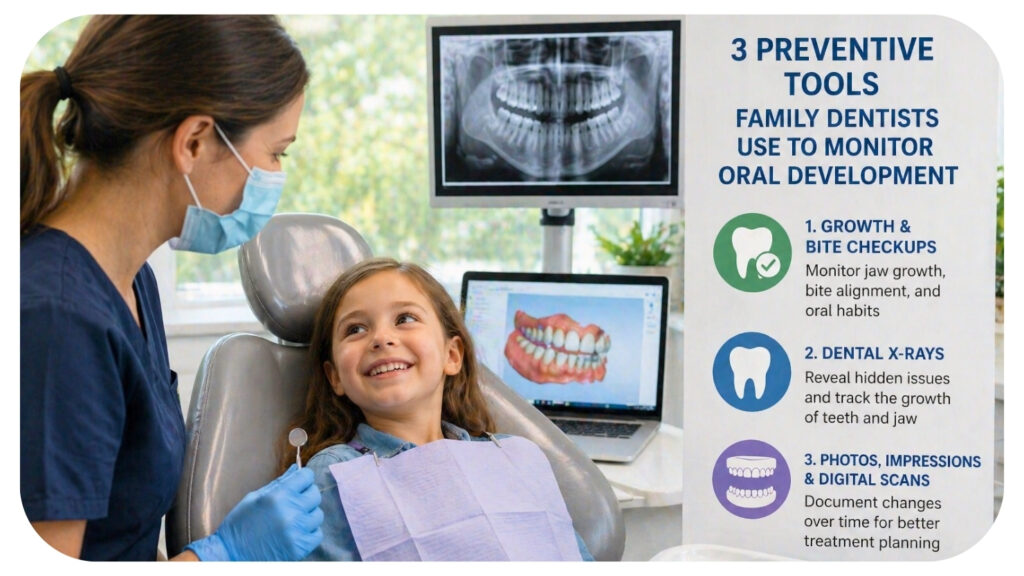
Your child’s teeth tell a story long before pain starts. Small shifts in growth can point to crowding, speech problems, or jaw trouble. You may not see these signs at home. A family dentist tracks them early and often. That care lowers the chance of braces trouble, broken teeth, or long visits later. A dentist in Thousand Oaks uses three simple tools to watch how your child’s mouth grows. Each tool shines a light on hidden changes. Each one helps you act before a problem grows. You learn how baby teeth guide adult teeth. You see how habits like thumb sucking or mouth breathing change the bite. You also gain a clear plan for the next year.
This blog walks you through those three tools so you can ask the right questions, feel prepared at each visit, and protect your child’s future smile.
1. Growth and Bite Checkups
Routine checkups do more than clean teeth. They show how your child’s jaw and bite change over time. You see only one moment. Your dentist sees a pattern.
During each visit, the dentist will usually
- Count and chart baby and adult teeth
- Measure how the top and bottom teeth meet
- Watch how your child breathes and swallows
- Look for wear from grinding or clenching
These small checks add up. They can reveal
- Crowding before teeth twist or overlap
- Open bites from thumb sucking or tongue pushing
- Crossbites that strain the jaw joints
- Early loss of baby teeth from decay or injury
The Centers for Disease Control and Prevention (CDC) notes that early tooth loss and decay raise the risk of pain and missed school days. Regular growth checks help catch those problems before they steal sleep or focus from your child.
2. Dental X‑Rays That Show Hidden Growth
X‑rays let the dentist see what the eye cannot. They show tooth roots, bone levels, and adult teeth that have not appeared yet.
Common types for children include
- Bitewing images to show decay between teeth
- Periapical images to show the full root and bone
- Panoramic images to show both jaws and all teeth at once
With these tools, your dentist can
- Spot decay between tight baby teeth
- Check if adult teeth sit in the right path
- See extra or missing teeth
- Watch jaw growth and joint shape
The American Dental Association (ADA) explains that modern X‑rays use low radiation and careful shields. Your dentist uses them only when they add new, needed information. That balance protects your child while still giving a clear picture of growth.
3. Photos, Impressions, and Digital Scans
Teeth move over months and years. Photos, molds, and digital scans let you and your dentist compare those changes.
These records may include
- In‑office photos of the face and smile
- Close‑up photos of the bite from many angles
- Traditional impressions with trays and putty
- Digital scans that map each tooth in detail
That record helps your dentist
- Track crowding or spacing over time
- Judge how thumb sucking or grinding changes teeth
- Plan if and when to refer to an orthodontist
- Explain choices to you in a clear, visual way
With pictures and models, you can see the change, not just hear about it. That clarity makes it easier to choose the next steps for your child.
How These Three Tools Work Together
Each tool has a purpose. Together, they build a strong picture of your child’s oral growth.
| Tool | What it Shows | When it Helps Most |
|---|---|---|
| Growth and Bite Checkups | Daily habits, bite pattern, tooth wear | Every routine visit from the first tooth onward |
| Dental X‑Rays | Hidden decay, roots, jaw bone, adult teeth | When decay is suspected or during growth checks by age |
| Photos and Scans | Visible change in tooth position and smile | Before and after treatment or when tracking crowding |
When your dentist compares these records over time, small shifts stand out. That early warning lets you
- Start interceptive orthodontic care before problems worsen
- Support habit changes at home, such as stopping thumb sucking
- Plan for future costs and visits with less fear
How You Can Support Oral Development at Home
Your role matters. These tools work best when paired with strong daily habits. You can support your child by
- Brushing with fluoride toothpaste twice a day
- Helping with floss once teeth touch
- Limiting sugary snacks and drinks between meals
- Watching for mouth breathing, loud grinding, or speech concerns
- Keeping regular checkups even when teeth look fine
Every visit is a chance to ask questions. You can ask
- How is my child’s bite changing
- Do you see any early crowding or spacing
- When should we expect adult teeth to come in
- Do we need X‑rays or new photos today
Those questions show your concern and help your dentist focus on what matters most to your family.
Taking the Next Step
Oral growth does not wait. Teeth move. Jaws change. Habits form. With steady checkups, smart use of X‑rays, and clear visual records, you gain control instead of reacting to emergencies.
You do not need to know every detail of dental science. You only need to stay present, ask direct questions, and keep each visit. Your dentist will use these three tools to watch your child’s story unfold and to guide you toward a strong, pain-free smile that lasts.




Leave a Reply