
4 Preventive Dental Care Tips For Busy Families
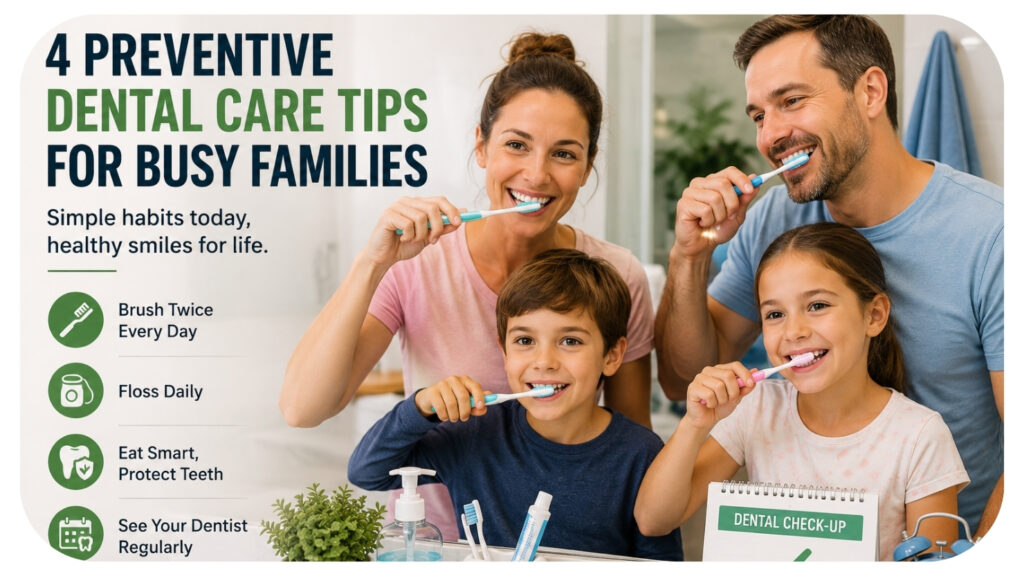
You might feel like you are doing well if everyone gets out the door with shoes on the right feet and a half decent breakfast. In the middle of school runs, work emails, sports, and dinner, remembering floss or scheduling a cleaning with a Stouffville emergency dentist can feel like one task too many. You know your family’s teeth matter, yet dental care often slips to “when things calm down,” and things rarely calm down.end
Because of this, you might notice small warning signs. A child’s “toothache” that comes and goes. Bleeding when you brush. A nagging worry that you are overdue for a checkup, but no time to find a family dentist and juggle appointments. It can feel like you are always one step behind.
The good news is that preventive dental care does not have to be complicated or time consuming. With a few simple routines and some smart planning, you can protect your family’s smiles, avoid painful emergencies, and often save money in the long run. This guide shares four practical preventive dental care tips tailored for busy families, along with a few shortcuts that respect your time and your energy.
Why does preventive dental care feel so hard when you are already doing your best?
Think about a typical weekday. Maybe your morning starts with packing lunches, finding a missing backpack, and getting kids dressed, all while you try to drink coffee before it gets cold. In that rush, reminding your child to brush for two full minutes or to floss can easily fall off the list. You are not careless. You are stretched.
Then there is the emotional side. Many parents carry guilt. You might worry that a cavity means you failed or that you should have started earlier. Children can pick up on that stress and resist brushing even more. If you had bad dental experiences growing up, you may be anxious about taking your own kids, which makes it even easier to postpone routine visits.
Money can also be a concern. You may wonder if professional cleanings, sealants, or fluoride are worth it, or if you should wait until there is a clear problem. Yet untreated cavities and gum disease often cost far more, both in dollars and in missed school or work days.
So, where does that leave you? It helps to know what truly matters in daily care and what a family dentist can support you with, so you are not trying to do everything, only the things that make the biggest difference.
Tip 1: Turn toothbrushing into a simple, non‑negotiable family habit
The foundation of preventive dental care for busy parents is still basic brushing and flossing. The challenge is consistency, not knowledge. Most families already know they “should” brush twice a day. The struggle is doing it, every day, without a fight.
For children, the Centers for Disease Control and Prevention shares clear, age based guidance on oral health tips for kids. Two key ideas stand out. First, start early, even before the first tooth erupts, by gently wiping the gums. Second, use a tiny amount of fluoride toothpaste and help your child brush until they have the hand skills to do it well on their own, often around age 7 or 8.
If you are short on time, try “habit stacking.” Tie brushing to something you already do without thinking. For example, no one leaves the house before “coat, shoes, teeth.” At night, brushing happens right after pajamas. You can also brush together. Kids are more likely to copy what they see than what they are told.
Tip 2: Use small tools that give big preventive benefits
When your schedule is packed, you need tools that work harder so you do not have to. This is where fluoride, floss, and sometimes sealants come in. They sound technical, but their job is simple. They protect against cavities and gum disease so that small issues never have a chance to grow.
An electric toothbrush can help children and adults clean more thoroughly in the same amount of time. Pre threaded flossers or water flossers can turn a tiring task into something more manageable, especially for kids with braces or parents who are exhausted by bedtime.
Sealants are thin coatings placed on the chewing surfaces of back teeth. They block food and bacteria from settling into deep grooves. Many children get them during routine visits, which means one short appointment can prevent years of trouble.
If you wonder whether all of this is really necessary, it can help to see how everyday habits compare with professional care.
What is the real difference between home care and professional preventive visits?
Home care and dental visits are not in competition. They work together. Your daily routine keeps teeth clean and gums healthy. Your family dentist checks for early signs of trouble, cleans areas you cannot reach, and guides you on what matters most for your specific family.
| Preventive Approach | What You Do At Home | What A Family Dentist Provides | Why Both Matter |
|---|---|---|---|
| Daily Cleaning | Brushing twice a day and flossing once a day to remove plaque and food | Professional cleaning that removes hardened tartar you cannot brush away | Home care slows buildup. Professional care resets the “baseline” and reaches hidden areas. |
| Cavity Prevention | Fluoride toothpaste and limiting sugary snacks and drinks | Fluoride treatments and sealants on cavity prone teeth | Home habits lower everyday risk. Office treatments add extra protection in weak spots. |
| Monitoring | Watching for pain, sensitivity, or bleeding gums | Regular exams, X‑rays when needed, and early detection of decay or misalignment | You notice changes. Your dentist sees what you cannot and acts before problems grow. |
| Education | Trying to teach kids to brush well, often during chaotic mornings or bedtime | Child friendly coaching, demonstrations, and age based recommendations | You set the routine. Your dentist backs you up and gives specific tips that stick. |
Organizations such as the American Dental Association explain what to expect at a child’s checkup, including back to school visits, which often focus on prevention and education rather than urgent treatment. You can read more about back to school dental visits for kids to get a sense of how straightforward these appointments can be.
Tip 3: Plan dental visits like you plan school and sports
One reason routine checkups get pushed aside is that they are treated as optional. When life gets busy, optional things lose. If you treat cleanings and exams like you treat school or practice, they are far more likely to happen.
Twice a year is common for many families, although your dentist might suggest a different schedule based on your needs. You can sync these visits with other milestones, such as the start of school and midyear. Some families like to book the next appointment before they leave the office, then add it to shared calendars while they are still at the front desk.
If you are unsure where to start or what “routine” really means, the CDC provides a clear overview of why oral health matters, including its connection to overall health. Understanding that connection can make it easier to give dental care a real place on your family calendar.
Tip 4: Talk about teeth in a calm, shame free way
How you talk about dental care at home has a quiet but powerful effect. If kids hear “If you do not brush you will get a ton of cavities,” they may feel scared or ashamed. Shame rarely creates lasting habits. Calm, steady messages work better.
You might say, “We brush to keep our mouths clean and comfortable,” or “Our teeth help us eat and smile, so we take care of them every day.” If a cavity does appear, treat it as information, not a verdict. Talk with your dentist about what you can adjust, such as snack timing or brushing technique, instead of blaming yourself or your child.
This kind of language also helps adults who carry their own dental anxiety. When you frame care as a normal part of health, not a test you can fail, it becomes easier to pick up the phone, schedule an appointment, and show up, even if you have delayed in the past.
Three simple steps you can take this week
1. Create one “always” brushing moment each day. Choose morning or night, whichever is more realistic, and make that brushing time non negotiable for everyone. Even if you are not perfect twice a day yet, locking in one consistent time builds a strong base. Set a two minute timer or use a short song so kids know when they are done.
2. Do a quick home dental check for each family member. Over a weekend or a quiet evening, gently look in your child’s mouth and your own. Notice any dark spots, chips, or bleeding when brushing. This is not to diagnose anything. It simply helps you see where you might need a professional opinion, instead of waiting for pain.
3. Schedule your next family checkups on the spot. Pull out your calendar and pick a time in the next few months that usually works, such as a late afternoon or a school break. Call your chosen office or book online if available. Treat the appointments like you would school or work. Once they are on the calendar, you are far more likely to keep them.
So, how can your family move toward healthier smiles without adding stress?
Preventive dental care does not ask you to be perfect. It asks you to be consistent in a few key ways. A regular brushing routine, smart use of tools like fluoride and sealants, steady checkups, and calm conversations about teeth can protect your family far more than you might think.
If you feel behind, you are not alone. Many busy parents are in the same place, and change can start with one small decision. Whether you are improving your routine at home or reaching out to a trusted family dentistry provider, every step you take now is a gift to your future self and to your children.
You do not have to overhaul your life. Begin with one new habit or one scheduled visit, then build from there. Your family deserves healthy, comfortable smiles, and with a few thoughtful choices, those smiles are well within reach.
Recommended: Why Cosmetic Dentistry Plays An Important Role In Oral Wellness

Recommended For You
5 Health Insurance Riders to Learn More About

Most Inside Editorial Team
MostInside is a trusted publication helping people navigate real decisions across health, finance, career, home, relationships and technology since 2009. Straight to What Matters.