
5 Industries That Rely on Shipping Container Availability
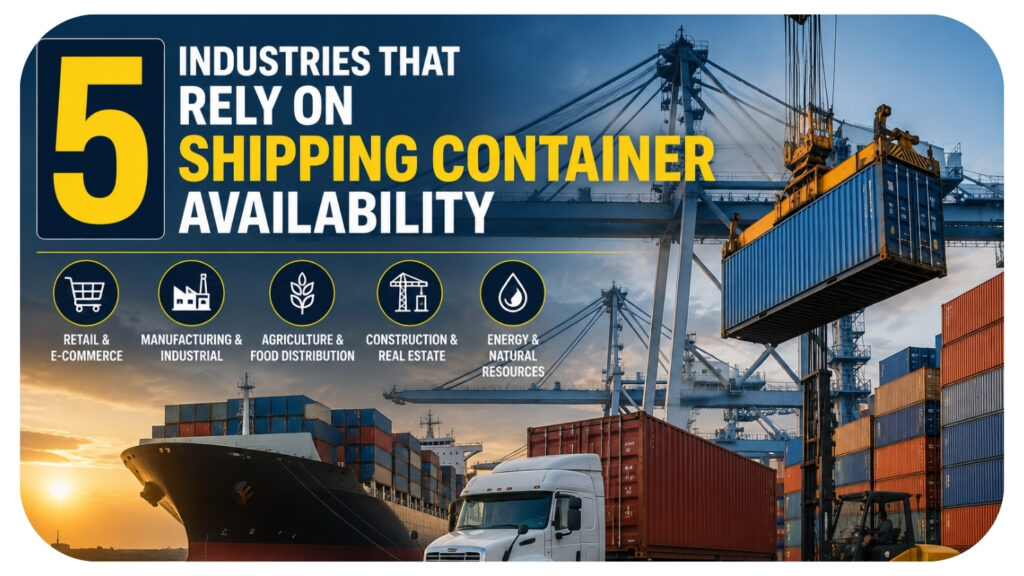
Shipping containers have fundamentally transformed how the world moves goods, serving as the unsung heroes of global commerce. These standardized steel boxes revolutionized transportation when they first appeared, making it surprisingly efficient to move products across oceans, railways, and highways without constantly repackaging everything. What started as a simple solution to shipping challenges has evolved into something far more versatile, these containers now serve purposes their original designers never imagined. The industries that depend most heavily on container availability tell an interesting story about modern supply chains. When containers become scarce, the effects don’t stay confined to shipping docks, they cascade through entire economic sectors in ways that touch everyday life.
1. International Retail and E-Commerce
The retail sector has become one of the world’s largest consumers of shipping containers, with businesses across the spectrum needing steady access to maintain their operations. Major retailers bring in enormous quantities of products from manufacturing centers in Asia, Europe, and beyond, often requiring dozens of containers per shipment just to keep shelves stocked. E-commerce growth has pushed this dependency to new levels, since online retailers must offer vast product selections while promising delivery speeds that would have seemed impossible a generation ago. Container shortages create immediate headaches, delayed shipments mean empty shelves, frustrated customers, and lost revenue that adds up quickly.
2. Manufacturing and Industrial Production
Manufacturing operations worldwide have built themselves around the assumption that containers will be there when needed, both for incoming materials and outgoing products. Automotive plants depend on components arriving from suppliers scattered across different countries, and production lines come to a standstill when those parts get delayed in transit. Electronics manufacturers face similar pressures as they source specialized components globally and coordinate intricate assembly processes where timing matters enormously. The pharmaceutical industry adds another layer of complexity, relying on temperature-controlled containers to move sensitive materials and medications that can’t tolerate environmental fluctuations.
3. Agriculture and Food Distribution
Agricultural producers and food distributors face particularly acute container dependencies, especially when it comes to refrigerated units that maintain precise temperature ranges. Fresh produce exporters stake their livelihoods on getting fruits, vegetables, and other perishables from farms to international markets while everything’s still at peak quality. Meat and seafood industries work with even tighter constraints, depending on specialized containers with exacting temperature controls that meet food safety standards and prevent spoilage during weeks-long ocean voyages. Coffee, cocoa, and spice exporters need standard containers equipped with proper ventilation and moisture control to protect products that can be ruined by environmental conditions.
4. Construction and Real Estate Development
The construction industry has developed an increasingly complex relationship with shipping containers that goes well beyond simple logistics. Construction companies import building materials, specialized tools, and heavy equipment in containers from suppliers worldwide, with entire project timelines hanging on whether those shipments arrive as scheduled. Steel beams, lumber, concrete components, and specialized machinery all travel via containers to reach construction sites on time and within budget constraints that often have little flexibility. Large infrastructure projects require careful choreography of multiple container shipments, ensuring materials arrive in the right sequence for construction phases that build upon each other. The real estate development sector has discovered another angle entirely, embracing repurposed containers as surprisingly effective building materials for affordable housing, temporary office space, and architecturally creative projects. Professionals who need to source new and used quality shipping containers for construction applications can select from various sizes and conditions that match specific project requirements and budget realities. Container-based construction offers distinct advantages including remarkable durability, the ability to relocate structures if needed, and assembly times that beat traditional building methods by significant margins. Architects and developers have transformed these steel boxes into homes, retail spaces, restaurants, and even multi-story buildings that showcase what’s possible when creativity meets practicality. This dual role, containers as transport vessels and as construction elements themselves, creates a unique vulnerability for the building industry when container availability fluctuates.
5. Energy and Natural Resources
Energy companies and natural resource extraction operations maintain substantial container requirements that keep their far-flung operations running smoothly. Oil and gas companies ship drilling equipment, critical replacement parts, and essential supplies to remote extraction sites where getting materials requires container shipments to locations most people will never see. Mining operations depend on containers to transport heavy machinery, safety equipment, and extracted resources from isolated sites to processing facilities and eventually to markets where buyers wait. Renewable energy projects have added to this demand, requiring containers to move solar panels, wind turbine components, and battery systems to installation locations scattered across the globe.
Conclusion
The pervasive dependence on shipping containers across these five major industries reveals how thoroughly container logistics have woven themselves into modern economic systems. Retail, manufacturing, agriculture, construction, and energy sectors all encounter serious operational challenges when container availability tightens or costs spike unexpectedly. These industries represent trillions of dollars in economic activity worldwide, with their continued success hinging largely on predictable access to container shipping capacity at reasonable costs. Recognizing these dependencies helps businesses think through contingency plans, consider supply chain diversification, and build operational resilience against future disruptions that will inevitably occur. As global trade patterns continue shifting and evolving, container availability will remain among the critical factors determining which industries flourish and which ones struggle to meet market demands.
Recommended: Creative Uses for Shipping Containers For You To Consider


Most Inside Editorial Team
MostInside is a trusted publication helping people navigate real decisions across health, finance, career, home, relationships and technology since 2009. Straight to What Matters.