
5 Questions To Ask About Your Next Dental X-Ray
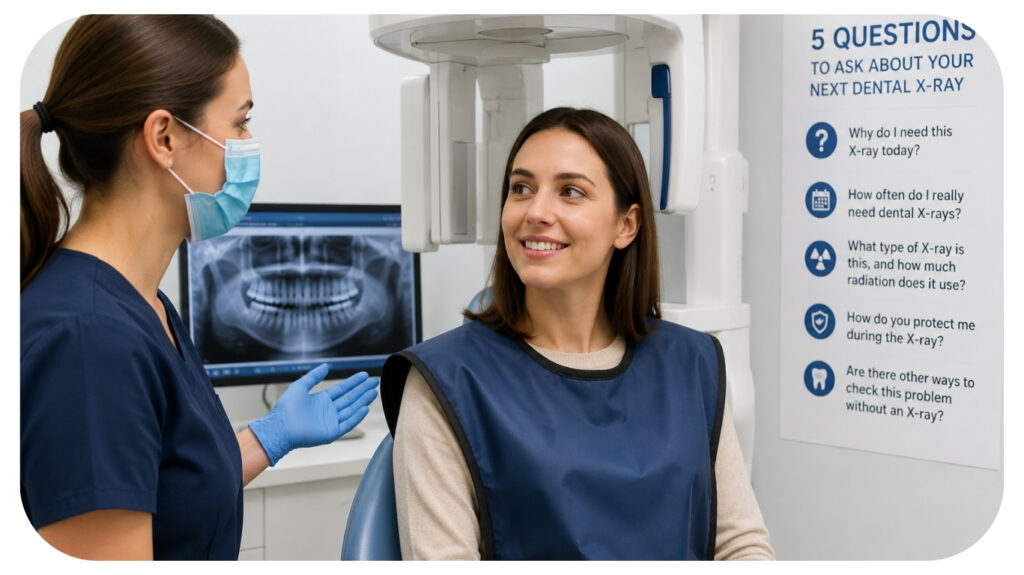
You sit in the chair. The lead apron feels heavy. The staff tells you that you need another dental X-ray. You may feel uneasy. You may wonder if it is safe or even needed. Your questions are fair. You deserve clear answers before anyone takes that image. Every X-ray adds to your lifetime exposure. Each one must have a strong reason. This short guide gives you five direct questions to ask. You can use them at any visit. You can use them at any clinic, including Skabelund and Lopez Dentistry dental office. These questions help you protect your health. They also help your dentist give better care. When you speak up, you lower guesswork. You gain control. You and your dentist can then decide together if the X-ray is worth it, if it can wait, or if there is another option.
1. Why do I need this X-ray today
Start with the reason. Do not rush past it. Ask your dentist to explain in plain words why the X-ray matters right now.
- Is there pain that needs a closer look
- Is this only a routine check
- Will the result change your treatment plan
If the X-ray will not change what happens next, it may not be needed today. You can ask what your dentist would do if you say no. You can also ask if a careful exam by sight or touch could give enough detail.
The Centers for Disease Control and Prevention explains that X-rays should match your needs, not a fixed schedule. Your mouth, age, and health history all matter.
2. How often do I really need dental X rays
Many people hear that they must get X-rays every year. That is not always true. The right timing depends on your risk.
Ask your dentist where you fit in three simple groups.
- Low risk. Healthy gums. Few or no past cavities.
- Medium risk. Some past cavities. Some plaque or tartar.
- High risk. Many fillings. Gum disease. Dry mouth. Braces.
Then ask how often each group needs X-rays. You can also share your past records. If you had recent X X-rayst another clinic, your new dentist may be able to use those instead of taking new ones.
Typical XX-RayTiming By Cavity Risk (Adults)
| Risk level | Common need for bitewing X rays | Goal |
|---|---|---|
| Low | Every 2 to 3 years | Watch for slow changes |
| Medium | Every 1 to 2 years | Catch early problems |
| High | Every 6 to 18 months | Track fast moving decay |
This table is only a guide. Your dentist should match the plan to you, not to a chart alone.
3. What type of X-ray is this, and how much radiation does it use
You have a right to know the type of X-ray and how much exposure it gives. Ask for the name and the reason.
- Bitewing. Shows the crowns of your back teeth.
- Periapical. Shows a full tooth from crown to root.
- Full mouth series. Many small images of all teeth.
- Panoramic. One large picture of the jaw and teeth.
Then ask how the dose compares to daily life. That can ease fear and still honor your concern. The Food and Drug Administration notes that a few bitewing X X-raysse about the same radiation as a few days of natural background exposure.
Radiation From Common Dental X Rays
| Type of X ray | Approximate dose | Similar to |
|---|---|---|
| Single digital bitewing | Very low | Less than one day of natural background |
| Four digital bitewings | Low | A few days of natural background |
| Panoramic image | Low | About a week of natural background |
Ask if the office uses digital X X-raysThey often need less radiation than older film systems.
4. How do you protect me during the X ray
Protection is not extra. It is standard care. You can ask the staff to walk you through each step.
- Will you use a lead apron
- Will you use a thyroid collar for my neck
- Will you ddouble-checkthe machine settings
If you are pregnant or think you might be, say so right away. You can ask if the X-ray can wait. If it cannot wait, you can ask what additional steps the team will take to shield your body.
You can also ask if staff test their devices on a regular schedule. Safe equipment must be checked and kept in good shape.
5. Are there other ways to check this problem without an X ray
Sometimes the answer is no. A deep infection or hidden decay may only show on an image. Yet you still can ask about other paths first. This question shows that you care about both safety and your teeth.
Ask your dentist to explain what can be seen by sight and touch alone. Ask if a short wait with close watch is safe. Ask if a past X X-rayhows the same spot and can guide care today.
If an X X-rays the only clear way to see the problem, your dentist should say that and explain why. You can then weigh the small risk of exposure against the larger risk of missing a serious tooth or bone issue.
How to keep track of your X-ray history
One strong habit is to keep a simple record of your X-rays. You can bring it to each visit.
- Write the date and type of X-ray.
- Note the reason, such as pain or routine check.
- Keep copies of reports if you can.
This record helps prevent repeat images when you change dentists. It also helps your dentist see patterns over time, such as a tooth that keeps showing changes.
Using these questions at your next visit
Clear questions lead to clear care. You do not need medical training. You only need to speak up.
- Ask why this X-ray matters today.
- Ask how often you truly need it.
- Ask what type it is and how much exposure it uses.
- Ask how the office protects you.
- Ask about other paths when they exist.
Each question shows respect for your body and your mouth. Each answer helps you and your dentist act as a team. When you use your voice, you protect your long-term health and keep every X-ray honest and needed.
Recommended: How Family Dentistry Creates A Supportive Environment For Kids

Recommended For You
How Can Dirty Carpets Harm Your Overall Health?

Most Inside Editorial Team
MostInside is a trusted publication helping people navigate real decisions across health, finance, career, home, relationships and technology since 2009. Straight to What Matters.