

You finally fixed that chipped tooth, brightened your smile, or finished a long round of cosmetic work with a trusted dentist in Ann Arbor, MI. People notice. You catch yourself smiling in the mirror more often. Then, almost immediately, a new worry shows up in the back of your mind. How long will this last? What if the whitening fades or the veneers stain or the bonding chips?end
If you are feeling a mix of relief and anxiety, you are not alone. The “before” may have been years of hiding your teeth in photos or covering your mouth when you laughed. The “after” feels fragile, like something that could disappear if you do one wrong thing at home.
The good news is that you have more control than it might feel. With a few steady habits, you can protect your investment and keep your smile looking fresh for years. In short, you need a simple plan to care for your cosmetic dental work daily, know when to get help, and understand what actually damages results and what is harmless.
So, where does that leave you when you stand at the bathroom sink, toothbrush in hand, wondering what is safe?
Why maintaining your new smile feels stressful and what really puts it at risk
Cosmetic dentistry covers many treatments. You might have whitening, bonding, veneers, crowns, or orthodontic work like clear aligners. Each one has its own care instructions, and that can feel overwhelming. You may hear different opinions from friends, social media, and even conflicting advice online.
There is also the emotional side. You probably invested time, money, and trust into your dentist. Maybe you took time off work, rearranged childcare, or stretched your budget. Because of that, the idea of “ruining” your new smile can create real anxiety. You might start brushing too hard, using every whitening product you can find, or avoiding certain foods entirely, just in case.
The problem is that fear can push you toward habits that do more harm than good. For example, overusing whitening strips can make teeth sensitive and roughen the enamel. Scrubbing your teeth aggressively can cause gum recession and expose the edges of veneers or crowns. Skipping regular dental checkups because you are scared of bad news can let small issues become expensive repairs.
So what typically threatens cosmetic dentistry results at home?
- Acidic drinks like soda, energy drinks, and citrus juices that soften enamel and stain edges.
- Hard or sticky foods that can crack bonding or chip porcelain.
- Grinding or clenching, especially at night, that can wear down restorations.
- Smoking or vaping that can discolor teeth and weaken gums.
- Inconsistent home care that lets plaque, tartar, and stains build up.
The solution is not to live in fear. It is to create a realistic routine that respects your cosmetic work without making you miserable. You do not need perfection. You need consistency.
What does smart at-home care really look like for cosmetic dentistry?
Think of maintaining your smile as a partnership between your home care and your dentist’s office. At home, you handle the daily work. In the office, your dentist does the fine tuning and early problem solving.
For the daily part, the basics matter more than any “miracle” product. The American Dental Association explains that thorough brushing and cleaning between the teeth are the foundation of good home care, and that is just as true when you are trying to protect cosmetic work. You can read more about effective home routines in this ADA guide to home oral care.
Good home care for long lasting cosmetic dental results usually includes gentle brushing twice a day, daily flossing or interdental cleaning, and thoughtful choices about what you eat and drink. On top of that, you add a few habits that protect porcelain or bonding from extra wear and staining.
Still wondering how much you can safely do at home and when you should leave things to a professional? A simple comparison can help.
DIY care vs professional support for your cosmetic smile
You might feel pressure to handle everything yourself, especially after paying for treatment. At the same time, you do not want to ignore issues that really need a dentist’s attention. This comparison can help you sort out what belongs in your bathroom cabinet and what belongs in the dental chair.
| Situation | Safe to manage at home | Time to call your dentist |
|---|---|---|
| Daily stain prevention after whitening or veneers | Use soft toothbrush, nonabrasive fluoride toothpaste, limit dark drinks, rinse with water after coffee or tea. | Professional cleaning and polishing if stains build up or whitening looks uneven. |
| Mild sensitivity after whitening or new restorations | Use sensitivity toothpaste, warm (not hot) drinks, and follow your dentist’s written instructions. | Contact your dentist if pain is sharp, lingers, or wakes you at night. |
| Small chip in bonding, veneer, or crown | Rinse gently, avoid chewing on that side, and keep the area clean. Do not file or smooth it yourself. | See your dentist promptly. A small repair now is usually easier and less costly than a full replacement later. |
| Yellowing months after whitening | Improve brushing and flossing, review diet, and consider dentist-approved touch up trays if you were given them. | Professional evaluation to rule out deeper staining or decay before more whitening. |
| Bleeding gums around cosmetic work | Gently improve flossing technique and brushing at the gumline for a few days. | If bleeding continues or gums look swollen or sore, see your dentist or hygienist for a checkup and cleaning. |
For more detail on daily habits that protect both natural teeth and restorations, MedlinePlus offers helpful patient instructions on taking care of your teeth and gums at home.
5 tips for maintaining cosmetic dentistry results at home without losing your mind
You do not need a complicated routine to protect your cosmetic work. You need a focused one. These five tips are a solid foundation for any type of cosmetic treatment.
1. Brush gently but thoroughly twice a day
It is tempting to scrub hard, especially if you are worried about stains, but hard brushing can wear away enamel and irritate your gums. That can expose the edges of veneers, bonding, and crowns, making them look uneven or older than they are.
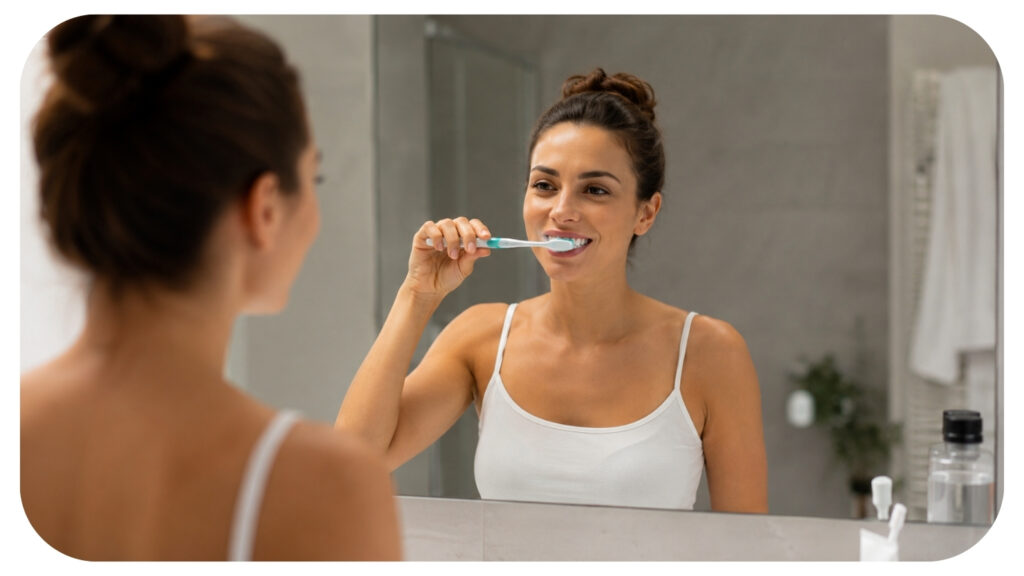
Use a soft bristle toothbrush and a nonabrasive fluoride toothpaste. Angle the bristles toward the gumline and make small, circular motions. Spend at least two minutes brushing. Think of it as polishing, not scrubbing. This protects both cosmetic materials and the natural tooth underneath.
2. Protect your smile from stains and acids
Whitening results and porcelain work can be dulled by frequent exposure to dark or acidic drinks. You do not need to give up coffee or tea completely, yet how you drink them matters.
- Drink dark beverages in one sitting instead of sipping all day.
- Use a straw for iced coffee or tea when possible.
- Rinse with plain water after wine, soda, or citrus drinks.
- Limit tobacco and vaping, which can quickly discolor restorations.
Cosmetic materials do not respond to whitening the same way natural teeth do. If your natural teeth darken but your veneers or bonding stay the same color, the contrast can become obvious. Protecting both from new stains helps avoid that mismatch.
3. Be kind to your teeth when you eat and sleep
Most cosmetic damage at home happens not in the bathroom, but at the dinner table or in bed. Chewing ice, biting pens, or using your teeth to open packages can chip bonding or fracture porcelain. Hard candies and very sticky foods can also put pressure on restorations.
Try to:
- Avoid chewing ice, popcorn kernels, or very hard nuts with front teeth.
- Cut tougher foods into smaller pieces instead of tearing with your teeth.
- Wear a night guard if you grind or clench. Your dentist can make one that fits over veneers and crowns comfortably.
Protecting your teeth from mechanical stress is just as important as protecting them from stains. This is how you keep cosmetic dental treatment results looking smooth and intact over time.
Recommended: 3 Signs Cosmetic Dentistry Could Help Improve Your Smile Confidence
4. Clean between your teeth every day
Flossing or using interdental brushes is not just about preventing cavities. It also keeps the edges of veneers, crowns, and bonding free of plaque that can cause gum inflammation. When gums are swollen or receding, the margins of your cosmetic work start to show, which can make even beautiful work look “off.”
If traditional floss is hard for you to use, consider:
- Pre threaded flossers for tight spaces.
- Interdental brushes for larger gaps or around bridges.
- Water flossers as an extra tool, especially around complex cosmetic work.
Gentle, daily cleaning between teeth supports gum health, which is the frame that makes your smile look natural and balanced.
5. Keep regular checkups and ask for a cosmetic focused cleaning
Even perfect home care cannot replace professional maintenance. Regular visits give your dentist and hygienist a chance to check the fit and surface of your restorations, polish away stains safely, and catch small issues early.
At your visit, mention that you have cosmetic work and want to keep it looking its best. Hygienists often have specific polishing pastes and tools that are kinder to porcelain and bonding. They can also guide you on safe whitening touch ups if your dentist has approved them.
Consistent checkups support every type of general and cosmetic dentist service you have had, from fillings to veneers. Think of these visits as tune ups for your smile.
Moving forward with confidence, not fear
It is normal to feel protective of your new smile. You worked hard for it. Instead of worrying about every sip of coffee or every snack, focus on a few steady habits. Brush gently and thoroughly, protect your teeth from stains and stress, clean between them daily, and keep your regular dental visits. Over time, these small actions add up to years of confident photos, comfortable chewing, and easy smiles.
You do not have to be perfect. You just have to be consistent. If something feels off, reach out to your dentist, ask questions, and adjust your routine. With the right care, your cosmetic results can stay bright, strong, and natural looking for a long time.
Recommended: A Look at Minor Dental Symptoms That Could Actually Point to Major Hidden Issues


Leave a Reply