
6 Preventive Strategies General Dentists Recommend For Busy Patients
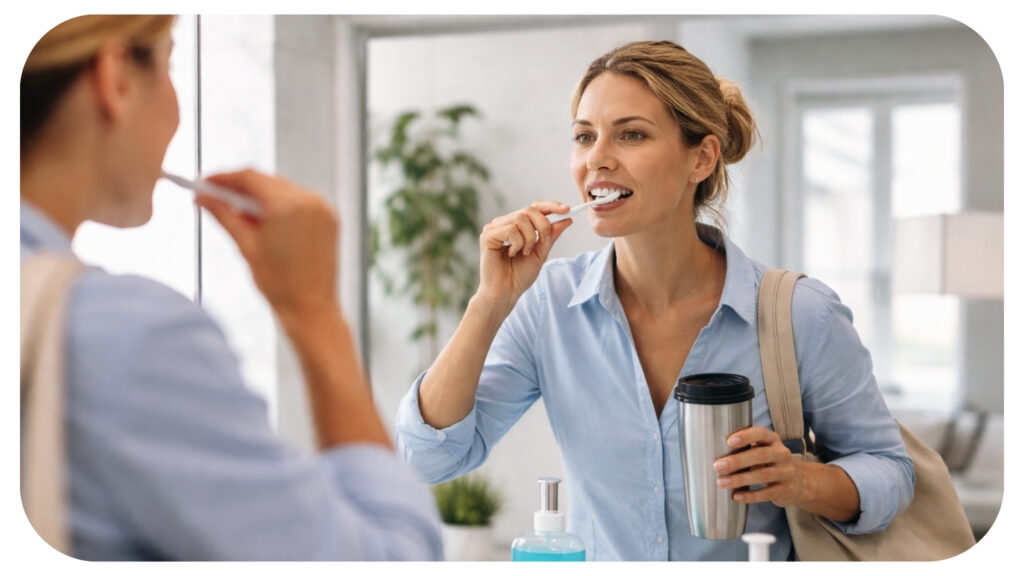
Your schedule is packed. You race between work, family, and errands, and your own health often falls last. Your teeth pay the price. Cavities, gum infection, and dental pain do not wait for a free day on your calendar. They grow quietly. Little Elm dentistry often sees busy patients only when something hurts. By then, treatment is longer, more costly, and more stressful. You deserve better. You can protect your mouth with small steps that fit into your day. You do not need special tools. You do not need long appointments. You only need clear habits that you can keep. This blog shares six simple preventive strategies that general dentists trust for people with no time. You will see how to protect your teeth at home, at work, and on the road. You can keep your smile strong while your life stays full.
1. Brush with purpose, not pressure
Rushed brushing causes harm. You scrub fast. You miss spots. You hurt your gums. Then bacteria stay on your teeth and under your gumline.
Use this simple plan.
- Brush twice a day for 2 minutes.
- Use a soft toothbrush.
- Angle bristles toward the gumline.
- Use short strokes on each tooth.
The Centers for Disease Control and Prevention reports that cavities are the most common chronic disease in many children and adults. Daily brushing is your first shield. You do not need force. You need time and steady motion.
If you rush in the morning, set a 2-minute timer on your phone. At night, keep your brush by the sink with toothpaste already open. That simple setup saves seconds and keeps you from skipping.
2. Floss once a day, even if it is not perfect
Food and plaque between teeth cause silent damage. You may not see it. You may not feel it. Yet gum loss and cavities grow in those tight spots.
You do not need perfect flossing. You only need daily contact.
- Choose regular floss, floss picks, or small brushes.
- Slide gently between teeth.
- Curve along each tooth side.
- Aim for once a day, any time.
Many busy patients floss in the car before work or while watching a show. That counts. Consistent effort beats a perfect but rare routine.
3. Turn snacks into protection, not risk
Your mouth does not react only to what you eat. It reacts to how often you eat. Frequent snacks keep sugar on your teeth. That feeds bacteria and raises acid. Then your enamel thins and weak spots form.
Use your snacks to guard your teeth.
- Pick water instead of soda or juice.
- Choose nuts, cheese, or plain yogurt.
- Limit sticky snacks like candy or dried fruit.
- Rinse your mouth with water after any treat.
The National Institute of Dental and Craniofacial Research explains that bacteria feed on sugars and starches, then create acids that break down enamel. You can cut that damage with smart snack choices and simple rinsing.
4. Use fluoride and sealants as quiet helpers
Fluoride and sealants work while you live your day. They do not need effort once in place.
- Fluoride strengthens enamel.
- Sealants cover deep grooves on back teeth.
- Both reduce cavity risk.
Ask your dentist about:
- Fluoride toothpaste for daily use.
- Fluoride varnish during cleanings.
- Sealants for children and adults with deep grooves.
These steps are fast during an office visit. Yet they protect your teeth during work, sleep, and meals. They save you from emergency visits that steal hours from your calendar.
5. Plan short, regular visits instead of crisis visits
It may feel smart to skip cleanings to save time. That choice often leads to longer treatment later. Small problems grow. Then you face root canals, extractions, or deep cleanings that take many visits.
Routine checkups catch problems early.
- Cleanings remove hardened plaque.
- Exams find weak spots before pain starts.
- X rays show hidden decay between teeth.
Book your next visit before you leave the office. Then treat it like any work meeting. You would not cancel a key meeting for a minor errand. Give your mouth the same respect.
6. Build quick habits into your daily rhythm
You do not need more willpower. You need smoother habits that fit into your day without thought.
Use the rule of three.
- Morning: Brush for 2 minutes after you get dressed.
- Midday: Drink water after coffee or lunch.
- Night: Brush and floss before screens or reading.
Set visual cues.
- Keep a travel brush and paste in your bag.
- Store floss by your couch or nightstand.
- Place a water bottle on your desk.
These small cues nudge you toward action. They remove the need to think or plan. That matters when you feel worn down.
Quick comparison of time and cost
The next table shows how simple habits compare with common dental problems.
| Choice | Time per day or visit | Typical cost level | Stress level |
|---|---|---|---|
| Brush and floss daily | 3 to 4 minutes | Low | Low |
| Use fluoride toothpaste | No extra time | Low | Low |
| Routine checkup every 6 months | 1 hour per visit | Low to medium | Low |
| Filling for a cavity | 1 to 2 hours per visit | Medium | Medium |
| Root canal and crown | 2 to 3 visits | High | High |
| Emergency visit for severe pain | Unplanned hours | High | High |
Bring it together in your own life
Your mouth does not ask for perfection. It asks for steady care. You can protect your teeth without long routines or complex tools.
- Brush twice a day with care.
- Floss once a day in any place that works.
- Use water and smart snacks to cut sugar hits.
- Ask about fluoride and sealants during visits.
- Keep regular checkups on your calendar.
- Use cues to make these steps part of your daily rhythm.
These choices guard your time, your comfort, and your money. They keep you out of the dental chair for emergencies. They let you show up for work and family without the weight of tooth pain. Your schedule is crowded. Your care can still be strong.


Most Inside Editorial Team
MostInside is a trusted publication helping people navigate real decisions across health, finance, career, home, relationships and technology since 2009. Straight to What Matters.