

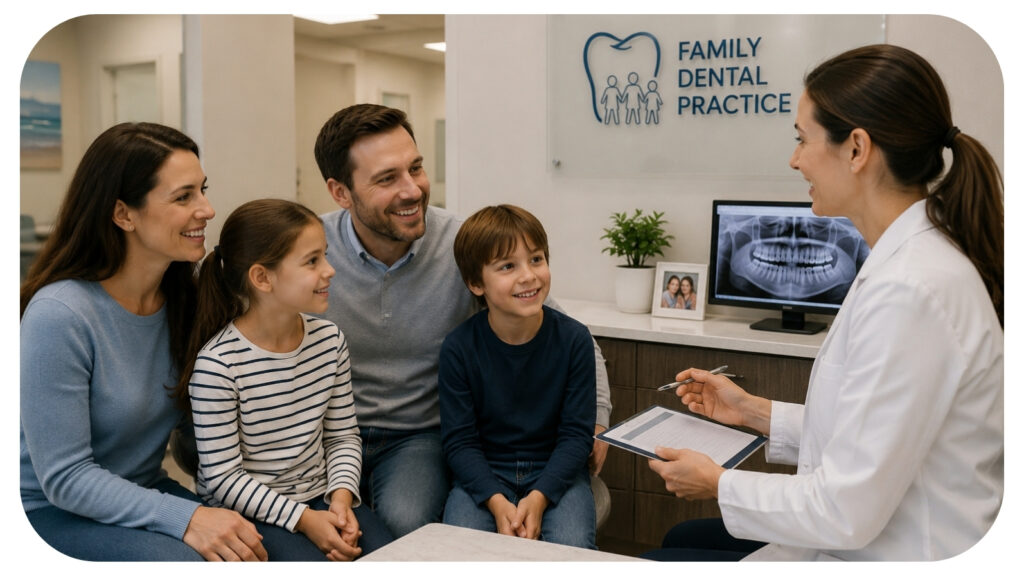
You might be feeling a quiet pull to make a change with your dental care. Maybe you have a growing family, or an aging parent moved in, or you are simply tired of juggling different dentists for different people. Whether you’re looking into same day crowns in San Jose or just hoping to consolidate care, it can feel messy and scattered, and you may wonder if there is a calmer way to handle everyone’s teeth and health.end
Right now, you might be in that in-between space. You have a dentist you know, but appointments feel like a puzzle to coordinate. Your child is nervous every time they visit someone new. You are not sure if your current office is really set up to care for your whole family over time. Because of this tension, you might be asking yourself if it is time to move to a family dental practice that can see everyone under one roof.
The short answer is that you are ready for that transition when you want consistency, long term relationships, and care that fits your family’s real life, not the other way around. Below are six clear signs that you are ready, what they mean in everyday terms, and how to take your next steps without feeling overwhelmed.
Are your dental visits starting to feel harder than they should?
One of the first signs is simple. Everything feels like a hassle. You are trying to remember which child goes to which dentist, at which office, on which day. You might have a pediatric dentist for the little ones, an adult dentist for you, maybe a specialist for someone else. Nothing is coordinated, and you spend more time managing calendars than focusing on care.
This is more than an inconvenience. When things are complicated, you are more likely to postpone cleanings or skip follow up visits. That can mean small problems, like a tiny cavity, quietly turn into bigger ones that cost more money and more time.
A family dentist is trained to see children, adults, and often seniors in the same setting. They can schedule multiple family members together, keep everyone’s records in one place, and often track patterns that a scattered system would miss. When you feel that your dental care is running you, instead of you running it, that is a strong sign a family focused practice may serve you better.
Do you want one trusted dentist for every stage of life?
Another sign appears when you start to crave stability. You want one person or one team who knows your family history, your fears, and your goals. Maybe your child is anxious and needs a gentle, patient approach. Maybe you have a history of gum problems. Maybe a grandparent at home struggles with dry mouth or denture issues. You want someone who understands all of that without starting over at every office.
Because oral health changes with age, it helps when the same practice follows you over time. Many general and family dentistry clinics are designed for this continuity. For example, a family dentist can see your child when they are losing baby teeth, guide them through braces, and later help them protect their teeth as young adults. They can also manage adult issues like worn teeth, grinding, or early gum disease in the same setting.
If you find yourself repeating your story to new providers, or if you are worried your care is fragmented, that is another clear sign that a family centered practice could be a better fit.
Are you concerned about cost, prevention, and long term health?
Money and time are often at the heart of this decision, even if you do not say it out loud. You may be worried that switching dentists will be expensive or confusing with insurance. At the same time, you may sense that staying where you are is costing you in other ways, like missed preventive care or rushed visits.
Here is the tension. Reactive care feels cheaper in the moment, because you only pay when something hurts. Preventive care can feel like “one more bill.” Yet research consistently shows that regular cleanings, checkups, and early treatment save families money and pain over the long run. Family practices usually focus heavily on prevention, because they expect to care for you for years, not just during emergencies.
For example, a child who sees a dentist regularly for cleanings and sealants is less likely to need major fillings or crowns later. An adult who is monitored for gum disease can avoid tooth loss and expensive restorative work. You can read more about typical services offered in general and family dentistry settings to get a sense of what ongoing care can look like.
If you are starting to think in terms of “How do I keep our mouths healthy over time?” rather than “How do I fix this one problem?”, that mindset shift is a strong sign you are ready for a family dentist.
Do you wish dental visits felt calmer and more child friendly?
Think about the emotional side. Maybe you have a child who cries before every appointment, or a partner who has had a bad experience in the past and avoids the dentist. You might feel guilty, torn between pushing them to go and wanting to protect them from stress.
Family dentists are generally used to seeing nervous children and anxious adults. Many design their offices with families in mind, offering quieter rooms, clear explanations, and a slower pace when needed. They often use simple language, show tools ahead of time, and focus on building trust, not just finishing the procedure.
When you catch yourself thinking, “I wish we had someone who really understands my child” or “I want a place where my whole family feels safe,” that is another sign that a family dentist may be the right next step.
Would you like better guidance and reliable information?
Modern dental information can feel overwhelming. One website tells you something is dangerous. Another says it is normal. Social media adds more noise. You might be unsure about fluoride, sealants, X rays, or when your teenager should have wisdom teeth checked. You may want someone you can ask all your “Is this normal?” questions without feeling rushed or judged.
Good family practices often act as guides, not just technicians. They explain what they see, why it matters, and what your options are. They can also point you to trustworthy resources, such as patient education pages from organizations like the Indian Health Service, which offers helpful dental patient resources.
If you are tired of guessing and want a clear, steady source of advice for your whole family, that is another sign you are ready for this kind of care.
Are you managing multiple needs, ages, and health issues at once?
Maybe your life looks something like this. You have a toddler who sucks their thumb, a teenager with braces, an adult with sensitive teeth, and an older relative who wears dentures. On top of that, someone in your home has diabetes, heart disease, or another condition that affects oral health. You are trying to connect the dots, yet each provider only sees one small part.
A family dental care provider is often more comfortable handling these overlapping needs. They understand how medical conditions, medications, and age affect the mouth. They know when to refer you to a specialist and when they can manage things in house. When one practice has the full picture, your care tends to be safer, more coordinated, and less stressful.
If your home feels like a small community with many different needs, that is one more sign a unified family practice could simplify your life.
How does a family dental practice compare to separate providers?
It can help to see the differences in a simple comparison. This is not about saying one option is always “bad” and the other is always “good.” It is about which approach fits the season of life you are in.
| QUESTION | SEPARATE DENTISTS FOR EACH PERSON | SINGLE FAMILY DENTAL PRACTICE |
| How many offices and schedules do you manage? | Multiple offices and calendars, more travel | One office, often grouped family appointments |
| Who knows your full family history? | Each provider knows only their patient | One team sees patterns across the whole family |
| Support for children and anxious patients | Varies widely, may not focus on kids or families | Commonly set up for child friendly and family care |
| Preventive focus over time | Can be good, but often less coordinated | Strong focus on long term prevention for all ages |
| Emotional comfort and trust | Relationship built separately with each office | One trusted home for dental care through life stages |
If you read this table and feel yourself leaning toward the right side, that is your intuition telling you that a family focused approach may be the next right move.
What can you do right now to move toward better family dental care?
When you are already busy, even a positive change can feel heavy. The goal is not to overhaul everything overnight, but to take clear, manageable steps.
1. Clarify what matters most to your family
Take a few minutes and list what you truly want from a dentist. Is it gentle care for nervous children. Flexible scheduling. Clear explanations. Help managing medical conditions. Prioritize your top three. This simple step makes it easier to evaluate any practice you consider, because you are clear on what “good” looks like for you, not just in general.
2. Research and shortlist two or three family practices
Look for practices that specifically mention general and family dentistry, preventive care, and comfort for all ages. Read reviews with an eye for patterns about how they treat patients, not just how fancy the office looks. If you have special needs in your family, such as disabilities or chronic illness, check that the practice is experienced and welcoming in those areas.
Call and ask simple but telling questions. For example. “Can you see my children and me on the same day.” “How do you support anxious patients.” “How do you handle emergencies.” Their answers, and the way they speak to you, will tell you a lot.
3. Schedule one “trial” visit and evaluate the fit
Instead of switching everyone at once, choose one person, perhaps you or one child, and schedule a cleaning and exam. Use this visit to observe. How does the staff speak to you. Do they explain findings in plain language. Does the space feel calm. Do you feel rushed or heard.
Afterward, check in with yourself and your family. If the experience feels respectful, clear, and kind, you can gradually transition the rest of your household to that practice. If not, you can move on to another option without feeling locked in.
Where does this leave you today?
If you recognize yourself in these six signs, it does not mean you have failed by staying where you are. It simply means your life has changed, your family has grown, and your needs have shifted. You are allowed to choose dental care that matches the season you are in.
A good family dentist becomes more than someone who fills cavities. Over time, they become a steady support for your family’s health, someone your children grow up knowing and trusting, someone who understands your story without you having to repeat it.
You do not have to decide everything today. Start small. Get clear on what you need. Ask questions. Try one visit. Each step you take is a move toward calmer, more connected care for the people you love most.




Leave a Reply