


You might be looking at your toddler’s tiny teeth and wondering if you are already behind. Maybe you noticed a small brown spot and your stomach dropped, or your child fights brushing every single night and you are exhausted from turning bedtime into a stand-off. You care deeply, yet the advice you hear feels scattered and sometimes even conflicting. A family dentist in Norfolk, MA can help bring clarity and a plan that fits your child and your family.
If that sounds familiar, you are not alone. Early childhood oral care can feel like one more thing on an already heavy list. At the same time, you know these early years matter. The good news is that you are not expected to figure it out on your own. A family dentist for young children is there to guide you step by step, from that very first tooth to confident brushing before school.
In simple terms, here is the big picture. Early oral care is about three things. Keeping your child comfortable and pain free. Building healthy habits before problems start. And giving you clear, calm guidance so you do not have to guess your way through every new tooth, bump, or cavity scare.
Why does early childhood oral care feel so confusing for parents?
It often starts quietly. Your baby gets their first tooth and you are still trying to figure out sleep, feeding, and childcare. Brushing a single tiny tooth feels like a low priority. Then someone mentions “baby teeth do not matter because they fall out anyway,” and another person warns you about “bottle rot,” and suddenly it feels like there is a right answer that everyone knows except you.
Because of this tension, you might wonder what actually matters. How soon should a child see a dentist. How much sugar is too much. Whether fluoride is safe. Whether thumb sucking or pacifiers will ruin their teeth. Without a trusted guide, every article online can sound urgent and alarming.
Family dentists understand this swirl of questions. They see parents who are worried about cost, who feel guilty about missed brushing, or who had bad dental experiences as children and never want their kids to feel that same fear. A good family dentist does not judge. They focus on teaching you how to protect your child’s mouth in ways that fit your real life.
What happens if early oral care is ignored, and how does a family dentist change that story?
To understand why early care matters, it helps to look at what can happen without it. According to national data on children’s oral health, tooth decay is one of the most common chronic conditions among kids. Many children develop cavities long before kindergarten, and some end up with pain, infections, or trouble eating and sleeping because of untreated decay. You can explore more statistics from the National Institute of Dental and Craniofacial Research by visiting the official children’s oral health data.
When decay shows up early, it affects more than teeth. Children may miss school, avoid certain foods, or struggle with speech. Parents face stress, missed work time, and sometimes expensive treatments that could have been prevented with earlier guidance.
This is where a family dental care partner makes a real difference. Instead of waiting until something hurts, you have a place to turn from the very beginning. A family dentist can:
Explain when to schedule the first visit, often by age one or within six months of the first tooth. Show you how to clean baby gums and teeth in a way your child can tolerate. Talk honestly about bottles, breastfeeding, sippy cups, and snacks. Help you set a brushing routine that fits around naps and bedtime without creating battles. Watch your child’s growth over time so small issues are caught before they become emergencies.
So, where does that leave you when your child bites the toothbrush, spits out toothpaste, or screams at the sight of the dental chair. It leaves you with a partner who understands child behavior and can offer small, realistic shifts instead of one more thing to feel bad about.
How do family dentists guide you through each stage of early childhood?
Children’s needs change quickly, from infancy to preschool. A family dentist walks beside you through each stage, explaining what is normal and what deserves extra attention.
In the baby stage, the focus is often on cleaning gums with a soft cloth, understanding teething, and preventing decay from prolonged bottle or breastfeeding at night. Many parents are surprised to learn that cavities can start as soon as teeth appear, which is why early conversations matter.
As your child becomes a toddler, the focus shifts. Your family dentist can help you move from wiping teeth to using a small toothbrush, talk about using a smear of fluoride toothpaste, and share realistic ways to limit frequent sugary snacks and drinks. They can also guide you on habits like thumb sucking or pacifier use, so you know when to gently encourage change.
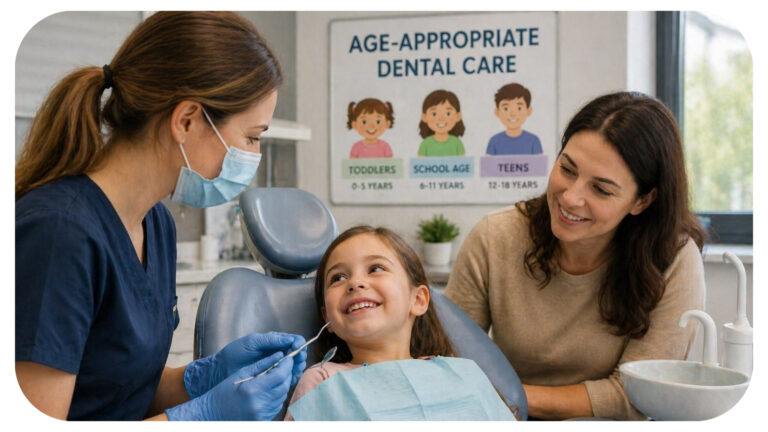
By preschool age, visits often become more interactive. The dentist and team help your child sit in the chair, count teeth in a friendly way, and slowly build trust. They may use pictures, models, or simple games to show your child that the dental office is a safe place. This is not just about one cleaning. It is about shaping your child’s lifelong attitude toward dental care.
If you want a parent friendly overview of many of these topics, the American Academy of Pediatric Dentistry offers helpful resources for parents on children’s oral health that align with what many family dentists teach in their offices.
DIY early oral care vs partnering with a family dentist
You might be wondering whether you can simply “handle it at home” and wait until your child is older to see a dentist. To help you think this through, here is a simple comparison of trying to manage early oral care on your own compared with working closely with a family dentist.
| APPROACH | WHAT IT LOOKS LIKE | SHORT TERM IMPACT | LONG TERM IMPACT |
| DIY only | Relying on internet tips and trial and error. No professional visits until there is visible decay or pain. | May save time initially. Ongoing uncertainty about what is normal or safe. | Higher chance of undetected cavities, emergency visits, and children associating dentists with pain. |
| Partnering with a family dentist | Early first visit. Regular checkups. Personalized guidance on brushing, habits, and diet. | Clear plan, fewer worries, child slowly becomes familiar with dental visits. | Lower risk of severe decay, fewer surprises, and stronger lifelong habits and comfort with care. |
Every family is different. Some children seem naturally easygoing about brushing and visits. Others are anxious, sensory sensitive, or strong willed. A family dentist can adjust advice to fit your child’s temperament and your family routines, which is something online articles alone cannot do.
What practical steps can you take with your family dentist right now?
Once you decide you want guidance, the next question is what to actually do. Here are three concrete steps you can take, even if your child is very young or you feel behind.
1. Schedule the first “happy visit” early
If your child has not seen a dentist yet, aim for a gentle, early visit rather than waiting until there is a problem. Call a family dental office and explain your child’s age and any fears you have. Many offices will schedule a short, low pressure appointment that may simply include a ride in the chair, a quick look at the teeth, and a chance for you to ask questions.
During this visit, talk openly about feeding habits, bedtime routines, thumb sucking, and any spots on the teeth you are worried about. You do not need perfect habits before you go. The goal is to start a relationship and leave with clear, simple next steps.
2. Build a calm, repeatable home routine with professional guidance
Ask your family dentist to walk you through what an ideal brushing routine looks like for your child’s age. Then work together to adapt it. For example, if your toddler fights brushing, your dentist might suggest trying a “you brush, I brush” game, brushing while your child lies in your lap, or using a song that lasts two minutes.
Use the dentist’s advice on toothpaste amount and fluoride. If you are unsure or have heard conflicting opinions, you can also review the AAPD’s frequently asked questions for parents and bring your concerns back to your next visit for discussion.
3. Use each visit to plan ahead, not just react
At every appointment, ask what to expect before the next visit. For example, “Which teeth are likely to come in next.” “Is my child at low, medium, or high risk for cavities.” “What one change would help the most at home.”
This forward looking approach turns your dentist into a guide instead of just a fixer. You leave each visit knowing what to watch for, when to call, and what small habits to focus on. Over time, this steady planning can prevent a lot of last minute panic and late night internet searches.
Moving from worry to confidence in your child’s oral health
If you have been feeling guilty, behind, or simply overwhelmed by early childhood oral care, you are not failing your child. You are doing what caring parents do. You are asking questions and looking for better answers.
A trusted family dental provider is there to share that load. They help you sort through mixed messages, understand what really matters at each age, and create routines that your child can grow into. With the right support, those tiny teeth become less of a constant worry and more of a quiet, steady part of your child’s overall health.
You do not need to have everything figured out before making that first appointment. You only need to take one small step toward partnership and clearer guidance. From there, you and your family dentist can handle the rest together.
Recommended: Why Familiar Dental Environments Make Visits Easier For Children



Leave a Reply