
How Smart Home Technology Is Revolutionizing Real Estate Transactions
Key Takeaways:
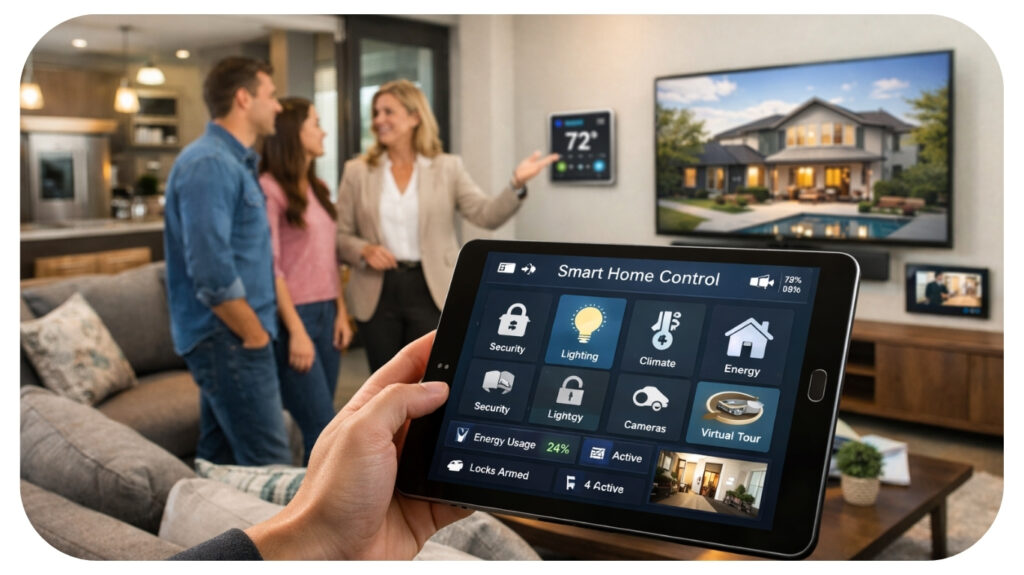
- Adds Value: Smart features such as thermostats, security systems, and energy-efficient appliances increase home appeal and resale value.
- Simplifies Home Search: Virtual tours and AR let buyers explore homes remotely, saving time and improving decision-making.
- Data-Driven Insights: AI tools analyze market trends, guiding buyers and sellers to make informed offers.
- Boosts Efficiency & Sustainability: Automated systems reduce energy use, water waste, and utility costs.
- Enhances Security: Smart locks, cameras, and sensors provide peace of mind.
- Personalized Living: Homes adjust lighting, climate, and entertainment to suit daily routines.
In recent years, the integration of smart home technology has significantly transformed the real estate landscape, introducing a wide range of advancements that have altered how homes are marketed, bought, and sold. Homebuyers and sellers are increasingly recognizing not only the convenience but also the substantial value that these innovative technologies add to properties. From automated lighting and intelligent security systems to state-of-the-art appliances, smart features are no longer considered luxury add-ons. Instead, they are becoming sought-after necessities that influence property values and the overall experience in real estate transactions. Menlo Park real estate agents Straser Silicon Valley, led by Katy Thielke Straser, exemplify this emerging trend by focusing on properties that seamlessly integrate modern technology into everyday living. Their approach ensures clients make investments that are future-proof, adaptable to technological developments, and positioned to appeal to a growing market of tech-savvy buyers.
Enhancing Property Value with Smart Features
Homes equipped with smart technology often command higher prices and attract more interest from potential buyers than similar homes without these features. Smart thermostats, advanced security systems, programmable lighting, and energy-efficient appliances stand out in listings and open houses. These features not only offer immediate convenience but also contribute to long-term cost savings in reduced utility bills and maintenance costs, making them particularly attractive to a wide range of buyers. According to a report by Homes & Gardens, properties with advanced AI tools and smart features are becoming increasingly desirable in today’s competitive market. Technology-savvy homebuyers are willing to pay a premium for homes that simplify daily living, enhance security, and allow greater control over household systems, thereby boosting overall property value and marketability.
Streamlining the Home Search Process
The advent of virtual tours and augmented reality has fundamentally changed the way buyers explore properties, making home searches more efficient and much less time-consuming. With sophisticated virtual tour platforms, potential buyers can tour multiple properties from anywhere in the world. This means out-of-state or international buyers can narrow down their choices before even setting foot inside a home. These immersive experiences help buyers visualize themselves living in a space by allowing them to explore floor plans, room sizes, and layouts with unprecedented detail and accuracy. Augmented reality adds another layer by letting users virtually “place” digital furniture in rooms or see color palettes on different walls. As noted by Urban Splatter, these technologies are redefining the property-viewing process, giving buyers greater confidence and satisfaction in their final choices while also saving time for both agents and sellers.
AI-Powered Market Analysis
Artificial intelligence is playing a pivotal role in analyzing market trends and property values, ushering in a new era of data-driven real estate decision-making. AI-powered analytics tools can quickly gather vast amounts of market data, scrutinizing trends in buyer demand, neighborhood statistics, and even seasonal fluctuations. These insights help sellers determine optimal listing times, maximizing their chances of a quick sale at the best possible price. For buyers, AI can assess historical sales, comparable properties, and economic indicators to provide highly informed recommendations on offer amounts and potential investments. This shift toward predictive analytics enhances transparency and efficiency, enabling all participants to make timely decisions supported by a wealth of real-time market data. As AI technologies continue to evolve, their ability to predict hot markets and flag undervalued neighborhoods will become even more essential in successful real estate transactions.
Improving Energy Efficiency and Sustainability
Smart home technologies play a critical role in energy conservation and sustainability, factors that are increasingly appealing to environmentally conscious homebuyers. Features such as automated lighting, remotely controlled thermostats, and advanced energy management systems not only make daily life more convenient but also greatly reduce overall energy consumption. Smart water systems can reduce waste by monitoring usage, while smart appliances adjust to more efficient cycles based on household patterns. These green features can lower utility bills over time, helping homeowners save money while minimizing their carbon footprint. The popularity of these technologies is prompting many new developments to prioritize sustainability, making energy efficiency a standard expectation among modern buyers rather than the exception. As more consumers seek ways to align with sustainable living practices, properties equipped with energy-saving initiatives tend to sell faster and for higher prices.
Facilitating Remote Transactions
The rise of smart technology and advanced digital platforms has made remote real estate transactions more viable than ever. Prospective buyers and sellers, regardless of their location, can now access digital contracts, participate in virtual notarizations, and receive instant online mortgage approvals. These streamlined processes eliminate geographical barriers and significantly reduce the time and paperwork needed to complete a transaction. Digital tools offer a high level of security for personal data and legal documents, giving both buyers and sellers peace of mind that their transactions are protected. Furthermore, the use of e-signatures and digital escrow services ensures that all steps in the process can be tracked and verified remotely. As technology continues to improve, conducting a fully remote real estate transaction is becoming not just possible but preferred in many cases—making the buying and selling process more accessible and efficient for all involved.
Enhancing Home Security
One of the most significant advantages of smart home technology is improved home security. With advanced security systems featuring smart locks, motion sensors, video doorbells, and integrated surveillance cameras, homeowners can monitor every aspect of their property in real time from their smartphones or computers. Remote alerts can notify homeowners instantly of any suspicious activity, and many systems allow for two-way communication with visitors at the front door, even when the homeowner is away. Such features are increasingly important for buyers who prioritize safety and want peace of mind. Enhanced security has become a selling point that can tip the scales in favor of a property when buyers are choosing between homes, especially those with families or valuable possessions to protect.
Personalized Living Experiences
Smart homes offer unparalleled personalization, allowing homeowners to tailor their living environments to suit their unique preferences and routines. Automated systems can be set to adjust lighting, heating, and cooling based on individual schedules or triggered by sensors when occupants enter or leave a room. Entertainment systems, blinds, and even kitchen appliances can be programmed to operate in sync, creating a cohesive, customized atmosphere. Voice-activated assistants make it easy to control multiple devices at once, adjusting settings without ever lifting a finger. These innovations not only enhance daily comfort but also contribute to greater overall satisfaction with the home, as they adapt to the lifestyles and needs of each family member.
The Role of Real Estate Professionals
Real estate agents are adapting to these technological advancements by emphasizing the importance and inclusion of smart home features in the marketing and selling process. Professionals understand that today’s buyers are often seeking technologically advanced properties. By showcasing the connectivity, automation, and smart systems in their listings, these agents appeal directly to a tech-savvy demographic, giving their clients a competitive advantage. Straser Silicon Valley specializes in helping buyers and sellers find and market properties that are not only state-of-the-art but are also positioned to maintain long-term value as new technologies emerge. This proactive approach ensures clients benefit from the latest trends, while also promoting smarter, safer, and more sustainable living environments.
Final Thoughts
In conclusion, the integration of smart home technology is rapidly reshaping the real estate industry. Buyers and sellers who embrace these transformative innovations are better positioned to navigate an evolving, technology-driven market, leading to more efficient, secure, and satisfying real estate transactions. As smart technology continues to advance, its impact on property values, transaction methods, and daily lifestyles will only grow, solidifying its role as a driving force in the future of real estate.

Recommended For You
5 Beginner Tips for Learning Python Programming

Most Inside Editorial Team
MostInside is an independent publication focused on growth across lifestyle, business, finance, sports, and digital authority, prioritizing long term value and enduring credibility.