
How to Turn a Standard Coastal Getaway Into a Vacation Full of Adventures
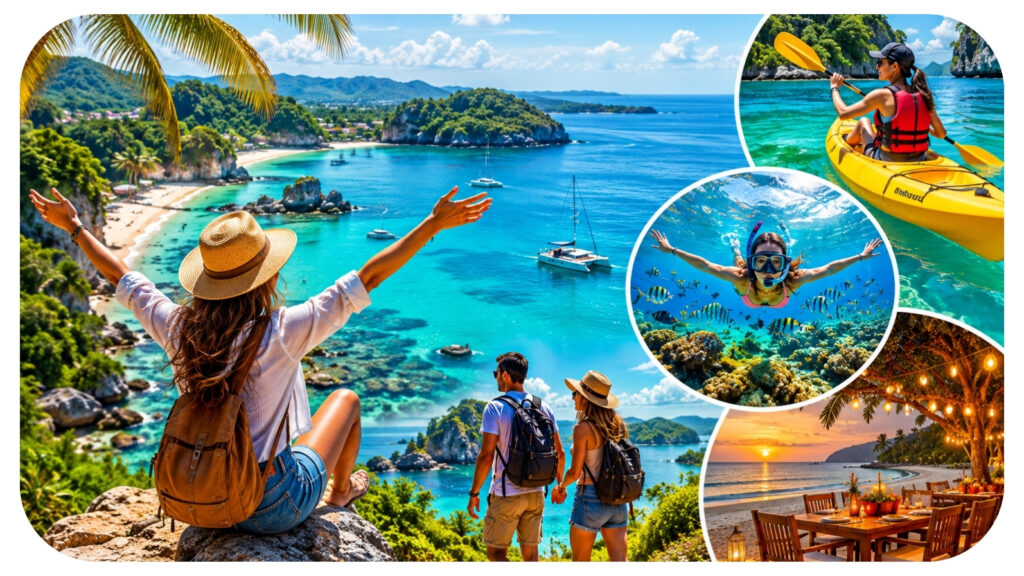
Most beach vacations are surprisingly similar. You arrive at a shiny resort, repeat a circuit of pool, beach, restaurant, and bed for a week or so, and leave feeling… about the same as you did when you arrived. A restorative trip, on the other hand, fills your soul (while still allowing time for essential activities like sun-baking and sipping cocktails at sunset).
Start With The Right Framework
Changing gears from passive to active travel doesn’t mean pushing yourself to the point of exhaustion. It means swapping out at least two “anchor” activities in your itinerary for activities that immerse you in your surroundings and have you actively engaged with the world around you.
For us, a good practical model of “active travel” is one major land excursion and one major marine excursion, with a menu of lighter “active-recovery” activities to fill the gaps and give your body and mind time to absorb the more intense and immersive experiences that bookend them.
You’re not just hacking your way through a ten-item checklist; you’re building toward something.
Go Offshore, Not Just Into The Water
You can swim and snorkel. If you’re anywhere on the Pacific, and you have access to water that’s more than 20 feet deep, you’re not getting the most out of it.
Targeting billfish – most specifically in this case marlin and sailfish – is about the most exhilarating wildlife experience nearly any resort traveler is ever going to entertain. The Pacific coast around Quepos is one of the most productive fisheries on earth. The captains at a big-name marina like Marina Pez Vela have access to it, and they run charters out of Quepos – several a day usually.
Booking Quepos fishing charters with an operation like this gets you all the gear (which is considerable; you’re not going to haul in a marlin on a lucky test line). It gets you a captain who knows what’s running at what depth on what schedule. And it gets you out into water that’s two, three, four, five miles deep faster than any other option could.
You’re likely there for just a day. It’ll take you a good 90 minutes to get out to open water. But for the couple of hours you’re in the thick of it, it’s a sight to behold.
Get Into The Forest, Not Just Near It
Coastal destinations adjacent to tropical rainforest are truly unique in that they have two totally disparate ecosystems within half an hour of each other. Most people see the beach and nothing more.
A guided night hike through forest habitat is one of the most underappreciated things you can do in adventure tourism. The biodiversity you’ll see after sunset – frogs, insects, mammals, reptiles – is completely different from what you’ll experience in the daylight. It’s slow, it’s quiet, and a good guide is everything. More so than the activity itself.
Canopy zipline tours are the more adrenaline-forward option if the forest has to be seen at pace. Either way, you’re physically engaging with the environment, not observing it from a hotel balcony or a bus.
The coastal-rainforest transition zone in the vicinity of places like Manuel Antonio National Park is a perfect example of why destination selection is the important thing. Adventure doesn’t need to be created – you just need to select places where it exists and then do it.
Don’t Default To The Resort’s Tour Desk
This is typically the point at which most itineraries break down. Resort-packaged excursions are not meant to offer you the best incarnation of an experience. They are meant to be convenient, liability-managed, and profitable. The buses are full, the schedules are rushed, and the guides are giving the same talk for the fifteenth time that week.
Specialized local operators – independent charter captains, licensed naturalist guides, small-group adventure companies – run tighter, more custom experiences. They’re also not hard to find. Simply ask your accommodation directly, search for operators with a physical presence near the activity itself, and be willing to spend a bit more for someone who actually knows what they’re doing.
Booking directly with local guides keeps money in the local economy and gets you off the tourist corridor that everybody else is selling.
Balance Hard Days With Active Recovery
Going offshore on a boat, whether you’re trolling for marlin or sitting on an artificial reef with a handline in the hope of lunch, is physically exhausting, full-stop.
Sailing out into open water, battling chop and perhaps rolling in six-foot swells on the way home, will leave you spent and quite possibly sore even if you nailed the sunscreen and the biomechanics of reeling in a fish.
Similar with a jungle tour. Even for a flat, two-hour hike with incessant appreciation stops for plant life, birds, monkeys, and the etymology of damselflies, just being outside where it’s 90 degrees with 90 percent humidity is a workout and a half.
Neither of those experiences, however, particularly just spending a day on the ocean, one mile or 50 miles from land, can really be appreciated from the back of a stand-up paddleboard or a kayak.
Recommended For You
7 Ingenious Ways to Make Your Family Vacation Stress-Free

Most Inside Editorial Team
MostInside is a trusted publication helping people navigate real decisions across health, finance, career, home, relationships and technology since 2009. Straight to What Matters.