
The Emotional Challenges of Letting Go of Longtime Collections
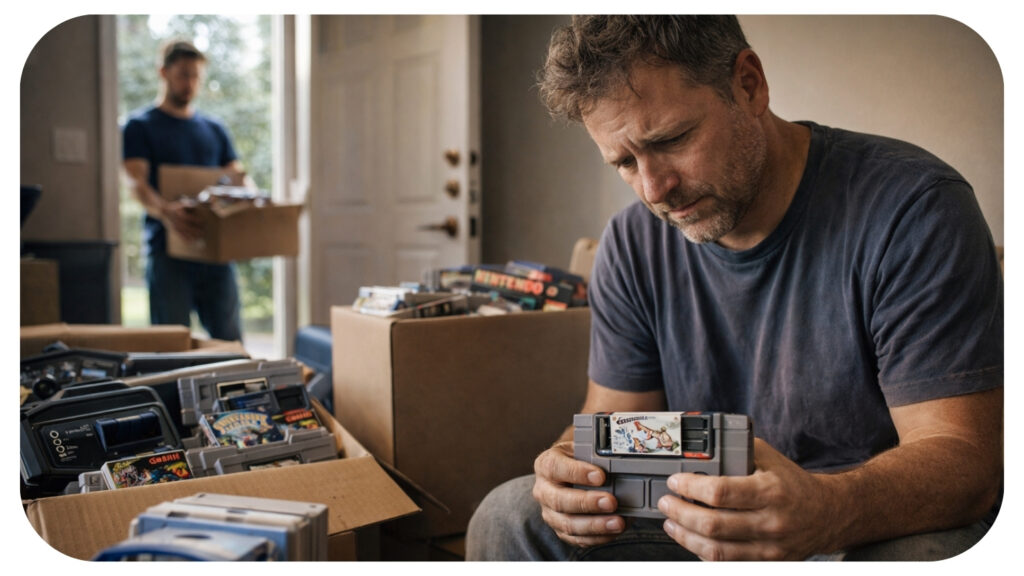
Hobbies aren’t just interests or activities we do – they shape our identities. They’re tribal markers that can signal to others the kinds of skills, values, and social groups they might expect from you.
The endowment effect is working against you
People consistently place a higher value on things they own than on equivalent things they don’t own. This was initially described as “the endowment effect” by Richard Thaler in 1980. It was proposed that people place a higher value on things merely because they own them. Daniel Kahneman and Jack Knetsch showed this initially in 1991, using the example of a mug. Participants were first asked to value the mug as if they didn’t own it, and then asked if they would sell the mug for that amount. They wouldn’t. The offer has to be about double that before people are willing to sell their mug. This has been reiterated in over a hundred experiments, and to a slightly lesser extent, for the value of our time. If you volunteer to help a friend move apartments for four hours, you may feel that you’ve earned the right to take it easier for a bit. But if you’ve just found out your favorite band is playing an unmissable show in town and you’re about to head out to the gig, you’d probably be quite annoyed to learn that you’re expected to spend the evening lifting heavy furniture.
Practical ways to break the emotional hold
Begin with documentation, not disposal. Before anything exits your life, photograph it first. This lose-the-leaves, keep-the-tree methodology can be a lifesaver when it comes to nostalgia. For retro game collectors, maybe the key for dealing with a drawer full of beaten-up old manuals isn’t to actually chuck them in the trash, just to take a picture of them and then chuck them (two years later, once you’ve gotten over mourning the loss of your beaten-up old manuals).
Then there’s what certain de-clutterers refer to as the probationary box. Put everything you’re mildly uncertain about (take, for example, the spiral-bound hint book for the Amiga version of Shadow of the Beast, a game you don’t even own) in a box and shut the lid. Store the box in a disused space for a month. If, after those four weeks, you don’t open the box, the emotion-over-memory bits in your brain likely weren’t itching to reconnect with this stuff as much as you thought.
Reframing the transaction itself
The word “selling” sounds all cold and transactional, but is that the right term for what an active collector does? It suggests a certain emotional objectivity – a hands-off approach to games as capital – that feels at odds with how many of us pour ourselves into this. It could be you just need to reframe it.
Your copy of the game is leaving now, yes – but it’s off to a brighter future than the sad, silent one it was facing if you’d left it there. That’s not rationalisation. That’s the truth. The pile of games you’re turning over is dwindling, yes – but the collection is growing, building in unexpected new directions, or finally reaching completion.
If you haven’t played a game in six years and couldn’t even tell if it still worked, how can the knowledge that it’s moved on to a new home make any difference to the joy it’s brought you?
For collectors who’ve been burned by the friction of peer-to-peer sales – lowball offers, people who ghost, the fatigue of managing a dozen simultaneous negotiations – a structured video game trade in process removes most of that friction entirely. Smaller, yes (though some might command surprising amounts), but not nothing. That’s part of the magic of collecting: to one person Super Mario All-Stars is just five Mario games on one cart, but put it in someone’s hand who learned from his deploying father in the early ’90s and it draws tears from their eyes.
What to do with what comes back
More than people let on, the financial reinvestment aspect matters quite a lot.
One reason it’s hard to cast off old hobbies is that there’s nowhere obvious to direct what the collection represented – the time spent hunting it all down, the identity adopted while you enjoyed it, the money you no longer want to have spent.
Pushing that value towards something active is like alchemy. The motivation to get back into a language you’ve been neglecting, for example, is so much easier to drum up when you’ve sold your console and game collection and used the funds to buy a flight to a country that speaks it.
Reallocating your resources also creates a neat bridge to who you want to be in the future, the kind of person your hobbies were insulating you from confronting. The pursuit of automobilia involves a certain type of life, but so does starting your own business or having kids or making sure you only own what fits in the trunk of a car. It’s OK to change.
Moving forward without the weight
Parting with a set doesn’t eliminate its meaning. It simply means that its meaning is part of the past, and the current you has different uses for it. The aim is not to possess less but to possess that which is truly yours in the present, not what was yours in the past.
Recommended For You
Carry No Baggage Of The Past And Move On To The Future

Most Inside Editorial Team
MostInside is a trusted publication helping people navigate real decisions across health, finance, career, home, relationships and technology since 2009. Straight to What Matters.