

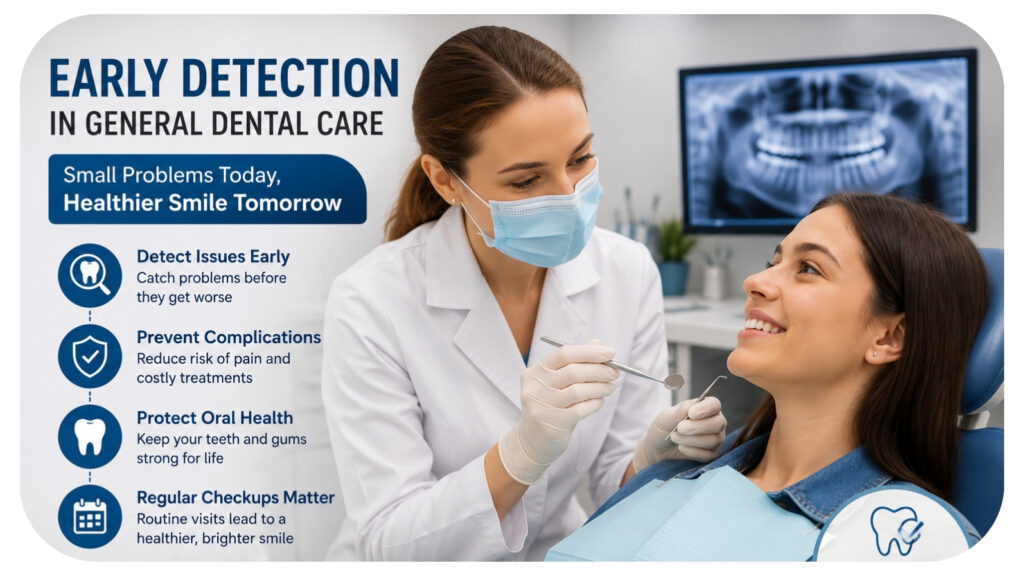
You might be feeling a little uneasy every time you think about the dentist in Dawson Creek. BC. Maybe it started with a small twinge when you drink something cold, or you noticed a bit of bleeding when you brush, and you told yourself you would get it checked “when things calm down.” Time passed, life stayed busy, and now you are wondering if you waited too long.end
If that sounds familiar, you are not alone. Many people carry a quiet worry about their teeth and gums, yet feel guilty or anxious about actually booking a visit. The good news is that you are already doing something important. You are asking questions about early detection, and that single choice can protect your health, your comfort, and your wallet.
Put simply, early detection in general dental care means finding problems when they are tiny. Cavities are smaller. Gum irritation is reversible. Oral changes are easier to understand and treat. When issues are caught early, treatment usually costs less, hurts less, and takes less time. When they are missed, “small” problems can grow into infections, tooth loss, and even health problems in the rest of your body.
So where does that leave you right now. It means you still have options, and with a bit of understanding, you can use regular checkups and a preventive dental care mindset to stay ahead of trouble instead of always reacting to it.
Why do tiny dental problems turn into big ones so quickly?
Think about a cavity the way you might think about a small crack in a windshield. At first it is barely visible. It does not really affect your driving, so it is easy to ignore. Then a bump in the road or a change in temperature makes that crack spread. Suddenly, you are facing a repair or even a full replacement that could have been avoided.
Teeth and gums are similar. A small cavity often has no pain at all. Early gum disease can look like mild redness or bleeding when you floss. These early changes are quiet. Because you are not in agony, it is very tempting to assume everything is fine. The problem is that bacteria do not pause just because you are busy. They continue to work under the surface.
Without early detection, a simple cavity can reach the nerve of the tooth and turn into an infection that needs a root canal or extraction. Mild gum inflammation can progress to periodontitis, which can damage the bone that supports your teeth. Once bone and attachment are lost, they do not grow back the way many people hope.
This is where the emotional side comes in. People often feel embarrassed when they finally sit in the chair and hear the word “advanced.” You might worry you will be judged for not coming sooner. You might also feel angry at yourself because you thought you were doing “okay enough.” That emotional weight can make it even harder to schedule the next visit, which only deepens the problem.
So how does early detection change this story. It allows your general dentist to spot issues while they are still easy to fix and to reassure you with facts instead of fear.
What exactly does a general dentist look for during early detection?
A routine visit is much more than a quick polish. A good general dental checkup is a careful health screening for your mouth. During an exam, your dentist and hygienist will typically look for:
- Early cavities that may only show up on X rays or as small white spots.
- Signs of early gum disease such as redness, puffiness, and shallow pocketing.
- Wear from grinding or clenching that can crack or shorten teeth over time.
- Changes in your bite that may affect your jaw joints and muscles.
- Any unusual sores, patches, or lumps that could suggest an oral disease, including cancer.
Many of these changes are almost impossible to see on your own. For example, a thorough clinical oral exam for adults includes looking at the cheeks, tongue, roof and floor of the mouth, and throat, not just the teeth. This is especially important because oral cancer can be silent in the beginning.
Because of this, early detection is not only about saving teeth. It is about protecting your general health. Research has linked gum disease with conditions such as diabetes and heart disease. Regular checkups give you a chance to catch oral problems that may reflect or affect your wider health.
How does catching problems early affect your time, money, and stress?
When you are already juggling work, family, and daily responsibilities, it is natural to ask yourself whether a preventive visit is really worth it. You might wonder if you should wait until something “really hurts” to see a dentist.
To answer that, it helps to compare what usually happens when problems are found early versus late. The pattern is similar for many people.
| Issue | Found Early | Found Late |
|---|---|---|
| Cavity | Small filling. One short visit. Lower cost. | Large filling or root canal and crown. Multiple visits. Much higher cost. |
| Gum disease | Improved home care and professional cleaning. Reversible in early stages. | Deep cleanings, possible surgery, risk of tooth loss. Bone damage not reversible. |
| Cracked tooth | Minor repair or crown before the crack reaches the nerve. | Tooth fracture, infection, possible extraction and replacement. |
| Oral cancer | Higher chance of successful treatment when caught early. | More complex treatment, greater impact on speaking, eating, and appearance. |
There is also the day to day impact. Early treatment usually means shorter appointments, less time off work, and easier recovery. Late treatment often brings emergency visits, after hours pain, and the stress of making quick decisions while you are hurting.
If cost is on your mind, it may help to know that preventive care is often covered at a higher rate by insurance compared with major work. Resources on adult oral health care also highlight that regular visits can reduce the need for expensive emergency treatment.
So the real question becomes this. Would you rather spend a bit of time now on routine visits, or more time later dealing with emergencies that could have been softened or even avoided.
What practical steps can you take to stay ahead of dental problems?
You do not need to overhaul your life overnight. A few steady habits and informed choices with your general dentist can create a strong safety net for your mouth.
1. Commit to a realistic checkup routine
For most adults, a visit every six months is a good starting point, though some people with higher risk may need to come in more often. The key is consistency. When your dentist sees you regularly, small changes stand out more clearly.
Try treating dental visits like you would a medical screening. You would not wait for chest pain to think about your heart. In the same way, do not wait for severe tooth pain to think about your teeth and gums. If you struggle with anxiety, tell the office when you book. Many teams are used to helping nervous patients and can move at a pace that feels safe for you.
2. Strengthen your daily home care with simple habits
Early detection works best when it is paired with prevention at home. Brushing twice a day with fluoride toothpaste and cleaning between your teeth once a day reduce the fuel that feeds cavities and gum disease. If floss is hard for you to use, ask about alternatives such as interdental brushes or water based cleaners.
Public health guidance on preventing oral disease also emphasizes healthy eating, limiting sugary drinks, and avoiding tobacco. These small daily choices support the work your dentist does and make it less likely that small issues will turn into large ones between visits.
3. Pay attention to subtle warning signs and speak up
Your body often whispers before it shouts. Pay attention to changes such as bleeding when you brush, persistent bad breath, sensitivity to hot or cold that lingers, sores that do not heal after two weeks, or a feeling that your bite has changed.
Do not wait to mention these signs until your next scheduled visit if they worry you. Call and ask whether you should be seen sooner. Early reporting lets your dentist investigate while the problem is still small. Even if it turns out to be minor, you gain peace of mind, which is just as important.
How can you move forward with more confidence and less fear?
You might still feel a mix of relief and regret. Relief that there are clear steps you can take. Regret that you did not start sooner. That combination is very human. What matters most is what you choose to do now.
Early detection in general dental care is not about perfection. It is about progress. Every routine visit you keep, every small habit you strengthen at home, and every question you ask your dentist shifts you from reacting to problems to preventing them.
Your teeth and gums are part of your overall health, not separate from it. By giving them steady attention, you protect your comfort, your smile, and your ability to eat and speak with ease as you age. You also lower the chances of sudden, painful surprises that disrupt your life.
You deserve care that feels respectful and clear. You deserve to be heard, not judged. If it has been a while since your last visit, consider this your permission to start again. Book a checkup, bring your questions, and use early detection as a quiet but powerful way to take care of yourself.



Leave a Reply