
The Importance Of Preventive Screenings In Family Dentistry
You might be feeling a little torn right now. You know you “should” keep up with regular dental visits for yourself and your family, yet life is busy, kids resist, work runs late, and those six months somehow turn into a year or more. Then a tooth starts to ache, or your child gets a sudden cavity, and you wonder if something important was missed along the way. Invisalign treatment in Homer Glen
If that sounds familiar, you are not alone. Many families treat the dentist as an emergency stop, not a regular part of staying healthy. The problem is that by the time pain shows up, the issue has often been growing quietly for months or even years. That is where preventive dental screenings for families matter so much. They help catch small problems before they become painful, expensive, or scary for you or your children.
So here is the short version. Regular checkups, cleanings, and simple screening tests protect your teeth and gums, save you money over time, and give your family a calmer, more predictable experience with dental care. They are not a luxury. They are a basic part of health, just like yearly physicals or eye exams.
Why do routine dental checkups feel easy to skip?
Think about how these visits usually fall off the calendar. A reminder email pops up, you mean to reschedule, the week gets away from you, and suddenly it feels embarrassing to call because it has been “too long.” Or maybe you had a rough experience years ago, and part of you tenses up at the thought of sitting in that chair again. If you are a parent, you might also be juggling your child’s fears, which makes it even easier to delay.
Because of this tension, you might wonder if skipping a few visits really matters as long as you brush and floss. Home care is powerful, and daily brushing and flossing are your first line of defense. Good habits at home, guided by resources like the American Dental Association’s home care tips, make a big difference. Yet they cannot replace what a trained family dentist can see and do during a screening.
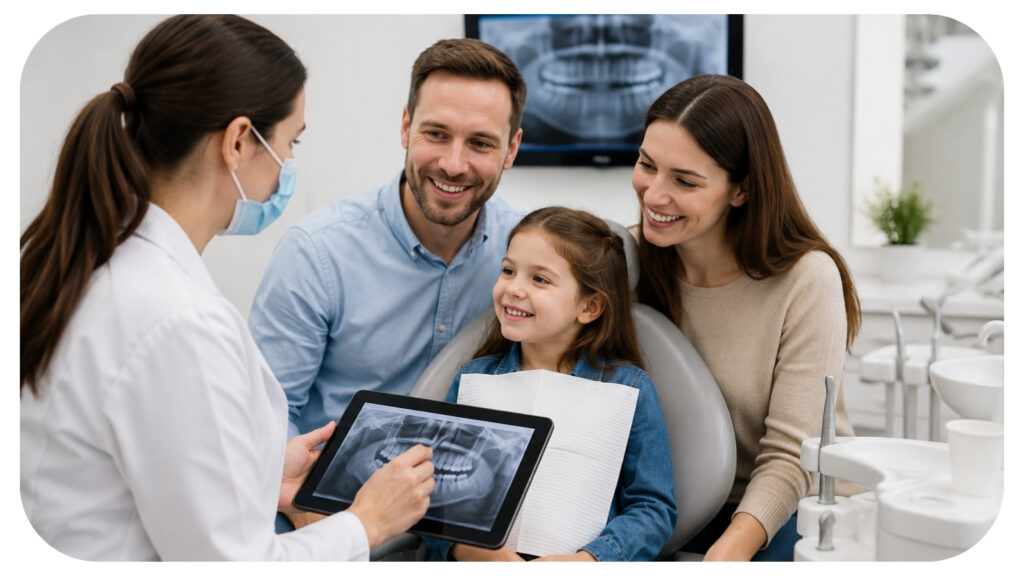
During a typical preventive screening, your dentist and hygienist do much more than clean your teeth. They check your gums for early signs of disease, look for tiny cavities before they spread, review your bite, examine old fillings or crowns, and even check your tongue and cheeks for early signs of oral cancer. Many of these changes are invisible to you at home and painless in the beginning. That is the tricky part. It feels like nothing is wrong, even when something is slowly getting worse.
What really happens if you skip preventive screenings?
Imagine two different families. The first family treats preventive family dental care as a regular routine. They go in for checkups twice a year. Their dentist spots a small cavity in a parent’s tooth and repairs it with a simple filling. During the same visit, the hygienist notices that a child is starting to get plaque buildup around the back molars, so they go over brushing technique and apply sealants.
The second family waits until someone is in pain. The same small cavity goes unnoticed. Over time, it grows, reaches the nerve, and suddenly there is a weekend of intense pain and an emergency visit. Now the tooth needs a root canal or extraction instead of a quick filling. The child, who never had sealants or early guidance, develops several cavities that need more involved treatment. Both the emotional and financial cost increase.
This is the pattern many people experience. The emotional cost shows up as anxiety, guilt, and worry about what the dentist will “find.” The financial cost shows up as bigger bills for root canals, crowns, or extractions instead of smaller visits for cleanings and minor repairs. The time cost shows up as missed school and work for longer procedures instead of short, planned appointments.
So where does that leave you if you already feel behind on dental visits? It means the best time to restart is simply your next available window. A good family dentist will not shame you. They will meet you where you are and help you move forward with a clear plan.
How do preventive screenings actually protect your family’s health?
Preventive screenings in family dentistry are not just about teeth. They are about overall health and early warning signs. Research shows that gum disease is linked with conditions like diabetes and heart disease. Dentists are often the first to notice changes that might point to these broader issues.
During a regular visit, your dentist can:
• Spot gum inflammation before it turns into advanced gum disease.
• Catch cavities when they are small, which means simpler repairs.
• Monitor your child’s jaw growth and tooth alignment, and suggest early orthodontic evaluation if needed.
• Look for signs of clenching, grinding, or sleep apnea that might be affecting sleep or causing headaches.
• Screen for oral cancer, especially important for adults who smoke, drink alcohol, or have a history of HPV.
Healthy habits between visits are just as important. The Centers for Disease Control and Prevention share helpful guidance on daily routines, like brushing with fluoride toothpaste, flossing, and limiting sugary drinks. You can find these suggestions in their oral health tips for adults.
When you combine strong home care with regular office screenings, you give your family the best chance at avoiding dental emergencies and long, difficult procedures. That is the quiet power of a steady relationship with a family dentist.
Is preventive care really worth it compared to “wait and see”?
It can help to see the differences side by side. Here is a simple comparison between a preventive approach and a “wait until it hurts” approach.
| ASPECT | PREVENTIVE SCREENINGS & REGULAR CARE | “WAIT UNTIL IT HURTS” APPROACH |
| Typical visits | Short, planned checkups and cleanings 1 to 2 times per year | Long, urgent visits when pain or infection appears |
| Common treatments | Cleanings, small fillings, sealants, fluoride treatments | Root canals, extractions, crowns, emergency antibiotics |
| Emotional impact | More predictable, less fear, kids build trust with the dentist | Higher anxiety, negative memories, children may develop dental fear |
| Financial pattern over time | Smaller, more regular costs that are easier to plan for | Fewer visits at first, then sudden large bills for major treatment |
| Impact on daily life | Minimal disruption, routine appointments scheduled in advance | Missed work or school for emergency care and recovery |
| Long term oral health | Better chance of keeping natural teeth and healthy gums | Higher risk of tooth loss, ongoing pain, and complex treatment |
If you are already in the “wait until it hurts” pattern, you have not failed. You have been doing the best you can with the time, money, and energy you have. The point of understanding this comparison is not to judge. It is to give you a clearer path forward so you can choose what works better for your family from today on.
What can you do right now to protect your family’s smiles?
1. Schedule the next checkup, even if it has been years
Your most powerful step is also the simplest. Call and schedule a preventive visit for each family member. Be honest about how long it has been and any fears you or your children have. A thoughtful family dentist will adjust the visit, explain each step, and move at a pace that feels manageable. You do not need to fix everything at once. You just need to start.
2. Build small, repeatable habits at home
Perfect routines are not necessary. Consistent ones are. Aim for brushing twice a day with fluoride toothpaste and flossing once a day. For children, make it part of an existing routine, like after breakfast and before bed. You can use music, timers, or brushing charts to make it easier. The CDC’s broader oral health prevention resources can give you simple ideas to support your efforts.
3. Talk openly with your dentist about costs and priorities
Money worries are one of the biggest reasons people avoid the dentist. Bring that concern into the open. Ask for a clear treatment plan with priorities, so you know what needs attention now and what can safely wait. Ask about prevention-focused options, like sealants for kids or fluoride treatments, which can reduce the risk of more expensive problems later. Many offices can phase care over time or help you understand your insurance benefits.
Moving forward with more confidence and less fear
You do not have to love going to the dentist to benefit from it. You just need a steady rhythm of visits and a team that treats your family with respect and care. When you understand the importance of routine family dental screenings, it becomes easier to see those appointments not as a burden, but as a way to protect your comfort, your budget, and your peace of mind.
Even if you feel behind, you are not too late. Every healthy choice you make from this point on will help. Your future self, and your children, will be grateful for the effort you put in today to keep their smiles strong and pain free.
Recommended: Why Tele Dentistry Is Becoming An Essential Tool For Busy Families

Recommended For You
Importance and Benefits of Aromatherapy

Most Inside Editorial Team
MostInside is a trusted publication helping people navigate real decisions across health, finance, career, home, relationships and technology since 2009. Straight to What Matters.