

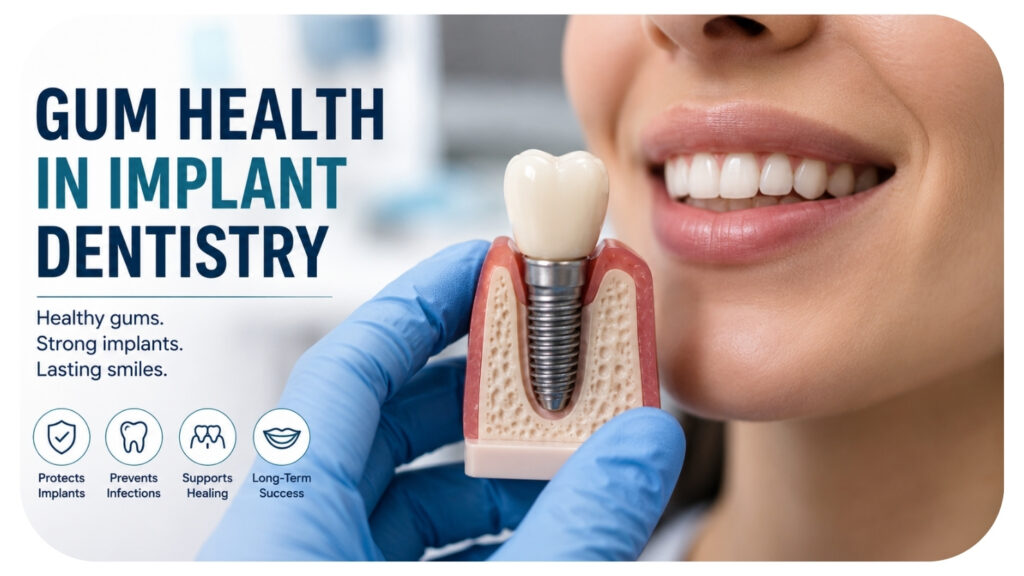
You might be feeling a mix of hope and worry right now. Maybe you have missing teeth and you are tired of hiding your smile, or you have been told you are a good candidate for implants, but then someone mentioned “gum disease” and everything suddenly felt uncertain. By working with a skilled periodontist in West Islip, NY, you can explore solutions that address both your gums and your implants. You want a long term solution, not another expensive treatment that fails a few years later.end
If that sounds familiar, you are not alone. Many people focus on the implant itself, the titanium post and the new tooth, and almost forget about the gums and bone that have to support it. When gum health is ignored, even the best implant can struggle. When gum health is protected, implants often feel and function like natural teeth for many years.
So where does that leave you. The short version is this. Healthy gums are not a bonus for implant dentistry. They are the foundation. If you understand how your gums affect healing, infection risk, and long term stability, you can make calmer, smarter choices and work with your periodontist and implant dentist as a partner instead of a passenger.
Why do my gums matter so much for dental implants?
It can be tempting to think of implants as mechanical parts that simply “go in” and work. In reality, your body has to accept and protect them. The implant is placed into your jawbone. Then the bone and surrounding tissues heal and bond to it. If your gums are inflamed, infected, or receding, that healing becomes harder and the risk of complications grows.
According to the U.S. Food and Drug Administration, dental implants can be a safe and effective option, but they are not risk free. Problems like infection, poor positioning, or delayed healing are more likely when the supporting tissues are not healthy. You can read more about general implant considerations from the FDA’s guidance on what you should know about dental implants.
So the question is not only “Can I get an implant”. It is “Are my gums ready to support an implant and keep it stable for years”. That is where a periodontist and implant dentist becomes especially important. A periodontist focuses on the health of your gums and bone. An implant dentist focuses on placing and restoring the implant. When those two roles work together, your chances of a strong result improve.
How does gum disease threaten a new dental implant?
Gum disease often starts quietly. You might notice a little bleeding when you brush, bad breath that does not go away, or mild soreness. The Centers for Disease Control and Prevention explain that periodontal disease is a chronic infection that affects the gums and can damage the bone that supports your teeth. You can learn more from the CDC’s overview of gum and periodontal disease.
Here is where it connects to implants. If gum disease has already damaged the bone around your natural teeth, that same bone is where an implant would need to be placed. Less bone means less support. Active infection also increases the risk of peri implantitis, which is an infection around the implant itself. That can lead to bone loss, pain, and even implant failure.
Imagine two people. One has healthy, pink gums that rarely bleed. The other has swollen gums and occasional abscesses. They both get a single implant. The first person is likely to heal smoothly, with the bone bonding to the implant and the gums sealing closely around it. The second person may heal slowly, notice persistent tenderness, and face a higher chance that the implant loosens or needs to be removed.
This is why gum treatment often comes before implant treatment. Deep cleanings, gum surgery, or bone grafting might sound like extra steps, but they are often the difference between a short term fix and a lasting solution.
What are the emotional and financial stakes with implant and gum problems?
When you are missing teeth, it is not just about chewing. It can affect how you speak, how you smile in photos, and how you feel in social or work situations. Many people choose implant dentistry because they want something that feels stable and natural again. If that investment fails because the gums were not ready, the emotional hit can be as hard as the financial one.
Implants are not cheap, especially when you include extractions, temporary teeth, bone grafts, and follow up visits. If gum issues cause an implant to fail, you may face additional surgery, more time off work, and more cost. Some people then feel guilty or ashamed, as if they did something wrong, when the real issue was that gum health was not fully addressed from the start.
Because of this tension, you might wonder. Is it better to delay implants until my gums are healthier, or should I move forward now. The answer is usually that careful preparation, even if it takes more time at the beginning, reduces risk and protects your investment in the long run.
How do healthy gums support long term implant success?
Healthy gums create a tight, protective seal around your implants, much like a natural tooth. That seal helps keep bacteria out and reduces the risk of infections that eat away at the supporting bone. Strong, disease free bone grips the implant and keeps it stable when you bite and chew.
Researchers are constantly studying how different implant surfaces and materials interact with bone and gum tissue. If you are curious about the science behind this, the National Institute of Dental and Craniofacial Research has shared technical information on dental materials and how they behave in the mouth. While it is fairly technical, the main idea is simple. Materials matter, but the health of the tissue around those materials matters just as much.
When a periodontist evaluates you for implants, they are not just counting missing teeth. They are looking at pocket depths around your gums, bone levels on X rays, your medical history, your habits like smoking, and your daily cleaning routine. All of that helps them judge how your body is likely to respond to an implant and how to strengthen your gums before and after treatment.
Comparing gum health and implant outcomes. What should you keep in mind?
It can help to see the differences between “rushing to implants” and “preparing your gums first” in a simple way. The details vary for each person, but this overview gives you a sense of what is at stake.
| APPROACH | SHORT TERM EXPERIENCE | LONG TERM RISK | TYPICAL EXTRA NEEDS |
| Implants placed with untreated or active gum disease | Faster path to surgery, fewer visits before placement | Higher chance of infection, bone loss, and implant failure within a few years | More emergency visits, possible implant removal, additional cost for retreatment |
| Implants placed after gum disease is treated and controlled | More visits up front, possible deep cleanings or gum surgery before implants | Better healing, lower infection risk, higher chance of long lasting implants | Regular maintenance cleanings, home care, and monitoring with your dentist or periodontist |
| No implants, using removable dentures only | Lower upfront cost, no surgery | Bone loss over time under the denture, possible sore spots and instability | Denture adjustments, relines, or replacements as the jawbone shrinks |
This comparison is not meant to scare you. It is meant to show why your gums are central to any conversation about the role of gum health in successful implant dentistry. The more you understand, the more you can ask the right questions and choose the right timing.
What can you do right now to protect your gums and your future implants?
You do not have to wait for a surgery date to start improving your chances. There are concrete steps you can take now that will support your gums, your overall health, and your future implant work.
1. Get an honest gum and bone evaluation before committing to implants
Ask for a thorough periodontal exam, not just a quick look. That usually includes measuring gum pockets, checking for bleeding, taking updated X rays, and reviewing your medical conditions and medications. If your dentist does not feel fully comfortable managing gum disease, ask for a referral to a periodontist. A clear picture of your gum and bone situation is the first step toward a realistic implant plan.
2. Treat existing gum disease and commit to maintenance
If you are diagnosed with gingivitis or periodontitis, take it seriously. Deep cleanings, gum surgery, or bone grafts can sound intimidating, but they are often what give your implants a stable foundation. After treatment, regular maintenance visits and consistent home care brushing twice daily, cleaning between teeth, and possibly using antimicrobial rinses are what keep disease from returning. Think of this as protecting the “soil” before you plant anything new.
3. Address lifestyle habits that quietly undermine your gums
Smoking, uncontrolled diabetes, and poor daily cleaning are three common factors that weaken gum health and raise the risk of implant problems. If you smoke, even cutting down before and after surgery can improve healing. Work with your physician to keep blood sugar in a safe range. Ask your dental team to show you exactly how to clean around implants and natural teeth so you are not guessing at home.
Moving forward with more clarity and less fear
You might still feel nervous about implants, and that is understandable. You are making a big decision about your health, your appearance, and your budget. The good news is that you do not have to choose between doing nothing and rushing into treatment. You can slow down, strengthen your gums, and then move forward with implant treatment when the foundation is ready.
Healthy gums are not a luxury for implant dentistry. They are the quiet support system that makes confident chewing, comfortable smiling, and long term success possible. When you give your gums the attention they deserve, you give your future implants a far better chance to succeed.
Recommended: 6 Preventive Dentistry Strategies That Protect Smiles At Every Age




Leave a Reply