
The Role Of Imaging Tools In Comprehensive Dental Planning
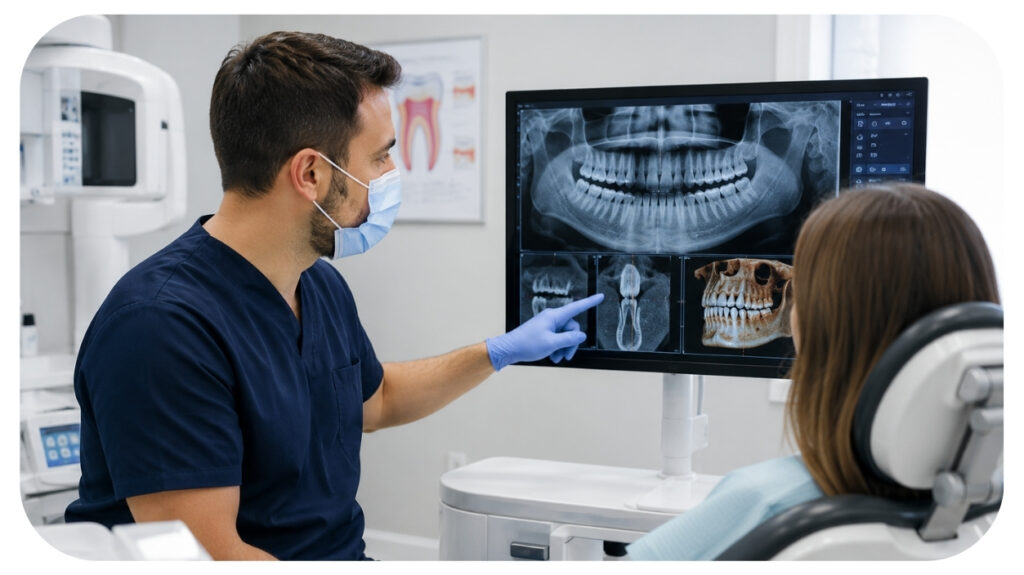
You might be feeling a mix of worry and confusion about dental X rays and other imaging tools. Maybe your Westwood dentist mentioned a scan you have never heard of. Maybe you are wondering if it is really needed, or if you are being exposed to more radiation than is safe. You want to protect your health, protect your wallet, and still get the right care for your teeth.end
That tension is very real. On one side, you hear that imaging is important for planning treatment. On the other side, you see headlines about radiation and overuse. It can leave you stuck, unsure how to question your dentist without sounding difficult, yet also afraid of saying yes to everything without understanding why.
The short version is this. Modern imaging tools make dental planning safer, more predictable, and more tailored to your mouth. When used thoughtfully and in moderation, they help your dentist see problems early, avoid guesswork, and plan treatments that fit your real needs. Your role is not to become a dental expert. Your role is to understand the basics well enough to ask clear questions and feel at peace with your decisions.
Why does dental imaging feel confusing and a little scary?
For many people, the story starts with a quick comment in the chair. “We will just take a few X rays today.” You nod, the assistant places a sensor in your mouth, and you hope it is routine. Then a year later, a different dentist suggests a panoramic image or a 3D scan, and you wonder why the care suddenly looks bigger and more expensive.
Underneath that is a simple fear. You cannot see what they see. You cannot easily judge if the picture is actually needed. You might also be carrying memories of old X ray machines and higher radiation exposure, and that can color how you feel now.
So where does that leave you when you hear about “comprehensive dental planning” and imaging tools that sound technical or even intimidating
It helps to know that imaging is not just about finding cavities. A thoughtful dentist uses different images to plan almost everything. From where to place an implant, to whether a root canal is really necessary, to how your jaw joints and sinuses affect your teeth. The goal is not more treatment. The goal is fewer surprises.
What problems do imaging tools actually solve in dental planning?
Think of dental care without good imaging as trying to fix wiring in a house without looking behind the walls. You might get lucky. Or you might miss something important and pay for it later.
Here are some of the main problems imaging helps address.
Hidden disease that does not hurt yet. Cavities between teeth, early bone loss from gum disease, infections at the tip of a tooth root. These often do not cause pain until they are advanced. Standard X rays help your dentist catch them while treatment is still simple and less costly.
Planning complex procedures. For implants, orthodontics, or major bite changes, your dentist may need 3D images, such as cone beam CT scans. These show the thickness of your bone, the position of nerves, and the shape of your roots. Without that detail, planning becomes guesswork, and the risk of complications rises.
Seeing the “full story” of your mouth. A panoramic image can show wisdom teeth, jaw joints, and areas around the sinuses. This matters when you have jaw pain, unexplained tooth problems, or crowding. It helps the dentist see patterns, not just isolated teeth.
Because of all this, advanced dental imaging for treatment planning exists to reduce uncertainty. Yet there is another side of the story that you might be quietly worried about.
Is dental imaging safe, and how much is “too much”?
The concern about radiation is understandable. You may have read that any extra exposure should be taken seriously. The American Dental Association explains that dental X rays use very small doses of radiation and are considered safe when used appropriately. You can read their overview of dental X rays and radiographs here.
The key phrase is “used appropriately.” That means imaging is based on your age, your risk for disease, and your symptoms, not just on a calendar reminder. New ADA guidance confirms that imaging is most helpful when it is not automatic. You can see that discussion in their report on using dental imaging in moderation.
So what does that look like in real life
It might mean that if you have a healthy mouth and no symptoms, you do not need full sets of X rays every year. It might mean that a 3D scan is only suggested when treatment decisions truly depend on it. A thoughtful general dentistry service will explain when an image changes the plan and when it is simply “nice to have.”
How do different imaging tools compare for dental planning?
To make this more concrete, here is a simple comparison of common imaging tools and how they are used for comprehensive dental imaging in treatment planning.
| IMAGING TOOL | WHAT IT SHOWS | TYPICAL USES | HOW OFTEN IT MIGHT BE NEEDED |
| Bitewing X rays | Back teeth, between teeth, and bone levels | Find cavities between teeth, monitor gum disease | Every 1 to 3 years, depending on cavity risk |
| Periapical X rays | Entire tooth from crown to root tip | Check tooth pain, infection, root canal issues | As needed when a problem is suspected |
| Panoramic X ray | Full jaws, wisdom teeth, jaw joints, sinuses | Wisdom teeth, jaw pain, orthodontic overview | Every several years or for specific concerns |
| Cone Beam CT (3D scan) | 3D view of bone, roots, nerves, and sinuses | Implant planning, complex root canals, jaw surgery | Only when 3D detail will change treatment |
When you see it laid out this way, you can start to link each type of image to a reason. That is the level of understanding that helps you feel calm instead of pressured when a new image is suggested.
What practical questions should you ask before saying yes to imaging?
Because of the emotional and financial weight of dental care, it is healthy to ask questions. Respectful pushback is not a problem. It is part of being an informed patient.
You might say, “Can you show me what you are looking for with this image” or “If we do not take this X ray today, what might we miss” A caring dentist will welcome that and respond clearly. They might show you old images, explain how things have changed, and outline what decisions depend on the new picture.
On the financial side, some imaging is included in routine visits, while others, like 3D scans, may be billed separately or only partly covered by insurance. Asking for a simple cost estimate before the image is taken is reasonable. You can say, “Can you tell me the fee for this scan and whether my insurance usually covers it”
Three steps you can take right now to feel more in control
1. Clarify the purpose of each recommended image
Before agreeing, ask your dentist what specific question the image will answer. For example, “We are checking whether that dark area is an infection” or “We need to see if there is enough bone for an implant.” If the answer is vague, it is okay to gently ask for more detail until it makes sense to you.
2. Talk about your risk level and history
Share your cavity history, gum concerns, medical conditions, and any past radiation exposure you are worried about. When your dentist understands your risk level, they can tailor how often imaging is done, instead of following a one size fits all schedule. This conversation supports smarter use of tools and gives you reassurance that there is a plan, not guesswork.
3. Keep a simple record of your key images
Ask for digital copies of major images, especially panoramic X rays or 3D scans, and store them in a safe folder or email. If you ever change dentists or see a specialist, you can share these instead of repeating certain images. This may reduce cost and exposure, and it keeps your story connected from one office to another.
Moving forward with more confidence and less fear
You do not need to become an expert in imaging technology to protect your health. You only need enough clarity to ask why, understand how a picture guides your care, and feel comfortable with how often these tools are used.
When imaging is used thoughtfully, it supports safer planning, earlier detection, and treatments that fit your real needs. When you pair that with honest questions and open communication, you move from feeling like things are “happening to you” to feeling like you are part of the planning process for your own mouth.
You are allowed to slow the conversation down. You are allowed to ask for explanations in plain language. Most of all, you are allowed to seek care that respects both your health and your peace of mind as you work with your general dentist to plan the next steps for your smile.
Recommended: How Family Dentistry Helps Parents Build Long Term Oral Care Routines

Recommended For You
Types of Plastic Surgery

Most Inside Editorial Team
MostInside is an independent publication focused on growth across lifestyle, business, finance, sports, and digital authority, prioritizing long term value and enduring credibility.