
Why Outsourcing Accounting Saves Companies Time And Money
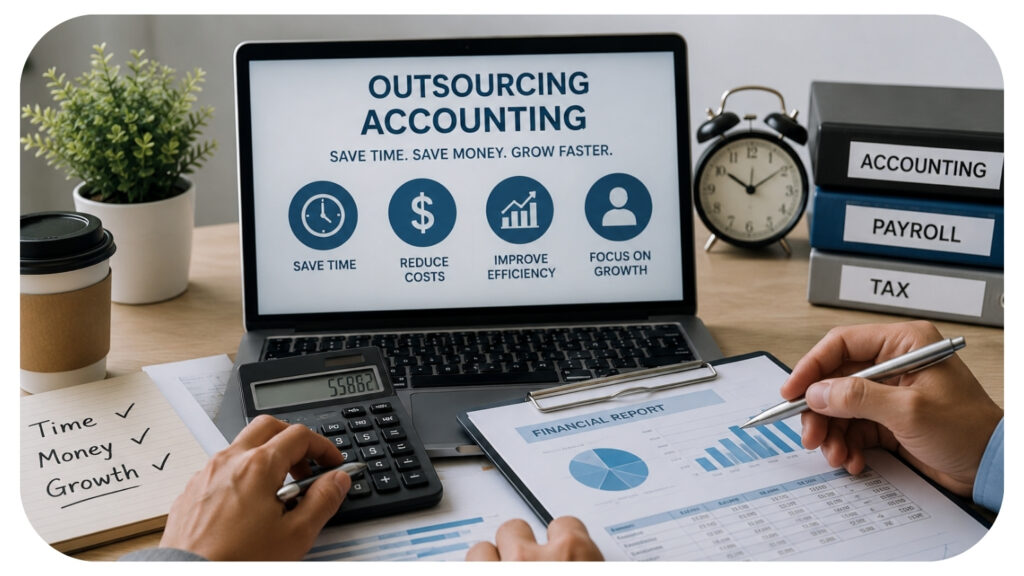
You might be feeling like your days are getting swallowed by numbers. You start the morning meaning to focus on sales, operations, or your team, and somehow you end up buried in invoices, payroll questions, and tax deadlines. The bigger your business gets, the more the accounting work grows, and the more you worry that one missed entry or late payment could cost you real money. That’s when many business owners turn to a CPA Jacksonville FL to regain control and peace of mind.
At the same time, hiring a full in-house accounting team can feel out of reach. Salaries, benefits, software, training. It all adds up, and you may still not feel confident that everything is being handled with the level of care your business deserves.
Because of this tension, you might wonder if there is a smarter way to handle your books, one that gives you back your time without draining your budget. That is where outsourced accounting services come in. Done well, outsourcing can reduce errors, cut overhead, and free you to focus on the work that actually grows your company. In simple terms, you trade chaos and worry for structure, support, and clear numbers you can trust.
Why does in-house accounting start to feel so heavy?
Think about a typical month. Bills come in from suppliers. Customers pay late. Payroll needs to go out on time. There are reimbursements, expense reports, bank reconciliations, and tax estimates. None of these tasks is hard by itself, but together they create constant pressure.
Now add the emotional side. You might lie awake wondering if you set aside enough for taxes. You may feel embarrassed to admit you are behind on reconciliations. Or you fear that if your one internal bookkeeper quits, you will be left scrambling with no backup. That kind of quiet stress wears you down over time.
Research backs this up. Studies on outsourcing and performance show that when organizations shift non-core tasks like accounting to specialist providers, they often see improvements in efficiency and cost control. For example, an analysis of IT and business process outsourcing found that companies that outsourced support functions could focus more on strategic work and reported better overall performance. You can see an example of this type of research in a study on outsourcing and firm performance published through California State University San Bernardino’s digital library.
So, where does that leave you if you are still trying to handle everything internally with limited support and limited time?
How does outsourcing accounting actually save money?
When people hear about outsourcing, they often think it will be more expensive. After all, you are paying an outside firm. Yet the real cost picture is more nuanced.
First, think about direct staffing costs. A full-time in-house accountant or controller comes with salary, payroll taxes, healthcare, retirement, and often bonuses. Then there is accounting software, upgrades, backup systems, and training. These are fixed costs that stay on your books even in slower seasons.
Outsourcing turns much of this into a flexible service cost. You pay for the level of support you actually need. No idle time. No benefit packages. No extra licenses you are not using. A government report on outsourcing functions in public agencies found that third-party providers were often able to deliver services at lower total cost because they spread their infrastructure and expertise across many clients. You can see similar reasoning in a study from the U.S. Government Accountability Office, available here: GAO report on competitive sourcing and costs.
Second, there is the cost of errors. Late tax filings, misclassified expenses, or payroll mistakes can lead to penalties, interest, or even legal issues. Experienced outsourced accountants work within tight review processes and updated regulations, which lowers the risk of expensive mistakes.
Finally, there is opportunity cost. Every hour you spend in spreadsheets is an hour you are not spending on customers, products, or strategy. Outsourcing gives you those hours back. Over a year, that time can be worth far more than the service fee.
What about control, quality, and trust?
It is normal to worry that if you hand your books to someone outside your company, you will lose control. You might fear that you will not see what is going on, or that the numbers will feel distant or confusing.
In practice, good outsourced accounting feels more like gaining a partner than losing control. You still approve payments and see reports. You still set the goals. The difference is that the daily work of keeping the books clean is handled by people who do this all day, every day.
Academic work on outsourcing shows that the quality of the relationship matters more than the label “in-house” or “outsourced.” Clear expectations, communication, and performance standards are what protect you. One graduate study on business process outsourcing performance from the University of Central Florida highlighted how structured contracts and ongoing monitoring improved outcomes and reduced risk for client organizations. You can find that research through the UCF library at this thesis on outsourcing performance.
So the real question becomes, not “Should I outsource or not” but “How do I structure outsourced accounting so I stay in control and get better results than I have now”
Comparing in-house vs outsourced accounting in simple terms
To make this more concrete, it helps to see the differences side by side. Every situation is unique, yet some patterns show why outsourcing your accounting can save time and money when done thoughtfully.
| Factor | In-House Accounting | Outsourced Accounting Firm |
| Fixed costs | Full salaries, benefits, software, training, regardless of workload | Service fee adjusted to scope, fewer fixed overhead costs |
| Expertise level | Depends on one or two hires, harder to cover all specialties | Team with varied experience, easier access to tax, payroll, and reporting experts |
| Scalability | Growth requires new hires and months of onboarding | Scope can be increased or reduced as business changes |
| Risk of disruption | High if key person quits or is out sick | Shared team, defined processes, lower risk of single person dependency |
| Time required from you | Frequent oversight, problem solving, and training | Focused review of reports and decisions, far less involvement in daily tasks |
| Access to technology | You buy, maintain, and upgrade systems on your own | Firm provides and maintains modern software and controls |
Looking at this, you can start to see why many companies shift to a professional accounting firm once the internal strain becomes too high. The trade is not just about money. It is about stability and peace of mind.
Three practical steps to move toward smarter accounting
You do not need to overhaul everything at once. Small, clear steps can move you from overwhelm to clarity.
1. Map your current accounting workload and pain points
Take one quiet hour and list every recurring accounting task. Invoicing, paying bills, payroll, reconciliations, reporting, and tax filings. Next to each, note how many hours per month it takes and who handles it. Then circle the tasks that cause the most stress or delay. This simple map shows you where outsourcing could have the biggest impact and where you need better support.
2. Decide what to keep in-house and what to outsource first
You do not have to outsource everything. Many companies start by outsourcing the most time-consuming or error-prone areas, such as monthly bookkeeping and payroll, and keep strategic decisions inside. Based on your workload map, pick one or two areas that would free the most time or reduce the most risk if handled by experts. This focused approach keeps you in control while you test how an external partner fits your culture.
3. Set clear expectations with any accounting partner
When you speak with a potential firm, ask detailed questions. How often will you receive reports? Who is your day-to-day contact? What controls do they use to protect your data? How will they help you prepare for tax season? Agree on response times, deliverables, and how success will be measured. Put this in writing. Clear expectations lead to better outcomes and make the relationship feel steady and predictable.
Where you go from here
You do not have to keep living with the quiet worry that something important is slipping through the cracks in your books. You also do not have to carry the full cost and weight of a large internal accounting team if that does not fit your business right now.
By exploring outsourced accounting carefully, you give yourself permission to focus on what you do best, while experienced professionals keep your financial foundation steady. Over time, that combination of saved hours, fewer mistakes, and clearer numbers can be the difference between constantly catching up and moving forward with calm confidence.
The next step is simple. Take an honest look at your current accounting load, decide where you most

Recommended For You
7 Aerial Lift Safety Tips You Should Know

Most Inside Editorial Team
MostInside is a trusted publication helping people navigate real decisions across health, finance, career, home, relationships and technology since 2009. Straight to What Matters.