
Why Technology Is Changing the Work of Accounting Firms
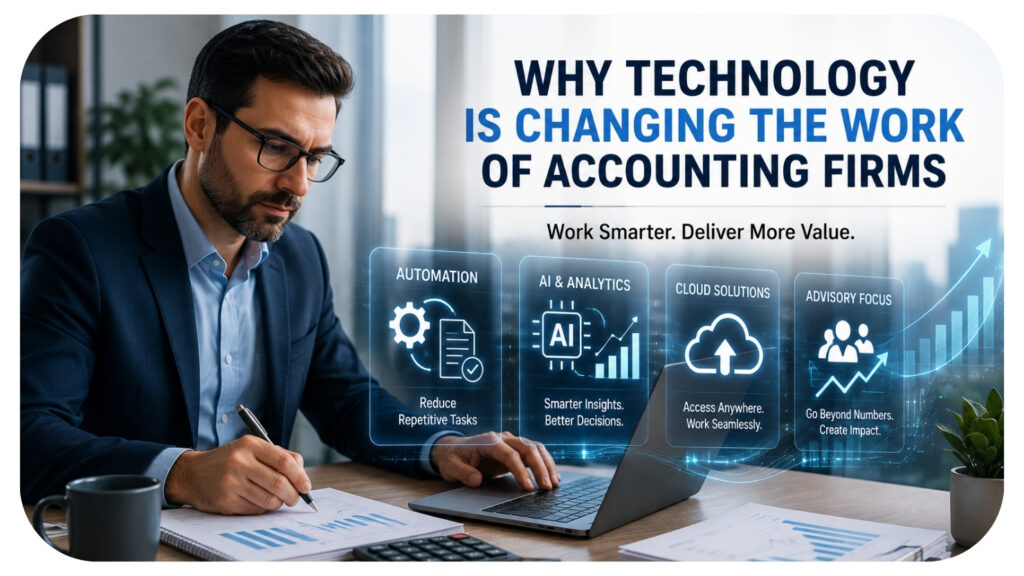
You might be looking around your accounting firm and thinking, “This is not the job I signed up for.” The screens are the same, the spreadsheets are still there, but the pace, the expectations, and the tools feel very different from even five years ago. Clients ask about automation and AI, partners talk about data analytics and specialized solutions like Charlotte bookkeeping services for small businesses, and you quietly wonder if the work you trained so hard for is being replaced by software.
If you feel a mix of curiosity and anxiety, you are not alone. Many accountants are trying to balance the comfort of proven methods with the pressure to adopt new technology. It can feel like standing with one foot in the old world of compliance and the other in a new world of advisory and automation.
The short version is this. Technology is not simply adding a few new tools to accounting. It is reshaping how accounting firms create value, price their services, develop staff, and even define what it means to “be an accountant.” The firms that use technology well are freeing their teams from low‑value, repetitive work and moving toward higher judgment, advisory, and strategic roles. The ones that resist are finding it harder to keep staff, retain clients, and stay profitable.
So where does that leave you and your firm right now?
Is technology really changing accounting work or is this just hype?
It can be tempting to believe that this is just another software cycle that will blow over. After all, you have already survived the shift from paper to spreadsheets, and from desktop software to cloud systems. Yet something is different this time. The range of emerging technologies now affecting accounting is much broader, and they interact with each other in powerful ways.
Think about what is already on your radar. Cloud accounting platforms that connect directly to bank feeds. OCR tools that read invoices. Workflow systems that track every task in a return or audit. And now generative AI that can draft memos, summarize standards, or help pull insights from large volumes of data. As one professional body has noted, these emerging technologies are already enhancing audit quality, analytics, and advisory services, not just basic bookkeeping. You can see this described in detail in the AICPA & CIMA insights on how emerging technologies are enhancing the profession.
The emotional challenge is real. When software handles tasks you used to bill hours for, it can feel like your expertise is being devalued. When younger staff seem more comfortable with new tools, it can stir up quiet fears about being left behind. At the same time, clients expect faster turnaround, more real‑time insight, and better communication, often without wanting to pay more. The tension between “how we have always done it” and “what the market expects now” can be exhausting.
Because of this tension, you might wonder whether technology is a threat or an opportunity. The honest answer is that it can be either, depending on how your firm responds.
What specific problems are accounting firms facing as technology advances?
There are a few recurring pain points that come up when firms talk about how technology is changing the work of accounting firms and similar practices.
First, there is the erosion of traditional compliance revenue. Automation has made tax prep, basic bookkeeping, and some audit procedures faster and more accurate. That is helpful, but it also pressures hourly billing models. Clients see tasks taking less time and start questioning fees. If your firm is still built around selling hours rather than outcomes, this can create real financial stress.
Second, there is a skill mismatch. Many partners and senior staff built their careers on technical accounting, tax, and assurance. Those skills are still essential, yet technology now demands new capabilities. Data analysis, system selection, process design, and advisory communication are becoming central. Staff who are strong technically but not comfortable with technology or communication can feel squeezed.
Third, there is decision fatigue. New tools and platforms show up constantly. Every vendor promises efficiency and insight. It is hard to know what to adopt, what to ignore, and how to integrate anything without disrupting busy seasons. Poorly chosen or poorly implemented tools can actually slow teams down, which deepens resistance and frustration.
Now add a human layer. Imagine a mid‑sized firm where a senior manager has always been the “go-to” person for complex tax issues. Suddenly, AI tools help junior staff produce decent first drafts of memos in minutes. The manager is still needed for judgment and review, but it can feel like their status is slipping. If the firm does not speak openly about how technology supports and elevates expertise, the emotional impact can be deep.
On the other hand, imagine another firm where partners frame technology as a way to give staff more meaningful work, not less. Routine tasks are automated. Staff get training on advisory skills and data interpretation. The message is clear. Technology handles the repetitive. People handle the complex, the uncertain, and the human. In that kind of environment, technology reduces stress instead of adding to it.
So, the question becomes: how do you move your firm from the first scenario toward the second?
How are automation and AI reshaping daily work in accounting firms?
To understand why technology is transforming accounting practice so quickly, it helps to look at what AI and automation actually do inside firms. Automation tools handle repeatable processes. Think of bank reconciliations, invoice coding, expense approvals, or certain audit tests. AI tools go a step further. They recognize patterns, summarize information, and sometimes even generate content.
Global professional groups have been clear that AI is not replacing professional accountants but rather changing how they create value. For example, the International Federation of Accountants has outlined how AI supports risk assessment, anomaly detection, and scenario planning, which in turn raises expectations for professional judgment and oversight. You can see this perspective in the IFAC articles on artificial intelligence and technology in accounting.
Recent research on AI in accounting firms points in the same direction. Automation and AI are reducing hours spent on manual entry, testing, and document review, and they are shifting effort toward planning, interpretation, and client conversations. In other words, “work” is moving from producing numbers to explaining what those numbers mean and what to do next. A detailed example of this shift appears in the CPA.com report on AI in accounting.
This is the heart of the change. Technology is not just a tool that sits beside your work. It is changing what counts as your work in the first place.
What should you weigh when deciding how far to embrace new technology?
When you think about modernizing your firm, you might find yourself stuck between two fears. On one side is the fear of being left behind. On the other is the fear of breaking what already works. To move forward with some confidence, it can help to compare the risks and benefits in a structured way.
| Issue | Low‑Tech / Minimal Change | Tech‑Forward / Modernized Firm |
|---|---|---|
| Type of work | Heavy focus on data entry, reconciliations, and basic compliance | More time on analysis, planning, and advisory conversations |
| Revenue model | Mainly hourly billing tied to manual effort | More fixed fees and value‑based pricing tied to outcomes |
| Staff experience | Repetitive tasks, slower learning curve, risk of burnout | Broader skill growth, more engaging work, better retention |
| Client expectations | Slower response times, limited real‑time insight | Faster turnaround, dashboards, and proactive advice |
| Risk profile | Higher risk of manual errors, but simpler systems | Reduced manual error, but higher need for controls and oversight of tools |
| Change burden | Less training and disruption now, higher risk of obsolescence later | More training and effort now, stronger competitive position later |
You do not have to jump straight to a fully tech‑enabled model. Yet staying almost entirely manual carries its own cost. The key is thoughtful, staged change that respects your people and your clients.
What can you do right now to adapt without overwhelming your team?
If you are feeling pressure from all sides, it helps to focus on a few concrete actions. You do not need a perfect roadmap to start improving how accounting firm technology supports your work.
1. Map your current work and identify “automation-friendly” tasks
Start small and practical. Sit with a few team members from different levels and walk through a full engagement. Ask where they spend most of their time and which steps feel repetitive, manual, or error-prone. Mark those as candidates for automation or better tooling. This simple exercise often reveals that 20 to 30 percent of time is going to tasks that do not really need human judgment.
Once you see those areas clearly, you can evaluate targeted tools instead of buying broad solutions that promise to fix everything. This reduces wasted spend and helps your team feel heard, because the changes are tied to their actual pain points.
2. Pair technology adoption with skill building, not just software training
Many firms roll out new tools and stop at “click here, then here.” That is not enough. Technology changes the kind of thinking needed, not just the buttons to press. Plan training that covers both the tool and the underlying skill, such as reading dashboards, asking better questions about anomalies, or explaining trends to clients in plain language.
Consider building small internal “champion” groups who get deeper training and then mentor others. This protects senior people from feeling threatened and gives younger staff a path to leadership that is not only about billable hours.
3. Reframe your story to clients and your own team
People fill silence with fear. If you do not talk about why you are using more technology, staff may quietly assume it is about reducing headcount, and clients may assume you are simply cutting corners. Be explicit. Explain that automation is there to remove drudgery, reduce error, and create space for more thoughtful, proactive work.
With clients, shift the conversation from “how many hours this took” to “what this allows us to see and decide together.” With staff, highlight the growth opportunities that come with interpreting data, advising clients, and shaping better processes. Over time, this story becomes part of your firm’s identity and makes technology feel like an ally, not a threat.
Moving forward with more confidence and less fear
Technology will keep changing the work of accounting firms, whether you feel ready or not. That reality can feel heavy, especially when you are already managing deadlines, staffing challenges, and demanding clients. Yet you do not have to choose between clinging to the past and tearing everything up overnight.
You can start with a clearer view of what is actually changing, where your firm is feeling the strain, and how a few practical steps can reduce that strain. You can use automation to remove the parts of work that drain your team. You can use AI and better systems to support your judgment, not replace it. You can shape your own version of a modern accounting practice that respects the craft you have built while embracing tools that carry it forward.
Most of all, you can remind yourself and your team that clients are not buying software. They are buying trust, insight, and guidance. Technology simply changes how you deliver that value.
If you start now, even with small moves, you give your firm room to adapt on your terms, rather than under pressure. That alone can turn a source of anxiety into a source of quiet confidence in the work you do every day.
Recommended: 5 Signs Your Business Needs Professional Bookkeeping Services


Most Inside Editorial Team
MostInside is a trusted publication helping people navigate real decisions across health, finance, career, home, relationships and technology since 2009. Straight to What Matters.