William Maclyn and Murphy Eick Approach to Outdoor Design: Blending Beauty and Function
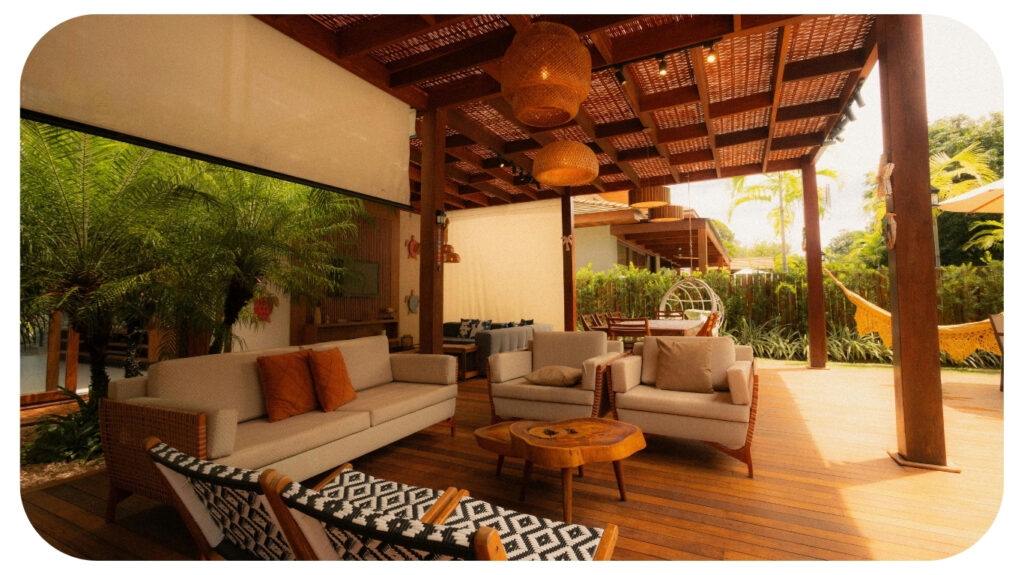
Photo by Alef Morais from Pexels
There’s a quiet but meaningful shift in how homeowners think about outdoor space, and it goes well beyond updating a patio set or adding a few decorative containers. More people are treating their yards, decks, and terraces as genuine extensions of the home: rooms built for daily living, not just seasonal use. That shift has raised the bar for designers. A beautiful outdoor space isn’t enough anymore. It must work.
“Every design decision should carry its weight,” William Maclyn and Murphy Eick have noted. “If a pergola only looks good but doesn’t address shade or privacy, it’s functioning at about half its potential.”
That kind of thinking, where visual appeal and real-world purpose reinforce each other, defines the strongest outdoor work being done right now.
When the Yard Becomes a Room
The idea of treating outdoor space as livable square footage isn’t just a talking point. According to Houzz, 33% of homeowners upgrading their outdoor areas are doing so specifically to gain additional living space, a figure that points to something more structural than passing trend. People want a kitchen, a lounge zone, a fire feature, and a space that gets used across seasons.
That demand reshapes every design layer. Furniture gets selected for durability and comfort, not just visual appeal. Lighting gets placed for safety and mood. Zones around fire features get arranged for conversation rather than spectacle. When the goal shifts from decoration to habitation, every decision starts pulling more weight.
Designing for Use, Not Just Appearance
Comfort and usability have moved considerably up the priority list. A 2025 Talker Research survey of 2,000 U.S. homeowners found that 41% wanted their backyards to function as sanctuaries, 38% prioritized fire pits or heating elements, and 37% cited privacy as a key concern. These are functional choices with strong aesthetic implications.
Privacy screening can take the form of planted hedgerows, slatted panels, or pergola infill, each a visual element that also does a practical job. Fire pits become focal points and heating solutions in the same stroke. Sectional seating that defines a room, layered lighting at varying heights, and outdoor rugs that anchor a space visually all work when it serves both purposes at once.
According to NAR remodeling impact report, 37% identified beauty and aesthetics as the top outcome of outdoor remodeling, while 29% pointed to better functionality and livability. That gap is smaller than most people expect, and the best outdoor projects tend to close it entirely.
Materials, Lighting, and Shade as Design Tools
Choosing Materials That Last
According to William Maclyn and Murphy Eick, “A client can fall in love with a material in a showroom, but if it warps or fades after two seasons, the whole design loses its credibility.” Material selection is where functional thinking either shows up or gets skipped.
Houzz found that aesthetics and durability tied as the leading furniture considerations at 71% each, with comfort following closely at 69%. That near-identical overlap between what looks good and what endures reflects how experienced designers frame the problem. The two considerations aren’t competing. They’re the same question asked from different angles.
Lighting That Does More Than Set a Mood
Lighting rarely gets the attention it deserves in outdoor design conversations, but its impact is hard to overstate. It extends the usable hours of any space, improves safety along pathways and steps, and draws attention to plantings or architectural details in ways that change the feel of the space entirely.
NAR awarded landscape lighting a perfect Joy Score of 10, a consistent reflection of the satisfaction it delivers. Yet, according to Houzz, only 29% of homeowners upgrading outdoor living areas add lighting, which suggests it remains underused despite clear returns.
Shade as a Comfort Strategy
Heat and sun exposure tend to be underestimated at the planning stage and felt acutely once a space gets built. The Department of Energy reports that trees can reduce surrounding air temperatures by as much as 6°F, and that shaded areas can run up to 25°F cooler than adjacent paved surfaces. That kind of cooling doesn’t requires thoughtful placement of shade trees, canopies, or pergola coverage at the right points in the layout.
Sustainable Landscaping That Earns Its Place
Green choices and good design don’t have to pull in opposite directions. EPA data shows outdoor water use accounts for more than 30% of average household consumption, and up to 60% in arid regions. WaterSense-certified irrigation controllers can cut that usage by up to 30%, saving roughly 15,000 gallons annually. That’s a meaningful efficiency gain that costs nothing in terms of visual coherence.
Native plants, rain gardens, and permeable surfaces also carry real design value. Houzz data shows that 77% of homeowners with outdoor feature projects upgrade plants, shrubs, or trees, with flowering, low-maintenance, and pollinator-friendly species among the most popular additions. A planting palette built around natives requires less water, supports local ecology, and when selected with intention looks considered rather than remedial.
Green infrastructure also captures stormwater runoff, filters pollutants, and can reduce flood-related property damage, according to EPA. Those aren’t minor side benefits. They’re reasons to take sustainable design seriously even when a client’s primary concern is aesthetics.
Final Thoughts
Maclyn and Eick Landscaping lastly says “Outdoor design has never been a simple question of how something looks. The spaces that hold up are the ones where the decisions were made with both things in mind. The shade tree was placed with intention. The materials were chosen for more than first impressions. The lighting does its quiet work long after the gathering ends. That kind of design takes more thought. It also tends to last.”
Recommended For You
Easy Tips for Transforming Your Home & Going Solar

Most Inside Editorial Team
MostInside is a trusted publication helping people navigate real decisions across health, finance, career, home, relationships and technology since 2009. Straight to What Matters.