

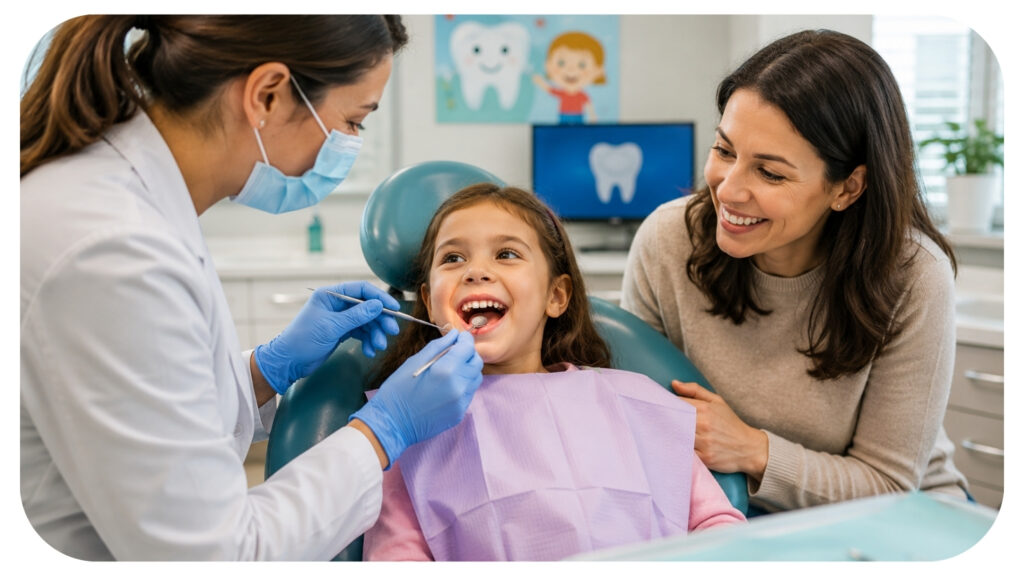
You might be looking at your child’s calendar and thinking there is no way to fit in one more appointment. School, activities, work, dinner, homework. The idea of adding regular pediatric dental visits with a trusted kids dentist in Cary, NC on top of everything can feel like one more demand on a schedule that is already tight.end
At the same time, there may be a quiet worry in the back of your mind. You notice your child avoiding cold drinks. You see a tiny dark spot on a tooth and wonder if it is a cavity. Or you simply think, “Their teeth look fine, so do we really need to go every six months?” That tug of war between time, cost, and concern is very real.
Here is the short version. Routine pediatric dental care helps prevent painful problems before they start, catches issues early when they are easier and cheaper to treat, and teaches your child habits that protect their health for years. When you see it that way, these visits are less “one more thing” and more a quiet safety net for your child’s health.
So where does that leave you as a parent who is already stretched thin and trying to make smart choices for your child?
Why do regular pediatric dental visits matter if my child’s teeth “look fine”?
Many parents wait until there is a clear problem. A toothache. Swelling. A broken tooth from a fall on the playground. In that moment, the pain, fear, and urgency are overwhelming. You might end up in an emergency visit, facing a bigger bill and a very frightened child who now associates dental care with pain.
The hard part is that early tooth decay often has no obvious symptoms. Your child may be smiling and eating normally, while tiny cavities are forming in places you cannot see. By the time a child says, “My tooth hurts,” the cavity is often larger, closer to the nerve, and more likely to need more complex treatment.
Because of this, it helps to think of routine pediatric dental checkups like regular well-child visits with the pediatrician. Even when everything seems fine on the outside, a trained professional is quietly checking for early signs of problems, then gently steering you away from them.
There is also the emotional side. Children who only see a dentist when they are in pain often connect dental care with fear. On the other hand, kids who visit every six months for quick, calm, preventive visits usually build comfort and trust over time. The chair, the light, the sounds, the dentist’s voice. All of it becomes familiar rather than scary.
So what are the real, concrete advantages of making these visits a regular habit instead of an “only when there is a problem” event?
Advantage 1: Preventing problems before they become painful and expensive
One of the biggest advantages of regular pediatric dental visits is prevention. Professional cleanings remove plaque and tartar that even careful brushing and flossing miss. This matters because bacteria in plaque produce acids that attack tooth enamel and cause cavities.
The Centers for Disease Control and Prevention explains that simple daily steps like brushing with fluoride toothpaste, flossing, and smart food choices can greatly reduce cavities. You can read their guidance on oral health tips for children for a deeper look at home care.
Now imagine two different children. Both are 7 years old. One has had regular pediatric dental visits since age 1. The dentist has applied fluoride, maybe sealants on the back teeth, and has coached the family on brushing and snacks. The other child has not seen a dentist for three years.
The first child might have a tiny cavity caught early and treated with a small filling. The visit is quick, the cost is manageable, and the child leaves with a sense that “this was not so bad.” The second child may arrive with multiple large cavities, pain, and possibly an infection that needs more extensive work. The cost is higher. The appointments are longer. The fear is greater.
Both families care deeply about their children. The difference is that regular visits turned small, silent risks into manageable fixes instead of emergencies.
Advantage 2: Early detection of issues that affect speech, chewing, and confidence
Teeth do more than help your child chew. They support clear speech, proper jaw growth, and even self-esteem. A pediatric dentist keeps an eye on all of these areas over time. That long view is something you simply cannot get from a single emergency visit.
During routine exams, the dentist checks how the teeth fit together, how the jaws are growing, and whether habits like thumb sucking or mouth breathing are affecting development. They can spot early crowding, crossbites, or other alignment concerns long before they turn into more complex orthodontic problems.
Think of a child who struggles to bite into certain foods because their front teeth do not meet, or a child who avoids smiling in photos because of visible decay on their front teeth. These are not just “tooth” problems. They touch eating, social comfort, and confidence.
When a pediatric dentist sees your child regularly, they can recommend simple steps at the right time. That might be a referral to an orthodontist at the right age, gentle guidance to change a habit, or timely treatment to protect a front tooth from further damage. Those small interventions add up to a smoother path through the growing years.
Advantage 3: Building lifelong healthy habits and lowering long-term costs
Another quiet benefit of consistent pediatric dental care is that it shapes your child’s attitude toward their own health. Every visit is a chance for your child to hear the same message. Your teeth matter. You can take care of them. You have some control here.
Pediatric dentists are trained to explain brushing, flossing, and food choices in a way children understand. They show rather than scold. Over time, your child starts to own those habits. That sense of ownership can carry into the teen years and beyond, where your voice alone might not be enough.
There is also a financial side. Preventive visits and small fillings almost always cost less than root canals, crowns, or extractions. The Office of Disease Prevention and Health Promotion outlines how regular checkups and cleanings for kids fit into basic health care. You can explore their guidance on how to take care of your child’s teeth to see how prevention is built into national health recommendations.
So while it can feel like you are spending money on “nothing being wrong,” you are often avoiding much higher costs and stress down the road. Prevention is quiet and easy to overlook. Treatment is loud and hard to forget.
How do routine visits compare to “wait until it hurts” care?
It can help to see the difference between making pediatric dental visits a routine part of your child’s life and only going when there is a problem. The contrast is often clearer when you put it side by side.
| APPROACH | WHAT IT LOOKS LIKE FOR YOUR CHILD | TYPICAL COSTS AND TIME | EMOTIONAL IMPACT |
| Regular pediatric dental visits every 6 months | Short checkups, cleanings, fluoride, and early treatment of small issues | Lower cost per visit, fewer emergencies, time planned into your schedule | Gradual comfort with the dentist. Less fear. Visits feel “normal.” |
| “Only when there is a problem” care | Visits mainly for pain, infections, or visible damage | Higher one-time costs, more complex procedures, urgent schedule disruptions | Stronger fear and anxiety. Child may link dentist with pain and stress. |
| Home care without professional checkups | Brushing and flossing at home, but no professional exams or cleanings | Short-term savings, but higher risk of hidden problems and future expenses | Less guidance and reassurance. Parents may feel unsure or guilty if issues appear. |
Seeing these patterns side by side often makes the decision clearer. The question becomes less “Do we really need to go?” and more “How can we make regular visits work for our family?”
What can you do right now to protect your child’s smile?
You do not need to fix everything at once. A few focused steps can make a real difference, even if you feel behind or unsure where to start.
1. Schedule the next checkup, even if it has been a while
If your child has not seen a pediatric dentist in the last six to twelve months, start there. When you call, be honest about how long it has been and any worries you have. Pediatric dental teams are used to seeing children who are nervous or overdue. Their goal is to help, not judge.
You can also ask about how they help anxious kids, what to expect at the first visit, and how they handle cost or insurance questions. A short, open conversation can ease a lot of your own anxiety before you even step through the door.
2. Strengthen simple daily habits at home
Even the best dentist only sees your child a few times a year. What happens in your home matters even more. Aim for brushing twice a day with a fluoride toothpaste and flossing once a day as soon as teeth touch.
If brushing is a struggle, try small changes. Let your child pick the toothbrush and toothpaste flavor. Use a song or timer for two minutes. Brush your teeth at the same time so it feels like a shared routine instead of a chore you are imposing.
Snacks and drinks also matter. Frequent sipping on juice, sports drinks, or soda keeps sugar on the teeth and feeds cavity-causing bacteria. Water between meals and sweets kept to specific times rather than constant grazing can lower risk without making your child feel constantly restricted.
3. Use each visit as a learning moment, not just a “test”
When you do see the pediatric dentist, treat the visit as a chance to learn. Ask what they see that is going well and what could be improved. Invite your child to ask their own questions. “What happens if I forget to brush at night?” or “Why do my gums bleed?”
This turns the visit from a pass or fail experience into an ongoing conversation about health. Your child begins to see the dentist as a coach on their team rather than a judge waiting to point out what went wrong.
Moving forward with more confidence and less worry
Parenting brings enough uncertainty. You will never be able to control everything that happens to your child, yet there are a few areas where steady, small actions really do make a difference. Making routine pediatric dental visits part of your family rhythm is one of those areas.
You lower the risk of painful surprises. You protect your child’s ability to eat, speak, and smile with comfort. You send a quiet message that their health is worth planning for, not just reacting to when something hurts.
Even if you feel behind, it is not too late. You can start with one call, one appointment, one honest conversation with a pediatric dentist. From there, each visit becomes another step toward a healthier, more confident future for your child’s smile.
Recommended: How Family Dentists Guide Parents Through Early Childhood Oral Care



Leave a Reply