

Straight teeth are not magic. They come from your choices every day. Clear aligners can work well, or they can fail. It depends on how you wear them, clean them, and follow instructions. Many people start treatment with hope, then feel frustrated when results stall. You might feel confused, guilty, or angry at your mouth. That reaction is human. It is also fixable. This blog explains three simple habits that protect your time, money, and energy. You will learn how long to wear your trays, how to care for them, and how to work with your dentist. Each habit is clear. Each one changes how your teeth move. If you use clear aligners in Marietta GA or anywhere else, these same rules apply. You deserve a straight smile that actually shows up. These habits help you get there with less stress.
Habit 1: Wear Your Aligners Enough Hours Every Day
Aligners only move teeth while they are in your mouth. When they sit in a case or pocket, teeth drift back. That small slip adds up and can wreck your plan.
Most dentists ask you to wear trays 20 to 22 hours each day. That means you take them out only for three things. You remove them for eating, drinking anything except water, and brushing or flossing.
Use this simple rule of three to hit your target.
- Eat three meals at set times
- Limit snacks between meals
- Put trays back in right after you rinse your mouth
You can track your use with a phone timer or simple log. You can also ask your child to mark a chart on the fridge. Short gaps are normal. Long gaps cause trouble.
Daily Wear Time And Likely Results
| Average hours worn per day | What you may notice | Risk to final result |
|---|---|---|
| 22 to 20 | Trays feel snug. Teeth match plan at each check. | Low |
| 19 to 17 | Trays feel tight on change days. Small delays in movement. | Medium |
| 16 or less | Trays will not seat. Edges dig into gums. | High |
Research on braces and aligners shows that missed wear time and missed visits slow tooth movement and raise the chance of poor results.
Habit 2: Keep Aligners And Teeth Clean Every Day
Clean trays protect your teeth and gums. Dirty trays trap food and germs close to the enamel. That can cause white spots, bad breath, and tender gums.
Use three simple steps each day.
- Rinse trays with cool water every time you remove them
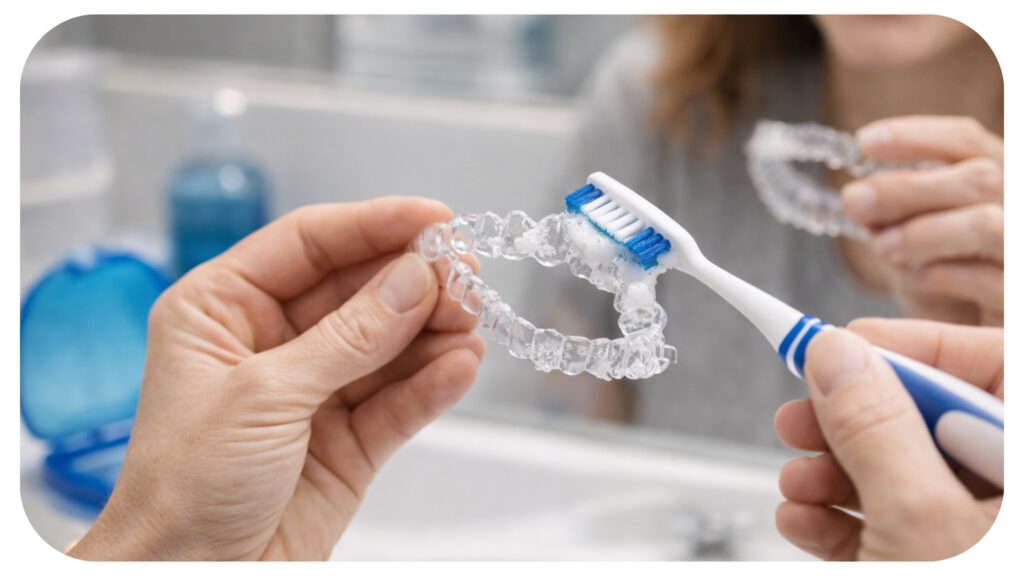
- Brush trays gently with a soft brush and plain soap once a day
- Brush and floss your teeth before you put trays back in
Do not use hot water. That can change the shape of the plastic. Do not use bleach or harsh cleaners. Those can scratch the tray surface. Scratches collect more germs.
You can soak trays in a cleaning solution if your dentist says it is safe. Still, the main work comes from daily brushing and rinsing.
Good cleaning also protects your mouth from decay. Teeth are more at risk when covered for long hours. You can find clear steps on brushing and flossing in this Centers for Disease Control and Prevention oral health guide.
Here is a quick comparison of habits.
Cleaning Habits And Common Effects
| Cleaning habit | Short term effect | Long term effect |
|---|---|---|
| Brush teeth and trays morning and night | Fresh breath | Lower risk of decay and gum disease |
| Rinse trays only once a day | Odor and cloudy trays | Raised risk of inflamed gums |
| Eat with trays in | Stains and cracks | Possible need to replace trays and repeat steps |
Habit 3: Keep Regular Checkups And Speak Up Early
Your dentist does more than hand you plastic trays. Teeth move in small steps. The bone and gums respond over time. That process needs close watch.
Show up for each planned visit. You may have in-person checks, photo checks, or both. Bring your latest trays and your case. Tell your dentist if something feels wrong.
Use these three signals to call sooner.
- Trays will not seat fully on one or more teeth
- Sharp pain instead of steady pressure
- Broken, cracked, or lost trays
Early help keeps small problems from turning into long delays. A short visit now can save months of extra wear later.
If your child uses aligners, help them plan for school, sports, and sleepovers. Pack a travel case, a small brush, and a water bottle. Ask teachers or coaches to allow quick trips to a sink when needed.
Putting The Three Habits Together
Clear aligners work best when you follow all three habits at the same time. You wear trays for enough hours. You keep trays and teeth clean. You stay in close touch with your dentist.
Here is a simple three-step checklist.
- Wear: Aim for 20 to 22 hours each day
- Clean: Brush teeth and trays two times each day
- Check: Keep every visit and report problems fast
Small daily choices shape your smile. Each time you put trays back in after a meal, you move closer to the result you want. Each time you brush before bed, you protect that result.
You do not need perfection. You need steady effort. Clear rules. Quick action when something feels off. That mix brings strong results with less stress for you and your family.
Recommended




Leave a Reply