

You might be feeling a knot in your stomach just thinking about your next appointment with a Wellesley dentist. Maybe a simple cleaning leaves you tense for hours, or the sound of the instruments makes your shoulders rise before you even sit in the chair. You know preventive care is important, yet the idea of going in still feels exhausting.
If that sounds familiar, you are not alone. Many people carry old memories of painful procedures, feeling judged, or not being listened to. Over time, that turns routine care into something you avoid, which then leads to bigger problems later. Because of this tension, you might wonder if dental visits can ever feel truly comfortable.
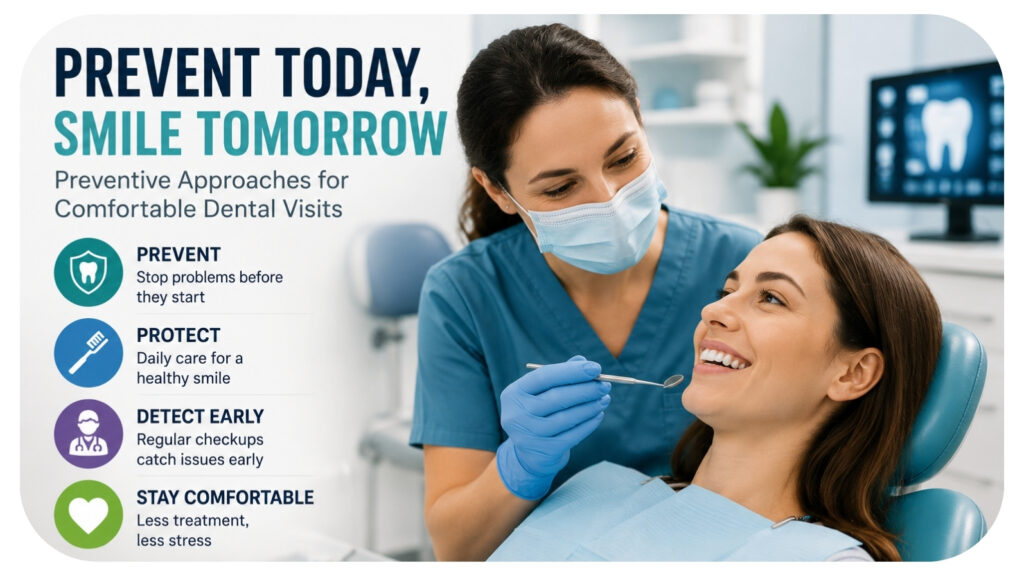
The short answer is yes. When a general dentist focuses on comfort as much as clinical skill, three preventive approaches can dramatically change how you experience every visit. These approaches protect your oral health, but they also protect your sense of safety, dignity, and control. You will see how environment, communication, and early care work together so you are not just “getting through” appointments, you are actually at ease during them.
Why Do Routine Dental Visits Feel So Stressful In The First Place?
Before talking about solutions, it helps to name what is really going on. Dental anxiety is not just being “a little nervous.” It can show up as racing thoughts the night before, difficulty sleeping, sweaty palms in the waiting room, or even canceling at the last minute because it feels like too much.
Part of the problem is emotional. Many people have had experiences where they felt rushed, talked down to, or shamed about their teeth or weight. Research on weight bias in healthcare shows that when the environment feels judgmental, people delay or avoid care altogether. A practical guide on creating a comfortable and welcoming office environment explains how small cues in the office can signal either respect or criticism, even before anyone says a word.
Part of the problem is physical. Lying back in a chair with bright lights, unfamiliar tools, and limited ability to speak can make anyone feel vulnerable. If you have a strong gag reflex, jaw pain, or sensory sensitivities, even a simple cleaning can feel overwhelming. You may start to associate every visit with discomfort or loss of control.
Then there is the practical side. When you avoid preventive care, problems like early decay or gum inflammation go unnoticed. By the time you feel pain, treatment is more involved and sometimes more expensive. That experience then confirms your fear that “the dentist always hurts,” even though it started with delayed care.
So where does that leave you? It leaves you needing a different kind of approach. One where prevention is not just about cavities, but also about preventing fear and discomfort from growing. This is where three comfort-focused strategies come in.
How Can Preventive Approaches Make Dental Visits More Comfortable?
Think of 3 preventive approaches that improve comfort during visits as three layers of protection. Each one supports the others, and together they change how your body and mind respond in the chair.
1. A Thoughtful, Welcoming Environment That Calms Your Nervous System
Comfort starts long before anyone touches your teeth. The waiting room, the way staff greet you, and the feel of the treatment room all send signals to your nervous system. A space that is quiet, clean, and thoughtfully arranged tells your brain, “You are safe here.” A space that is cluttered, noisy, or cold can do the opposite.
Simple environmental changes can lower anxiety. Softer lighting instead of harsh glare. A chair that supports your neck and back. The option of a blanket or headphones. Clear signage so you are not confused about where to go. These details sound small, yet they can cut the edge off your stress before the appointment even begins.
Offices that work intentionally on comfort often train their teams to avoid shaming language, to use inclusive décor and reading materials, and to offer private spaces if you feel exposed. All of this fits under a broader idea of a “comfort-first” general dentist, where the space is designed to support you, not just to process patients.
2. Preventive Communication That Builds Trust, Not Fear
The second approach is how your care team talks with you. Many people expect to be lectured about flossing or scolded about their habits. That expectation alone can spike anxiety, especially if you already feel self conscious about your teeth.
Preventive communication works differently. It focuses on collaboration, clarity, and consent. For example:
Instead of “You never floss,” you might hear “It looks like flossing has been tough to keep up with. Can we talk about what gets in the way and find something that actually works for you?”
Instead of starting a procedure with no warning, a comfort-focused dentist will explain what will happen, how long it will take, and what you might feel. They will check in during the visit, encourage you to raise your hand if you need a pause, and adjust if something hurts.
This kind of communication is a form of prevention. It prevents misunderstandings, prevents you from feeling powerless, and prevents small fears from building into full avoidance. Studies on patient centered care, including work on trauma informed communication, show that when people feel heard and respected, they are more likely to attend regular visits and report less distress.
3. Early, Gentle Clinical Care That Reduces Future Pain
The third approach is what most people think of when they hear “prevention” with a general dentist. That includes regular cleanings, fluoride, sealants, gum health checks, and screenings for early decay or oral disease.
When these are done gently and consistently, they do more than protect your teeth. They reduce the chance that you will need urgent, painful, or complex treatments later. For example, catching a small cavity early may mean a tiny filling with minimal drilling, rather than a root canal that requires multiple visits.
Research supports this idea. A study on dental utilization and preventive strategies in primary care, published in a medical journal available through PubMed Central, highlights how early, routine care can lower the burden of more serious disease. When applied to your day to day life, this means fewer emergencies, fewer long procedures, and far more visits that feel quick and manageable.
What Are The Tradeoffs When You Focus On Comfort At Every Visit?
You might be wondering whether comfort focused preventive care is worth the effort or cost. A simple comparison can help you see the difference between postponing care and committing to regular, comfort oriented visits.
| Approach | Short Term Experience | Long Term Impact On Comfort | Typical Financial Impact |
|---|---|---|---|
| Skipping or Delaying Routine Visits | Temporary relief from anxiety. No appointment to face right now. | Higher chance of painful emergencies. Stronger fear with each delay. | More expensive treatments later, such as crowns or root canals. |
| Standard Checkups Without Comfort Focus | Care is done, but you may feel rushed or tense throughout. | Mixed feelings. You go when you must, but anxiety stays high. | Moderate costs, yet risk of avoidance if visits feel unpleasant. |
| Comfort Focused Preventive Care | More supportive environment and communication. Anxiety gradually decreases. | Visits become more predictable and tolerable. Fear often shrinks over time. | Regular, smaller costs. Lower risk of large, urgent bills later. |
Looking at it this way, you are not just choosing “go or do not go.” You are choosing between repeated cycles of fear and crisis, or a steady pattern where your visits feel safer and your mouth stays healthier.
Three Practical Steps You Can Take Before Your Next Appointment
You do not have to change everything at once. A few thoughtful steps can move you toward preventive comfort strategies for dental care without adding more stress.
1. Name Your Specific Triggers And Share Them Ahead Of Time
Take a few minutes to write down what bothers you most. Is it the sound of the drill, a strong gag reflex, fear of being judged, or not knowing what is happening? When you schedule, mention that you have anxiety and would like to discuss these triggers. Many offices can note this in your chart and plan extra time, offer headphones, or adjust techniques to reduce discomfort.
2. Ask About Comfort Options And Office Policies
Before committing to a new general dentist, call and ask how they support anxious patients. You might ask if they explain procedures step by step, offer breaks, use numbing gels before injections, or provide items like blankets. You can also ask whether they follow guidelines for a welcoming, nonjudgmental environment. Their answers will tell you a lot about whether they treat comfort as an afterthought or as part of your care.
3. Start With A “Meet And Greet” Or Short Visit
If a full exam feels like too much, ask if you can start with a brief consultation or just a cleaning. Use that time to pay attention to how the team speaks to you, how the office feels, and whether you feel heard when you ask questions. One positive, lower pressure experience can soften some of the fear built up over years.
Moving Toward Visits That Feel Calm, Predictable, And Safe
Dental care does not have to be something you brace yourself for. When environment, communication, and early clinical care work together, your body learns a new pattern. Instead of tensing up at every appointment, you begin to expect a calm, respectful experience where you know what will happen and why.
You deserve care that protects your health and your comfort at the same time. If you recognize yourself in these worries, consider reaching out to a dentist who truly values prevention in both senses of the word. Prevention of disease, and prevention of fear.
Your next visit can be the start of a different story. One where you walk out feeling cared for, not just treated.
Recommended: How Pediatric Dentists Handle Dental Anxiety And Sensory Sensitivities




Leave a Reply