

You might be feeling a bit worn out by the constant cycle of cavities, dental visits, and reminders to brush and floss. Maybe your child just had another filling and you’re looking for experienced dentists in Ventura, or you are trying to cut back on sugary snacks but nothing seems to really change. It can feel as if you are always reacting to problems rather than preventing them.
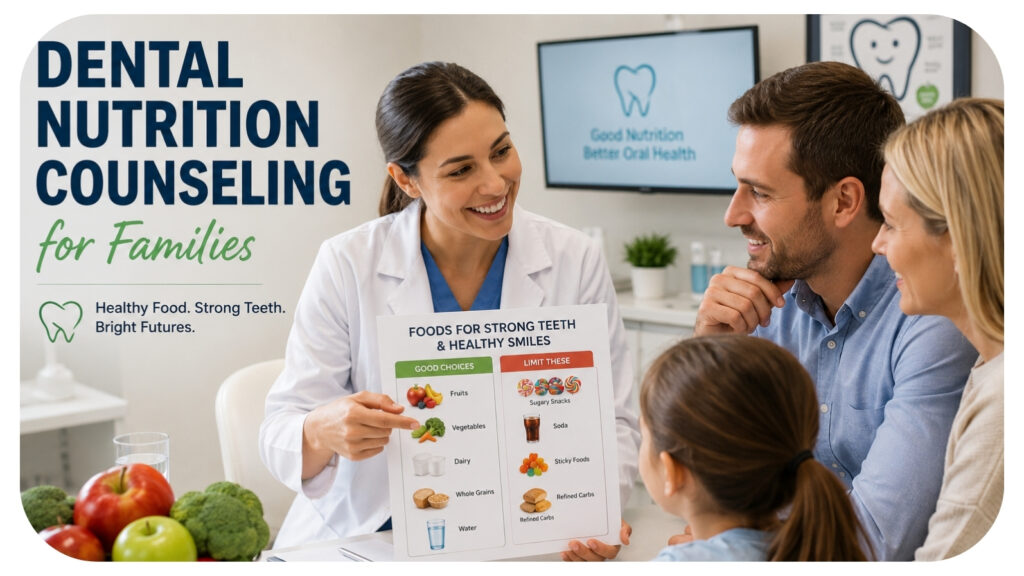
Because of this, you might be wondering if there is something deeper going on. You brush, you floss, you show up for cleanings, yet the dentist still finds issues. That is where food and drink habits come in. When families understand how nutrition affects teeth, the entire picture starts to shift. Dental nutrition counseling is simply guidance on what and how your family eats and drinks so you can protect your smiles, not just repair them.
In simple terms, nutrition counseling helps you connect everyday choices in the kitchen with what the dentist sees in the chair. It helps reduce cavities, protect gums, and support your child’s growth. It also gives you a plan you can actually follow as a family. So you move from feeling stuck and guilty to feeling informed and in control.
Why do good families still struggle with cavities and dental problems?
It often starts with good intentions. You buy “healthy” snacks, choose juice instead of soda, and encourage toothbrushing. Yet at the next checkup, your child has new cavities. This is frustrating and, for many parents, it feels like a personal failure. It is not. Modern food marketing and busy schedules make it very hard to see which choices quietly damage teeth over time.
The problem is that teeth are under attack many times a day. Each sip of a sugary drink, each sticky snack, each constant grazing between meals gives mouth bacteria new fuel. These bacteria turn sugars into acids that weaken enamel. Even foods that look healthy, like flavored yogurt or sports drinks, can have enough sugar or acid to cause trouble if they are used often.
So where does that leave you? You can try to guess which foods are “safe” and hope for the best. Or you can work with a family dentist who offers dental nutrition counseling for better oral health, so you understand what truly helps and what quietly harms.
How does nutrition counseling actually improve your family’s oral health?
Dental nutrition counseling looks at your family’s real life, not some perfect version of it. A caring provider will ask what your children like to eat, how often you snack, whether there are cultural or budget factors, and even how busy your evenings are. Then you get specific, practical changes that fit your reality.
For example, imagine a child who sips juice throughout the day, eats crackers between meals, and brushes once before bed. The parent believes they are doing fairly well. With nutrition counseling, the family learns that constant sipping keeps acid levels high in the mouth, and that crackers and chips stick to teeth and feed cavity bacteria. The solution might be to limit juice to mealtimes, offer water between meals, and swap some crackers for cheese, nuts, or crunchy vegetables.
Over time, these small shifts reduce how often teeth are exposed to sugar and acid. That means fewer weak spots, fewer cavities, and less fear in the dental chair. Research supports this approach. Pediatric oral health programs that include nutrition counseling, as highlighted by the American Academy of Pediatric Dentistry in their guidelines for preventive oral health care, consistently show better outcomes for children.
There is also a financial side. Every filling, crown, or emergency visit costs money and time. When your family uses food as a tool to protect teeth, you reduce the need for restorative work. A study shared by the CDC on community-based oral health interventions shows that prevention, including diet education, can significantly lower dental disease rates and long term costs.
Is professional guidance really that different from “doing your best” at home?
You might be thinking, “I already know sugar is bad for teeth. What more is there to learn?” The difference is in the details and in the support. A professional can spot patterns you may not notice and offer realistic alternatives that still respect your budget, culture, and your child’s preferences.
The comparison below shows how general efforts at home differ from working with a family dentist who includes nutrition based oral health counseling in your care.
| Approach | What Usually Happens | Common Result |
|---|---|---|
| DIY “eat less sugar” approach | Parents guess which foods are okay, cut obvious sweets, but keep frequent snacks, juices, and sticky foods that still damage teeth. | Some improvement, but cavities and plaque often continue. Parents feel confused and blame themselves. |
| Professional dental nutrition counseling | Family diet is reviewed, risky patterns are identified, and you receive tailored swaps, meal timing tips, and drink guidelines. | Fewer cavities, calmer dental visits, and more confidence that everyday choices are truly helping. |
| No change in diet, focus only on brushing | Children brush more, but sugary snacks and drinks stay the same. Teeth are still exposed to frequent acid attacks. | Ongoing decay, more fillings, and growing fear or frustration around dental care. |
What practical steps can your family start today?
Change does not have to be dramatic to be effective. Small, consistent choices shape your child’s mouth for years. Here are three steps you can start right away, even before you see a family dentist for full nutrition counseling for oral health.
1. Shift from “all day sipping” to “mealtime drinking”
Constant sipping on juice, soda, sports drinks, or even flavored waters keeps your child’s mouth in a steady state of acid attack. Try to keep sweet drinks with meals, when saliva is more active and can better protect teeth. Offer plain water between meals. If your child struggles with the change, start by slowly watering down juice or limiting it to one small cup at a set time each day.
2. Rethink snacks, not just desserts
Candy is not the only concern. Crackers, chips, gummy snacks, granola bars, and sticky cereals can cling to teeth and feed bacteria. Aim for snacks that either clear from the mouth quickly or support teeth. For example, cheese, nuts if age appropriate, plain yogurt, hard boiled eggs, or crunchy fruits and vegetables. Even swapping one “sticky” snack a day for a tooth friendly option can make a difference over months and years.
3. Connect brushing routines to food routines
Brushing and flossing work best when they are timed around eating. Try to anchor brushing to predictable food events, such as “after breakfast” and “before bed, after nothing else to eat or drink except water.” With younger children, make it a shared routine. You brush your teeth at the same time they do. This reinforces both the habit and the message that teeth matter, for adults as well as kids.
How can your family move toward calmer, healthier dental visits?
You do not need to become a nutrition expert. You simply need guidance that turns confusing messages into a clear, family friendly plan. When a family dentist takes time to talk about food and drink, not just fillings and cleanings, you gain a partner in reshaping your child’s future oral health.
With steady support, your family can move from surprise cavities and stressful appointments to fewer problems, more predictable visits, and a sense that your daily choices are finally working for you. You deserve that peace of mind, and your children deserve smiles that stay strong as they grow.
Recommended: Why Emergency Dental Services Within Family Practices Provide Peace Of Mind


Leave a Reply