

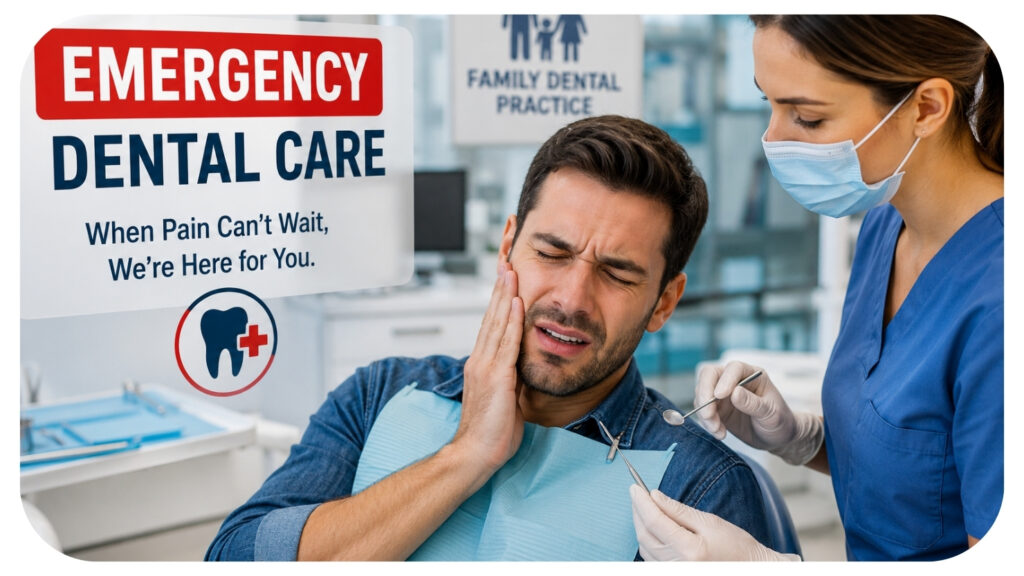
You might be reading this with a dull ache in your jaw, a child holding an ice pack to a swollen cheek, or the memory of a tooth cracking on a popcorn kernel still fresh in your mind, wondering whether you need to call a Steamboat Springs dentist. Dental emergencies have a way of showing up at the worst possible time, and when they do, everything else in your day can suddenly feel unimportant.end
Before the pain started, you probably were just getting through a normal day. After it started, every minute began to feel longer. You wonder how serious it is, whether you can sleep on it, and who will even answer the phone if you call now. That tension between “this really hurts” and “I don’t want to overreact” is exhausting.
Here is the simple truth. Having emergency dental care in a family practice is not just about getting a tooth fixed. It is about knowing that when something goes wrong, there is a familiar place that understands your history, your family, and your fears, and is ready to help you sort it out without judgment or delay.
In other words, the peace of mind comes from knowing you have a plan before the emergency happens. You know who to call, what to expect, and that you are not facing it alone.
Why do dental emergencies feel so overwhelming in the first place?
Dental pain is different from most other pain. It is close to your head, it affects how you eat, talk, and sleep, and it tends to come in waves. You might tell yourself it will “probably get better,” but deep down, you worry it might suddenly get worse at 2 a.m.
The American Dental Association explains that dental emergencies include things like severe toothache, infection, swelling, knocked out or broken teeth, and injuries to the mouth and gums. When these happen, you are juggling several fears at once. The pain itself, the cost of treatment, the fear of being judged for not coming in sooner, and the worry that you might end up in an ER that is not equipped to fully fix the problem.
Because of all this, you might delay care. You take more painkillers, use ice, or search online for “home remedies.” Sometimes the pain eases. Other times an infection grows quietly, which can lead to more complex treatment, missed work or school, and higher bills later.
So where does that leave you when something g,oes wrong and you do not have an established family dentist who offers emergency visits?
You might end up calling multiple offices, explaining your situation over and over, only to be told there are no openings. You might go to an urgent care that can give antibiotics or pain relief, but cannot fix the tooth. Or you might just wait and hope, which feels like a risky guess with your health.
How does a family dentist change the emergency experience?
When you have emergency dental services within a family practice, the entire experience shifts. Instead of starting from zero, you are working with a team that already knows you. They have your x rays, your medical history, and a sense of your comfort level with treatment.
Family practices that plan for urgent situations often build in same-day or next-day emergency slots. The ADA offers guidance on how dentists organize care for urgent needs in their resources on emergency treatment. For you, that means fewer hours wondering if anyone can see you and more clarity about when you will be seen and what will likely happen.
There is also a safety factor that many people do not think about until they are in the chair. Medical emergencies can happen during dental care. The ADA has clear protocols for handling these situations, which you can see in their overview of medical emergencies in the dental office. A well-prepared family practice trains regularly for these events. That preparation is invisible when everything goes smoothly, but it is one more reason you can feel calmer walking through their door.
Financial stress is another layer. The Centers for Disease Control and Prevention has reported that a large number of adults delay or skip dental care because of cost. Recent data show that millions of people have unmet dental needs related to expense, as outlined in this CDC data brief on dental care access. When you already have a relationship with a family dentist, conversations about cost and payment are usually smoother, because you know their policies and they know your situation. That does not make treatment free, but it can make it less frightening.
Most importantly, when your family dentist offers urgent care, you get continuity. The person who sees you in an emergency is often the same person who will follow up, complete any needed work, and keep an eye on that area in the future. You are not bouncing from one office to another, repeating your story and hoping each new provider understands what happened before.
What are your options when something goes wrong suddenly?
When a tooth breaks, a filling falls out, or swelling appears, you usually have a few choices. You can manage it at home and see if it improves, you can seek emergency help from a provider you do not know, or you can call your own family dentist, who offers urgent care.
The differences between these paths are not just medical. They affect your stress level, your time, your wallet, and sometimes the long-term health of your teeth.
| Option | Short term experience | Risks | Potential benefits |
|---|---|---|---|
| Home care only (no dentist) | Relies on painkillers, ice, and waiting. No professional exam. | Infection can spread. The problem can worsen and require more complex treatment later. Higher long-term costs. | Might be enough for very minor issues like a small, painless chip. |
| Walk in urgent care or ER without a dentist | Possible quick relief with medication. Usually no full dental repair. | Tooth often not definitively treated. You still need a dentist later. Higher medical bills. | Helpful if you have serious swelling, fever, or trauma and no dental option. |
| Emergency visit with your family dentist | Focused exam, X-rays if needed, and a treatment plan from someone who knows your history. | May need follow-up visits. Limited by office hours, though many offer urgent slots. | Address the cause of pain, not just symptoms. Lower chance of repeated emergencies. More predictable costs. |
When you look at it this way, having a family dentist who can see you urgently is less about convenience and more about protecting your health and avoiding avoidable crises.
What can you do right now to prepare for the next dental emergency?
You cannot predict when a tooth will crack or an infection will flare up, but you can control how prepared you are. A simple plan can turn a frightening night into a manageable situation.
1. Choose and establish care with a family dentist before you need one
If you do not already have a trusted family dentist, this is the time to find one, not when you are in pain. Call and ask specific questions. Do you offer same-day or next-day appointments for urgent problems? How do you handle after-hours calls. Who covers your patients when the office is closed? Pay attention to how the team responds, whether they sound rushed or willing to explain. Your comfort with them now often predicts your comfort with them in an emergency.
2. Ask directly about their emergency dental services
Once you have a family practice in mind, talk with them about their approach to urgent care. Ask what they consider an emergency, how quickly they usually can see patients, and what you should do if something happens outside office hours. Some offices have an on call number. Others give clear instructions about when to go to an ER, for example, if there is trouble breathing or swallowing. Understanding this ahead of time will help you stay calm if something goes wrong.
3. Create a simple “dental emergency plan” for your household
Write down the office name, address, and phone number, and keep it in a place everyone at home can find. Save the number in your phone under something obvious, such as “Dentist Emergency.” Put together a small kit with gauze, a clean container with a lid in case a tooth is knocked out, and any relevant medical information like allergies or medications. If you have children, explain in simple terms what will happen if they hurt a tooth, so they know you have a plan and do not need to panic.
Why having a plan brings real peace of mind
Knowing that emergency dental services in a family practice are available to you is a quiet kind of security. You may never need urgent care, but if you do, you will not be starting from fear and confusion. You will be calling a familiar office, speaking to people who recognize your name, and walking into a place where your story is already known.
Pain will still be uncomfortable. Treatment may still feel stressful. Yet the burden of figuring everything out on your own, in the middle of a crisis, will not be on your shoulders. That is where the real peace of mind comes from.
If you do not have that kind of support yet, consider taking the first step now. Find a family dentist, ask about their emergency care, and put their contact information where you can reach it quickly. Your future self, or your child with a sudden toothache, will be grateful you did.
Recommended: The Importance Of Early Detection In General Dental Care


Leave a Reply