

You might be sitting with a treatment plan in your hand, staring at words like “bone graft,” “sinus lift,” or “ridge augmentation,” and wondering how replacing a tooth suddenly turned into a conversation about rebuilding bone in your jaw. You wanted a simple answer about dental implants, and now you are weighing surgery, healing time, and cost. No wonder you feel uneasy. gum surgery Albuquerque end
It often starts with a sentence from your dentist or periodontist. “You do not have enough bone for an implant.” In that moment, your mind can jump straight to worst case scenarios. Will the implant fail. Is this going to be painful. Is someone trying to “up-sell” me. You are not alone in thinking this way. Many people feel the same confusion before they understand what bone grafting really does for implant success.
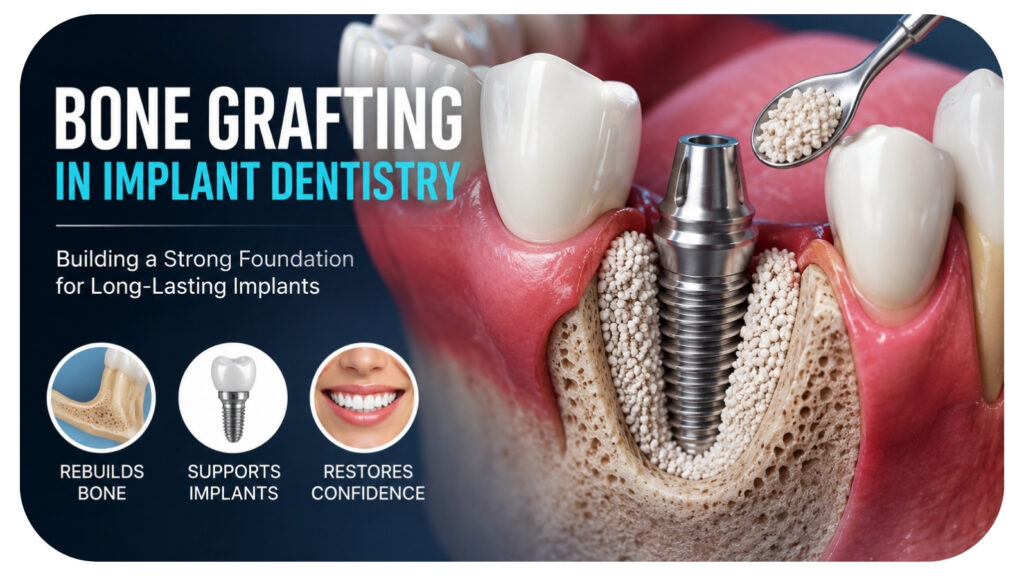
Here is the short version. Bone grafting builds up or preserves the jawbone so an implant has a solid, healthy foundation. When it is planned and done well, grafting can mean the difference between a fragile implant and one that functions like a natural tooth for many years. So where does that leave you right now.
Why does bone matter so much for dental implants
Dental implants act like artificial tooth roots. They need enough strong bone to hold them in place while they heal and for all the years you chew on them. If the bone is too thin or too soft, the implant can loosen or fail. That is why your periodontist and implant dentist looks closely at your jawbone with 3D scans before recommending anything.
Bone loss is more common than most people realize. When a tooth is removed and not replaced, the bone that used to support that tooth starts to shrink. This can be quite fast in the first year. Gum disease, trauma, long-term denture wear, or sinus anatomy in the upper jaw can also leave you with less bone than an implant needs. You might be wondering how serious that really is.
Research has shown that well-planned implant treatment, including bone grafting when needed, can be very successful. The Mayo Clinic explains how dental implant surgery is typically done in stages and often includes bone grafting if the jawbone is too soft or thin.
What exactly is bone grafting in implant dentistry
You may picture something dramatic when you hear “bone graft,” yet most grafts for implants are quite routine. A graft is simply material placed where bone is missing or too thin, so your body can grow new bone in that space. Over time, your own bone replaces most of the graft. This is why the role of bone grafting in implant success is so important. It gives your jaw a second chance to support a new tooth.
There are different types of grafts. A small “socket graft” at the time of tooth extraction can preserve the ridge so you do not lose as much bone before the implant is placed. A “ridge augmentation” rebuilds a narrowed area of jawbone. A “sinus lift” in the upper back jaw raises the sinus floor and adds bone so an implant does not poke into the sinus. Each one has the same goal. Create enough healthy bone for a stable result.
Clinical studies support this approach. A widely cited review in the National Library of Medicine describes how grafting materials integrate with the jaw and help create predictable support for implants, especially in areas with severe bone loss. You can see this discussed in more detail in a scientific review of bone grafting for dental implants.
What happens if you skip bone grafting when it is recommended
Here is where the tension really shows up. On one hand, you want the simplest, least invasive option. On the other, you want something that lasts. If your specialist is recommending grafting, it is usually because the risk of skipping it is higher than the hassle of doing it.
Without enough bone, several problems can appear. The implant may need to be shorter or narrower than ideal, which can affect strength. The gum line might look uneven, especially in the front of the mouth, and that can bother you every time you smile in a photo. In more serious cases, the implant can fail to bond with the bone, meaning you go through surgery and cost without a lasting result.
Recent data from the American Dental Association’s Science & Research Institute has looked at how lateral bone grafting affects implant outcomes. The findings suggest that, when done appropriately, grafting can improve the conditions for long-term stability. You can explore a summary of that work on the ADA’s page about the impact of lateral bone grafting on implant outcomes.
So the real question becomes this. Are you investing in a quick fix or in a foundation meant to last?
How do the risks and benefits of bone grafting compare
Every procedure carries some risk, and you deserve a clear picture before you say yes. Bone grafting for implants is common and usually safe, especially in experienced hands, yet you should still weigh it thoughtfully.
| ASPECT | IMPLANT WITHOUT RECOMMENDED GRAFTING | IMPLANT WITH RECOMMENDED GRAFTING |
| Primary stability of implant | May be reduced if bone is thin or soft | Higher chance of firm, stable support |
| Appearance of gums and smile | Greater risk of collapse or gaps near crown | Better support for natural-looking gum contours |
| Healing timeline | Shorter at first, but higher risk of later problems | Longer early healing, often smoother long term |
| Costs over time | Lower up front, possibly higher cost if failure occurs | Higher up front, often more stable over the years |
| Scientific support | Less favorable when bone is inadequate | Supported by multiple clinical and review studies |
Systematic reviews and long-term follow-up studies report high implant survival rates when bone deficiencies are properly managed. One recent review on implant success after bone augmentation found that grafted sites can perform similarly to native bone when the procedure is well planned and executed.
So where does that leave you when you sit in the consultation room and try to decide what to do next.
Three steps to move from confusion to a clear implant plan
1. Ask your periodontist to “show, not just tell” you about your bone
Request to see your X-rays and any 3D scans. Ask your implant dentist to point out where bone is missing or too thin and how that affects implant size and position. A clear visual explanation often calms fear, because you can finally see what your dentist sees instead of imagining the worst.
2. Talk through options, timing, and costs in writing
Ask for a written plan that compares doing the graft with trying to place an implant without it. This should include healing times, number of visits, approximate costs, and what happens if something does not go as planned. When you see the path in writing, it becomes easier to weigh short-term inconvenience against long-term stability. This is especially helpful if you need to discuss it with family or plan around work.
3. Consider a second opinion from a trained periodontist
If you still feel unsure, it is reasonable to seek another opinion. Look for a specialist who routinely handles bone grafting for dental implants and is comfortable discussing both benefits and limitations. You are not being “difficult” by asking questions. You are protecting your health and your investment.
Moving forward with confidence about bone grafting and implants
You might still feel a little anxious, and that is completely normal. You are making decisions that affect how you eat, speak, and smile, and that is deeply personal. At the same time, you now know that bone grafting is not an extra luxury. It is often a practical step that gives your implant the solid base it needs.
With the right periodontist and implant dentist, thoughtful planning, and honest conversation about your goals, grafting can turn a “maybe” implant site into a strong, reliable tooth replacement. You do not have to rush your choice. Take the time to ask your questions, review your scans, and understand your options. Then move forward when your head and your gut both feel ready.
Recommended: 6 Signs You’re Ready To Transition To A Family Dental Practice




Leave a Reply