

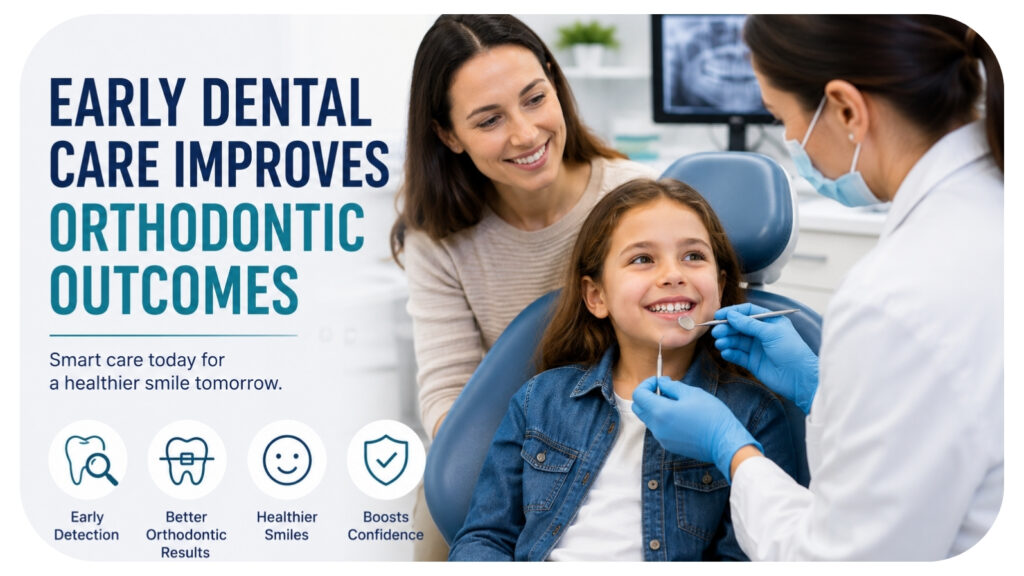
You might be looking at your child’s smile and wondering if those crooked baby teeth matter, or if you can just “wait and see” until the teen years. Maybe a dentist has mentioned crowding, an overbite, or thumb sucking, or even discussed options like porcelain veneers in North Phoenix, and now you are lying awake asking yourself if you are overthinking it or if you might miss an important window of time.end
That tension is very real. You do not want to rush your child into treatment, but you also do not want them to struggle with a bite problem that could have been easier to fix earlier. Because of this, it helps to understand a simple truth. Thoughtful early dental care can make later orthodontic treatment shorter, simpler, and more predictable.
In plain terms, early care is not about putting braces on tiny teeth. It is about guiding growth, watching for warning signs, and stepping in at the right moment so your child’s jaw and teeth have the best chance to line up well. When that happens, your child often needs fewer extractions, fewer complex procedures, and sometimes even avoids braces altogether.
So where does that leave you as a parent or caregiver who just wants to make a wise, calm choice for your child’s smile and comfort? It starts with understanding what early orthodontic care really is and how it works together with regular dental visits.
Is “Waiting Until All Adult Teeth Come In” Really the Best Plan?
Many parents grew up hearing that braces are a teenage thing. You might assume you should wait until all the permanent teeth are in before seeing an orthodontist. That used to be common, but research and experience have shifted that thinking.
For example, the American Association of Orthodontists recommends that children have their first orthodontic checkup by age 7. At that age, an orthodontist can see how the jaw is growing, how the front and back teeth meet, and whether habits like thumb sucking or mouth breathing are affecting development. You can read more about this early timing from the AAO’s guidance on child orthodontics.
Harvard School of Dental Medicine echoes this idea, explaining that an early visit does not always lead to treatment. Often it leads to reassurance, a plan, and monitoring. Their overview of when children should first visit an orthodontist reinforces that early evaluation is more about information than immediate action.
So the problem is not just crooked teeth. The deeper issue is that some bite and jaw problems are far easier to guide at age 7 to 10 than at 14 to 16, when growth is nearly complete. If you wait until everything is finished growing, you may lose simple options and end up needing more complex ones.
How Can Early Dental Care Change Your Child’s Orthodontic Future?
Think of early care as a partnership between your family dentist and an orthodontist. Regular checkups with a family dentist and orthodontist team give you an ongoing picture of how your child’s mouth is developing. When they spot an issue early, you have options.
Here are a few common situations.
Crowding and narrow jaws. If your child’s jaw is too small for their teeth, the teeth can twist or overlap. In a growing child, the orthodontist may use gentle expanders or other appliances to guide jaw width. This can create room for adult teeth to come in more naturally. If you wait until growth is finished, creating space may require extractions or more complex treatment.
Crossbites, overbites, and underbites. These bite problems are not just about looks. They can affect chewing, speech, and even jaw comfort. Some crossbites and underbites respond best to early correction while the jawbones are still flexible. Early correction can reduce the risk of uneven wear on teeth or jaw joint strain later in life.
Habits and breathing patterns. Thumb sucking, tongue thrusting, or chronic mouth breathing can change the shape of the upper jaw and the position of teeth. A dentist who sees your child regularly can catch these patterns. An orthodontist can work with you on habit guidance or simple appliances that protect the bite as your child grows.
Nationwide Children’s Hospital describes how an early phase of orthodontic treatment can set the stage for a smoother second phase during the teen years. Early care often focuses on jaw growth and serious bite issues. Later care then fine tunes alignment. This two-step approach can reduce treatment time in braces and may improve the final result.
So the “solution” is not rushing every child into appliances. The real solution is to use early information to avoid preventable problems and to time any needed treatment when it will be most effective and least disruptive.
What Are the Tradeoffs of Early Orthodontic Care vs Waiting?
You might still be weighing the emotional and financial sides. Will starting early mean more appointments and more cost, or does it actually save you trouble in the long run?
The answer depends on your child’s specific needs, but certain patterns show up again and again. The table below highlights some common comparisons between early-guided care and a “wait until teenage years” approach.
| Factor | Early-guided care (with monitoring) | Waiting until all adult teeth are in |
|---|---|---|
| Timing of first orthodontic check | Around age 7, often just evaluation and monitoring | Age 12 to 14, when jaw growth is well advanced |
| Complexity of later treatment | Often shorter, may avoid extractions or surgery | Higher chance of extractions or complex appliances |
| Impact on jaw growth | Can guide growth while bones are flexible | Growth mostly complete, fewer growth-guidance options |
| Emotional impact on child | More gradual, preventive steps, clear expectations | Possible sudden need for major treatment in teen years |
| Financial pattern | Costs may be spread over more years with early phase then shorter second phase | Costs may be concentrated in a shorter but more intensive period |
| Risk of untreated issues | Lower risk, issues identified before they worsen | Some problems may become harder or impossible to fully correct |
Of course, not every child needs early orthodontic treatment. Many will simply benefit from early evaluation, steady dental care, and reassurance that things are on track. The goal is not more treatment. The goal is smarter timing and better information.
Three Steps You Can Take Right Now To Support Better Orthodontic Outcomes
1. Schedule an early orthodontic evaluation around age 7
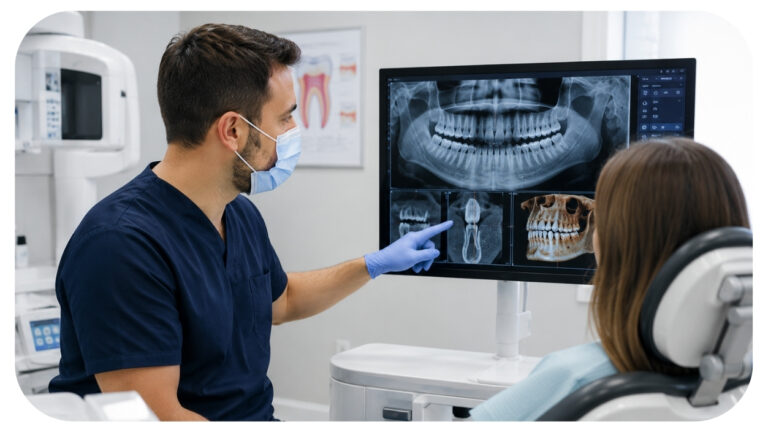
If your child is close to age 7, or older and has never seen an orthodontist, consider booking an evaluation. Even if everything looks fine to you, an orthodontist is trained to see subtle jaw and bite issues. This visit often includes photos, a simple exam, and sometimes X rays. You walk away with clarity. Either your child is on a good path, or you have a plan to monitor or address specific concerns.
2. Keep consistent checkups with a trusted family dentist
Regular visits with a caring dentist are the backbone of early orthodontic treatment for children. Your dentist tracks growth over time, notices changes, and can refer you to an orthodontist at the right moment. Bring your questions. If you are worried about crowding, mouth breathing, snoring, or habits like thumb sucking, speak up. Early conversations often lead to simple, low stress solutions.
3. Pay attention to everyday signs at home
You see your child every day, which means you often notice things long before any professional does. Watch for signs like difficulty biting into foods, constant mouth breathing, frequent biting of cheeks or lips, jaw shifting to one side when closing, or your child being self conscious about their teeth. None of these automatically mean braces are needed, but they are worth mentioning to your dentist or orthodontist. Early awareness is one of the easiest ways to improve orthodontic care outcomes later on.
Moving Forward With Calm And Confidence
It is completely normal to feel unsure about when to start orthodontic conversations. You want to protect your child’s comfort, your family’s budget, and your peace of mind. The reassuring news is that early dental care and smart, timely orthodontic evaluation are about giving you choices, not taking them away.
You do not have to have all the answers right now. What matters is that you stay curious, keep up with regular dental visits, and seek an early opinion rather than waiting for problems to grow. With that approach, you give your child’s smile the best chance to develop in a healthy, balanced way, and you reduce the chance of surprises when the teen years arrive.
Your next step can be as simple as calling your family dentist and asking whether it is time for an orthodontic check. From there, you and your care team can map out a calm, thoughtful path that fits your child and your family.
Recommended: 5 Questions To Ask Your Family Dentist About Preventive Care



Leave a Reply