Why Early Screenings For Orthodontic Issues Make A Difference
You might be looking at your child’s smile and wondering if something is “off,” but not quite sure what. Maybe their teeth look a little crowded, or their jaw seems uneven in photos, or you have a gut feeling that something is not lining up the way it should. At the same time, you might be hearing very different opinions. One person says “They’ll grow out of it.” Another says “You should see an orthodontist now.” It is no surprise if you feel stuck in the middle. Oshawa gum disease end
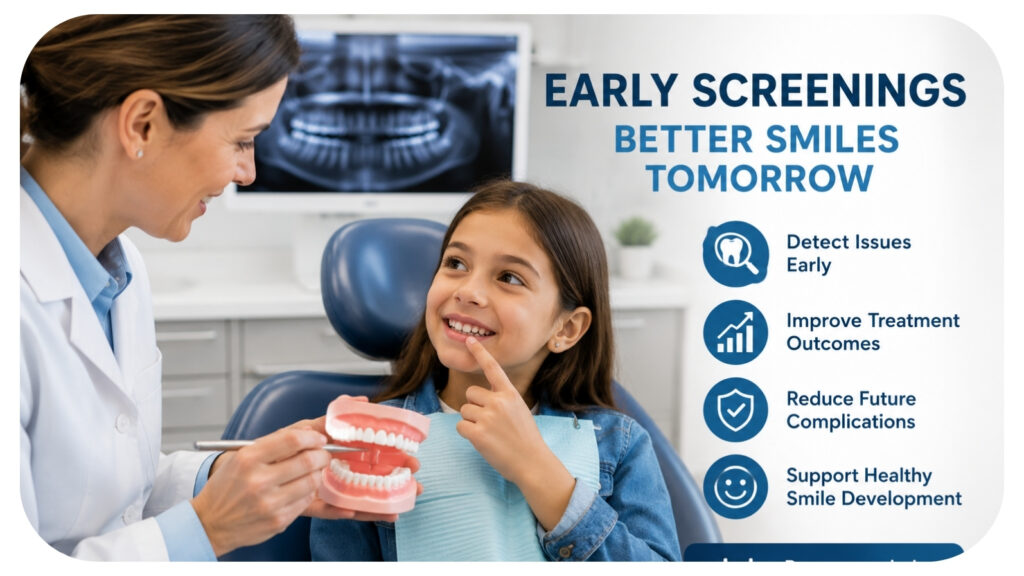
Because of this tension, you may be asking a simple question. Does it really matter if my child’s orthodontic screening happens at seven, ten, or fifteen, as long as they eventually get braces? The short answer is yes, timing does matter. Early screenings do not always mean early treatment, yet they can protect your child’s health, comfort, and even your budget over time.
This is the heart of it. Early orthodontic evaluation is less about rushing into braces and more about understanding how your child’s teeth and jaws are growing so you can make calm, informed choices, instead of waiting until problems are harder and more expensive to fix.
Why timing matters for your child’s smile and comfort
Children’s mouths are constantly changing. Baby teeth fall out. Adult teeth push in. Jaws grow. Most parents can see the obvious changes, yet the quiet shifts beneath the surface are just as important. An early orthodontic screening helps a family dentist or orthodontist spot those quiet changes before they turn into daily problems.
The American Association of Orthodontists recommends that children have their first check with an orthodontist around age 7, when a mix of baby and adult teeth are present. You can read more about that guideline in their explanation of when a child should first see an orthodontist. At this age, certain patterns are easier to see. For example, whether the jaw is growing too far forward or back, whether there is enough space for adult teeth, or whether the bite is putting too much pressure on certain teeth.
So where does that leave you if your child is older than 7, or much younger? Early screening is less about a strict birthday and more about catching growth while it can still be guided. A caring family dentist will often be the first to notice signs such as crossbites, open bites, or severe crowding, and will recommend when an orthodontic visit makes sense.
What happens if orthodontic issues are ignored or delayed?
It can be tempting to wait and hope things “even out” with growth. Sometimes they do. Many mild alignment issues truly are cosmetic and can wait until the teen years. The trouble comes with problems that affect function, comfort, or long term health.
Here are a few “what if” situations that many parents do not see coming.
What if a child has a deep overbite that causes the lower front teeth to hit the roof of the mouth? Over time, this can wear down teeth, irritate the gums, and make chewing uncomfortable. If this is caught early, relatively simple appliances can guide jaw growth and protect the teeth. If it is missed, treatment often takes longer and may require more complex solutions.
What if a child’s upper jaw is too narrow and the back teeth do not fit together correctly? This can affect chewing and even breathing. In a growing child, a gentle expander can widen the upper jaw. In an older teen, the same issue may require surgery or more aggressive treatment, which is harder on both the child and the family budget.
Research and clinical guidelines from pediatric dental experts emphasize that early observation helps the dentist track how teeth and jaws develop over time. The American Academy of Pediatric Dentistry’s guideline on the developing dentition and occlusion explains how early evaluation supports timely and less invasive care.
Financially, this matters. Treating a minor issue early often costs less than correcting a severe problem later. Emotionally, it matters just as much. A child who struggles to bite into foods, speak clearly, or feels embarrassed about crowded or protruding teeth may carry that stress for years if no one takes a closer look.
Early orthodontic screenings vs “wait and see” approaches
It can help to compare the mindset of early screening with the mindset of waiting until the teen years. Early screening does not always mean braces in second grade. It usually means “watchful waiting” with a clear plan, instead of crossing your fingers and hoping.
| Approach | What it looks like | Common benefits | Common risks |
|---|---|---|---|
| Early orthodontic screening | Evaluation around age 7 with regular follow ups, treatment started only if needed | Identifies jaw and bite issues early.Can guide growth to create space for adult teeth.May shorten or simplify later treatment. | Requires some time and visit costs.May feel worrying if parents fear “over treatment,” so choosing a trusted provider is important. |
| “Wait until all adult teeth are in” | First orthodontic visit in early or mid teens, no earlier monitoring | Fewer appointments in childhood.Some mild issues truly resolve with growth alone. | Missed chance to guide jaw growth.Higher chance of complex or longer treatment.Potential for tooth wear, gum issues, or self esteem problems in the meantime. |
When you see the comparison laid out, the benefit of an early orthodontic checkup becomes clearer. You are not signing up for automatic treatment. You are choosing information and options.
How a family dentist fits into early orthodontic care
You do not need to have all the answers right now. That is what a trusted family dentist and orthodontist team is for. Regular checkups give your dentist a chance to notice patterns, such as late loss of baby teeth, mouth breathing, thumb sucking habits, or jaw asymmetry, that can signal deeper orthodontic needs.
Guidelines for managing the growing mouth are detailed in professional resources, such as the American Academy of Pediatric Dentistry’s policy on developing dentition and occlusion. You are not expected to read every clinical page, yet it can be reassuring to know that the advice you hear is grounded in long standing research and shared standards.
So, how do you turn all this information into clear action for your child and your family?
Three practical steps you can take right now
1. Schedule an orthodontic screening by age 7, or as soon as you can
If your child is around 7 and has never seen an orthodontist, now is a good time. If they are older, do not worry that you “missed the window.” An early evaluation still has value, even in later childhood or early teens. Tell the dentist or orthodontist your concerns, even if they feel small. “Their front teeth seem crowded” or “Their jaw looks shifted in photos” are helpful starting points.
2. Ask clear questions about timing and options
During the screening, ask “Do we need to treat now, or can we monitor?” and “What happens if we wait a year or two?” A thoughtful provider will explain the tradeoffs so you understand whether early treatment could shorten or simplify future care. You can also ask whether your child’s situation matches what the guidelines recommend for early intervention, or if observation alone is enough for now.
3. Watch for everyday signs that something is off
Between visits, pay attention to your child’s day to day habits. Do they struggle to bite into sandwiches or apples. Do they breathe mostly through their mouth. Do their teeth seem to be getting more crowded or more spaced as new ones come in. Do they avoid smiling in photos. These are gentle prompts to bring up at the next visit. The more your dental team knows, the more tailored their advice will be.
Moving forward with more confidence and less worry
It is normal to feel uneasy when you are responsible for decisions that will affect your child’s smile, comfort, and confidence for years. You do not have to become an expert in orthodontics to make good choices. You simply need the right timing, the right questions, and the right support.
Early screenings for orthodontic issues are about giving your child the chance to grow into a healthier, more comfortable bite, and giving you the peace of knowing you did not wait until problems became harder to fix. With a trusted family dental care team and an informed plan, you can move from worry to clarity, one visit at a time.
Recommended: How Family Dentists Guide Teens Through Orthodontic Treatment


Most Inside Editorial Team
MostInside is an independent publication focused on growth across lifestyle, business, finance, sports, and digital authority, prioritizing long term value and enduring credibility.