
Why Family Dentists Emphasize Education At Every Appointment
Every visit to a family dentist is a chance to learn how to protect your mouth, not just fix a problem. You might come in for a cleaning, a filling, or dental implants in Rockingham, NC. You should leave with clear steps you can use at home that same day. Dentists see what daily habits do to teeth and gums over months and years. They see the quiet damage from skipped flossing, grinding, or sugar. Education during each appointment turns that hidden damage into clear facts you can act on. You hear what is happening in your mouth, why it is happening, and what will happen if nothing changes. You also hear what simple changes protect you. This steady teaching builds control, trust, and relief. It helps you avoid pain, missed work, and high bills. It turns each appointment into real protection for you and your family.
Why dentists focus on teaching, not just treating
Your dentist does more than repair teeth. The goal is to keep problems from starting. Treatment ends a crisis. Education keeps the next one away.
Three simple facts guide this focus.
- Most tooth decay and gum disease are preventable.
- Small changes at home often beat complex treatment later.
- You make mouth decisions every day. Your dentist does not.
Education gives you clear control. It turns a short visit into a long term shield for you and your children.
What you learn at a family dental visit
Each appointment offers three types of teaching that work together.
- What is happening now. You hear about current cavities, early gum trouble, worn teeth, or signs of dry mouth.
- Why it is happening. You see how sugar, brushing style, flossing, tobacco, or mouth breathing play a role.
- What to do next. You leave with simple steps that match your life and your budget.
This information stays grounded in your mouth, not in theory. The teaching uses plain words. The focus stays on what you can do tonight, tomorrow, and next month.
Education helps prevent common mouth problems
Tooth decay, gum disease, and tooth loss are common. Yet they do not have to be permanent. National data from the Centers for Disease Control and Prevention show a high rate of cavities in both children and adults. Routine teaching during visits directly targets the causes.
Common mouth problems and how education helps
| Problem | What often causes it | What you learn to change |
|---|---|---|
| Tooth decay | Frequent sugar, weak brushing, no fluoride | How often to brush, where you miss, how sugar timing matters, how fluoride protects |
| Gum disease | Sticky plaque left along the gumline | How to angle the brush, how to floss, and how to clean between teeth |
| Tooth wear | Night grinding and clenching | How to spot signs of grinding and when to use a night guard |
| Bad breath | Bacteria on tongue and between teeth | How to clean the tongue and why regular flossing matters |
| Tooth loss | Untreated decay and gum disease | Why early care saves teeth and how to keep gums firm and strong |
How your dentist teaches during each appointment
Education does not need long lectures. It fits into the normal steps in your visit.
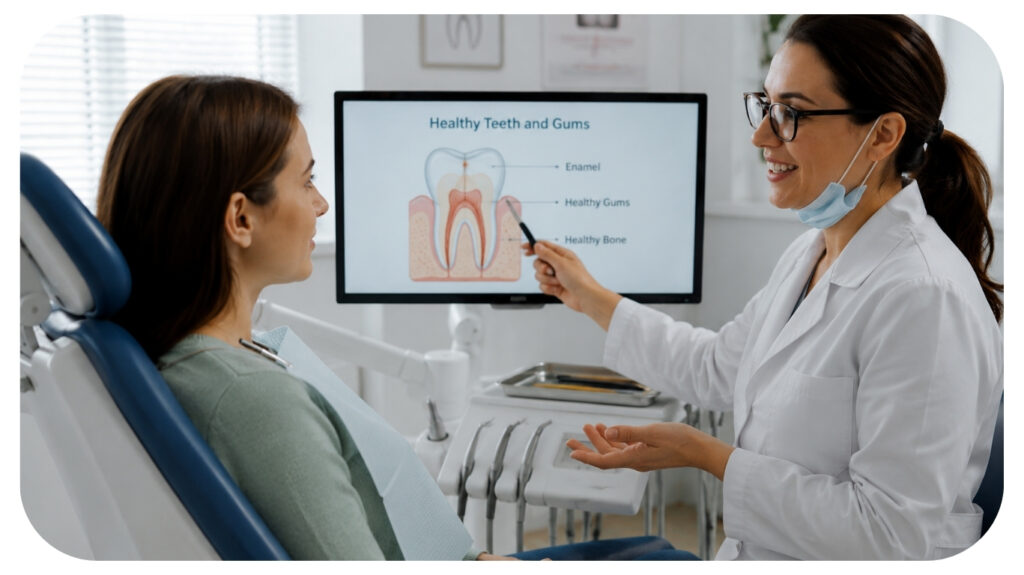
- During the exam. Your dentist or hygienist points out spots on a mirror or screen and explains what they show.
- During the cleaning. You hear where plaque builds up and how to reach those spots at home.
- During treatment. You learn why a filling, crown, or implant is needed and how to prevent a repeat.
Each message aims for three things. It should be short. It should be clear. It should match your age and health.
Education for children, adults, and older adults
Your needs change as you age. A good family dentist shifts teaching for each stage of life.
- Children. Guidance centers on brushing with help, snack choices, and the first visits. The aim is to build calm habits and reduce fear.
- Teens and young adults. Talks often cover sports guards, soda, vaping, and wisdom teeth.
- Adults. Focus moves to gum health, stress grinding, pregnancy changes, and long work days.
- Older adults. Teaching includes dry mouth from medicine, denture care, and options for missing teeth.
You do not need to remember every fact in one day. You hear the right message at the right time.
Education reduces cost, pain, and fear
Good teaching protects more than teeth. It protects your time, money, and peace of mind.
- Early care costs less than root canals or implants.
- Regular cleanings reduce deep cleanings and emergency visits.
- Clear explanations cut fear and help you feel safe in the chair.
When you understand your choices, you feel less trapped. You help plan your care instead of feeling like a bystander.
Evidence supports education at the dentist
Research supports what many families already notice. Simple instructions at the dental office lead to better brushing and less decay. The National Institute of Dental and Craniofacial Research reports that adults with regular care and fluoride use have fewer untreated cavities. Teaching is a key part of that routine care.
How to make the most of your next visit
You can turn your next appointment into a stronger learning moment with three simple steps.
- Bring questions about pain, bleeding, or habits you worry about.
- Ask your dentist to show you where problems are starting.
- Request a short, written list of home steps before you leave.
You do not need perfect teeth to start. You only need clear information and a plan you can follow.
Education today protects your smile tomorrow
Every appointment is a chance to change your future mouth health. Treatment fixes what has already gone wrong. Education guards what still works. When you expect clear teaching at each visit, you claim your role in that work. You protect your own mouth and pass those habits to your children. That quiet shift turns routine visits into something stronger. It turns short conversations into lasting protection for you and your family.
Recommended: 3 Preventive Tools Family Dentists Use To Monitor Oral Development

Recommended For You
Cooking With CBD Oil

Most Inside Editorial Team
MostInside is an independent publication focused on growth across lifestyle, business, finance, sports, and digital authority, prioritizing long term value and enduring credibility.