
Why Family Dentists Recommend Age Appropriate Treatments
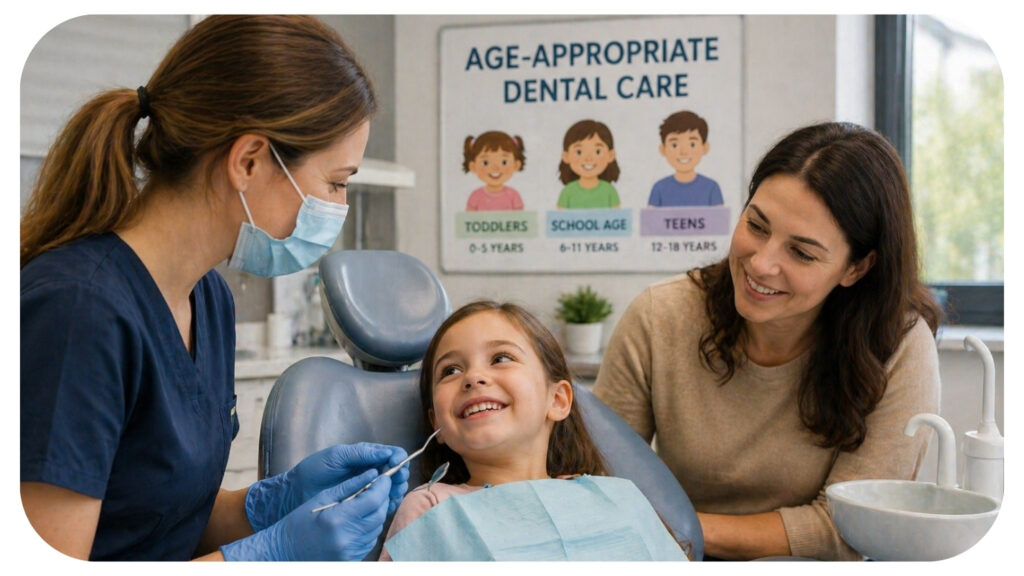
Your child’s teeth change fast. So their dental care must change too. A Crown Point dentist looks at more than cavities. They look at age, habits, and growth. This helps them choose treatments that fit your child’s stage in life.
Early years need gentle visits and simple cleanings. School years call for sealants, fluoride, and clear guidance on brushing. Teen years may need braces, wisdom tooth checks, and support for sports injuries. Each step has a purpose.
Age appropriate care prevents pain. It also protects speech, sleep, and confidence. You do not guess. You do not wait for a crisis. You work with a family dentist who knows what to do and when to do it.
This blog explains why timing matters, which treatments match each age, and how you can support your child at every step.
Why timing matters for your child’s mouth
Your child’s mouth is always moving. Teeth come in. Teeth fall out. Jaws grow. Habits form. If care does not match that timing, small issues turn into damage.
Age appropriate treatment helps you:
- Catch problems early, when they are easier to fix
- Protect baby teeth so adult teeth come in with less trouble
- Guide jaw growth so chewing and speech stay on track
The American Academy of Pediatric Dentistry urges a first dental visit by age one. That early step lets the dentist set a plan that grows with your child.
Stage one: toddlers and preschoolers
From birth through about age five, baby teeth rule. They hold space for adult teeth. They also help your child eat and speak.
At this stage, your dentist may focus on three things:
- Regular exams and cleanings
- Fluoride to strengthen enamel
- Guidance on brushing, diet, and thumb or pacifier use
Treatment stays simple. The goal is to stop cavities, protect tiny teeth, and build trust. Short visits, clear words, and kind care help your child feel safe in the chair.
Stage two: school age children
From about six to eleven, baby teeth and adult teeth share space. First molars come in. New habits form when your child eats at school and brushes without close help.
Your dentist may add:
- Dental sealants on permanent molars
- Regular fluoride treatments
- X rays to watch new teeth and roots
Sealants cover the chewing surface of molars. They block food and germs from hiding in deep grooves. The Centers for Disease Control and Prevention explains that sealants can cut cavity risk in molars by up to half within four years.
Stage three: preteens and teens
From about twelve through the late teen years, most adult teeth are in place. Social pressure grows. Sports, snacks, and screen time affect oral health. This stage shapes long-term habits.
For teens, your dentist often looks at three main needs:
- Alignment and bite checks for braces or clear aligners
- Wisdom tooth position and space in the jaw
- Protection for sports, such as custom mouthguards
Teens face a higher risk from sugary drinks, vaping, and skipping brushing at night. Age-targeted talks about choices and consequences matter. Straight talk from a trusted dentist can reach your teen in a way that brief reminders at home may not.
Comparing treatments by age
| Age group | Main goals | Common treatments | Visit frequency |
|---|---|---|---|
| Toddlers and preschoolers(0 to 5 years) | Build comfortPrevent early decayGuide habits | Short exams and cleaningsFluoride varnishParent coaching on brushing | Every 6 monthsMore often if high cavity risk |
| School age children(6 to 11 years) | Protect new molarsWatch growthReinforce daily care | Sealants on molarsFluorideX rays as needed | Every 6 months |
| Preteens and teens(12 to 18 years) | Guide bite and jawPrevent sports and snack damagePrepare for adulthood | Braces or alignersMouthguardsWisdom tooth checks | Every 6 monthsOrthodontic visits as planned |
How a family dentist adjusts treatment
A family dentist treats every age in one office. They learn your child’s history from the first tooth through high school. That record lets them spot patterns and small shifts.
They adjust care based on three things:
- Age and growth stage
- Risk level for cavities or gum problems
- Habits such as diet, sports, and oral hygiene
If your child has many cavities, the dentist may suggest more fluoride or shorter visit gaps. If your teen plays contact sports, they may need a strong mouthguard. The plan fits your child, not a template.
Your role at every stage
You guide your child’s daily choices. Your support turns dental advice into real change at home.
You can help by:
- Brushing with your child twice a day until they can clean well alone
- Limiting sugary drinks and snacks between meals
- Keeping regular checkups even when teeth look fine
Each visit is a chance to ask clear questions. You can ask why a treatment is needed now, what happens if you wait, and how your child can help protect the work at home.
When to call the dentist sooner
Age-appropriate care also means knowing when to move faster. You should contact your dentist if you see:
- Tooth pain that lasts more than a day
- Swelling in the face or gums
- Knocked out or cracked teeth from a fall or sports hit
Quick care can save a tooth and ease fear. It also keeps small injuries from harming adult teeth that are still forming.
Growing with your child
Age-appropriate treatment is not one extra step. It is the core of smart family dental care. You match care to your child’s stage. You act early. You adjust as they grow.
With steady visits, honest talks, and the right treatments at the right time, your child can carry strong teeth and steady habits into adult life.

Recommended For You
Shruti Haasan’s Fitness and Diet File

Most Inside Editorial Team
MostInside is an independent publication focused on growth across lifestyle, business, finance, sports, and digital authority, prioritizing long term value and enduring credibility.