
Why Teeth Whitening Often Complements Dental Implant Treatment Plans
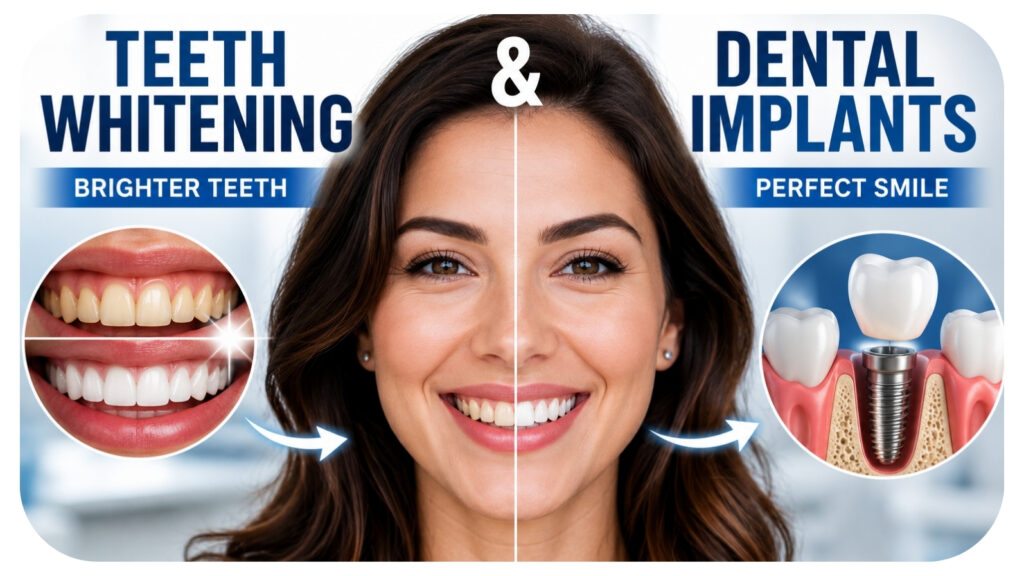
You might be feeling a mix of relief and hesitation right now. Relief, because you are finally taking steps to restore your smile with dental implants through advanced cosmetic dentistry in Boston. Hesitation, because the more you read, the more you realize there are choices to make about color, timing, and even whether you should whiten your natural teeth before the implant work is finished.end
It can feel like one decision has quietly turned into five. You want your new teeth to look natural. You want everything to match. You do not want to spend a lot of money and end up with a smile that looks “off” in photos. Because of this tension, you might wonder if whitening and implants really need to be planned together, or if it is just an extra add on.
Here is the short version. Teeth whitening often pairs very well with an implant treatment plan. When it is done at the right time, it helps your dentist match your implants to a brighter, more youthful shade, so your final smile looks intentional instead of patched together. When it is done at the wrong time, you can end up with implants that stay one color and natural teeth that shift to another.
The good news is that this is not about chasing perfection. It is about making thoughtful choices so your investment in implants truly pays off, both in function and in confidence.
Why does whitening even matter if I am getting implants?
Dental implants are designed to replace missing teeth and restore how you chew, speak, and smile. The implant itself is the part in the bone. What you and others actually see is the crown or bridge on top. That visible part is made from a material like porcelain or zirconia, which is color matched to your surrounding teeth.
Here is the key point. Once that crown or bridge is made and placed, its color does not change. Whitening products do not lighten porcelain or zirconia. They only work on natural tooth enamel. So if you whiten your teeth after your implant crown is made, your natural teeth can become a lighter shade while the implant crown stays the same. That mismatch can be very obvious, especially in the front of your mouth.
Because of this, many implant and cosmetic dentists recommend whitening before finalizing the color of any implant crowns. By brightening your natural teeth first, the dentist can then select a crown shade that matches your new, lighter color. This is why combining teeth whitening with dental implant planning often leads to a more seamless, natural result.
So where does that leave you if you already have darkened or stained teeth and are planning implants now?
Common challenges when you mix stained teeth and new implants
Think about a few real world situations that might sound familiar.
Imagine you are replacing one front tooth with an implant. The rest of your teeth are a bit yellow from coffee and age. If the dentist matches the implant crown to your current color, everything blends for now. But in two years, you decide you want a whiter smile and do a whitening treatment. Your natural teeth respond and become several shades lighter. The implant crown does not change, so now that one front tooth looks darker and stands out every time you smile.
Or imagine you are getting several implants in the back of your mouth, but your front teeth are chipped and stained. You decide to whiten first, then your dentist plans a mix of whitening, bonding, and implants. When everything is coordinated, your back teeth match your new brighter front teeth, and the whole smile looks like it belongs to the same person at the same point in time.
There is also the emotional side. Many people choose implants because they are tired of hiding their teeth. If the final color is off, they can feel disappointed and self conscious, even though the implants themselves are strong and well placed. That kind of quiet regret is very common, and it can usually be avoided with better planning at the start.
Financially, it matters too. Replacing an implant crown later just to change the color can be costly. Insurance often does not help with that if the original crown was healthy and functional. Whitening at the right time is usually much less expensive than remaking crowns that were matched to a darker shade.
Because of these emotional and financial pressures, many patients find it calming to talk through whitening and color choices before the implant work begins in full.
How does professional whitening fit into an implant and cosmetic dentist’s plan?
Professional whitening is usually planned early in the process. Your dentist will often suggest whitening once your mouth is healthy and any urgent work is handled, but before the final implant crowns, veneers, or bonding are made.
Professional systems are generally more controlled and more predictable than over the counter options. The American Dental Association explains how dentist supervised whitening can be safer and more effective than store products, especially when stronger gels are used. You can read more about that in the ADA’s overview of tooth whitening options.
When you work with an implant and cosmetic dentist, they are not just thinking about one tooth. They are thinking about how your bite, gum line, lip position, and tooth color all come together. Whitening becomes one tool in a larger plan to balance function and appearance.
So you might be asking, how do I compare whitening choices if I know implants are coming?
Comparing whitening choices when you are planning implants
The timing and type of whitening matter. Here is a simple comparison to help you weigh your options before you commit to a shade for your implant crowns.
| Whitening Approach | How it works with implants | Pros | Cons / Risks |
| Over the counter strips or trays | Can lighten natural teeth somewhat before implants, but results are less predictable, which makes shade matching harder. | Lower cost. Easy to start on your own. | Uneven results. Possible gum irritation. Harder for the dentist to match implant crowns if the shade keeps changing. |
| Professional take home trays from your dentist | Custom trays and controlled gel strength help you reach a stable shade before crowns are made. | More even whitening. Dentist oversight. Better for matching future implant crowns. | Higher cost than store products. Requires consistent use over days or weeks. |
| In office whitening | Teeth can lighten quickly, often in a single visit, which lets the dentist select an implant crown shade soon after. | Fast results. Stronger gels. Good for patients on a tight treatment timeline. | Teeth may be temporarily sensitive. Color can “settle” over a week, so final shade checks are needed. |
| No whitening at all | Implant crowns are matched to your current shade and stay that way long term. | No added cost. Simpler planning. No risk of sensitivity from whitening. | You are “locked in” to your current tooth color. Any whitening later will not change implant crowns and can create a mismatch. |
Professional organizations like the American College of Prosthodontists have also shared guidance and talking points for dentists on tooth whitening, safety, and expectations, which can help you ask better questions during your visit. You might find it reassuring to review their tooth whitening discussion points before your consultation.
What should you do right now if you are considering whitening with implants?
You do not need to have everything figured out today. A few clear steps can bring a lot of calm to the process.
1. Be honest about your “end goal” smile color
Ask yourself a simple question. If I could safely and comfortably have my teeth any reasonable natural shade, would I want them lighter than they are now? If the answer is yes, tell your implant dentist that from the start. This helps them plan teeth whitening with dental implants in mind, instead of treating whitening as an afterthought. Bring photos of smiles you like, not to copy exactly, but to show the general brightness you feel comfortable with.
2. Ask your dentist to map out the sequence
During your consultation, ask for a clear sequence. For example, “First we treat your gums. Then we whiten. Then we wait two weeks for the color to stabilize. Then we take final shades and make your implant crowns.” A written or visual plan can ease a lot of anxiety. Make sure you understand which teeth will be whitened, which will be restored with crowns or veneers, and how they will all match when finished.
3. Talk through sensitivity, maintenance, and future changes
Whitening can cause temporary sensitivity for some people. Ask about ways to manage that, such as special toothpaste or adjusted whitening times. Also ask how often you might need touch up whitening in the future and how that could affect any other cosmetic work. Understanding maintenance helps you avoid surprises and protects your investment in your smile.
Bringing it all together so your smile feels like “you” again
You are not just fixing teeth. You are trying to feel at ease when you laugh, talk, and show up in photos. When whitening is thoughtfully woven into an implant treatment plan, it can help your final smile feel more natural, more balanced, and more “you.”
An implant and cosmetic dentist can guide you through the trade offs, the timing, and the shade choices, so you are not guessing alone. You deserve clear information, honest expectations, and a result that matches the effort and trust you are putting into this process.
With a bit of planning, teeth whitening with implants becomes less of a confusing extra and more of a smart step toward a confident, lasting smile.

Recommended For You
Everything to Know About Health Insurance?

Most Inside Editorial Team
MostInside is an independent publication focused on growth across lifestyle, business, finance, sports, and digital authority, prioritizing long term value and enduring credibility.